







Definition and Meaning
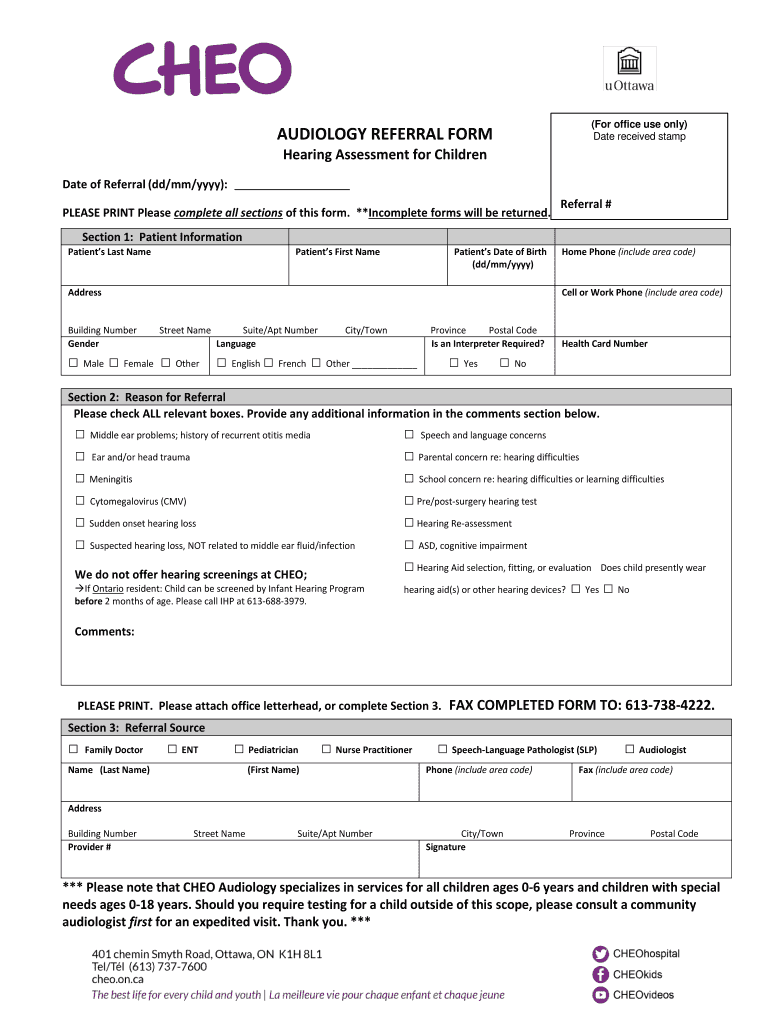
A "Hearing Assessment for Children" refers to a specialized evaluation conducted to measure and analyze the hearing capabilities of children. This form is essential in identifying hearing issues early, allowing for timely intervention and management. The form captures detailed patient information, reasons for referral, and is typically used to help clinicians and audiologists assess the hearing health of children. In the U.S., these assessments are often conducted for children aged 0-6, and for those with special needs up to 18 years. By assessing hearing capability, healthcare providers can devise appropriate audiological intervention strategies.
How to Use the Hearing Assessment for Children
To effectively utilize the "Hearing Assessment for Children" form, follow these structured steps:
-
Collect Required Information: Gather comprehensive information about the child's medical history, including any prior hearing issues, current symptoms, and relevant family history.
-
Complete Patient Details: Enter the child's personal data, such as name, age, and contact information, ensuring accuracy to avoid form rejection.
-
Specify the Reason for Referral: Clearly articulate the reasons for the child's referral, detailing specific symptoms, concerns, or behaviors that indicate a potential hearing issue.
-
Include Referral Source: Identify and record the healthcare provider or institution recommending the assessment. This helps in tracking the referral pathway and facilitates communication among professionals.
-
Submit the Form: Once completed, submit the form to the designated audiology department or clinic. This can typically be done through mail, digital upload, or physically at the clinic.
Steps to Complete the Hearing Assessment for Children
Completing the "Hearing Assessment for Children" form involves several critical steps to ensure all necessary information is captured:
-
Prepare Documentation: Verify all required documents, such as previous medical records and insurance details, are ready for reference.
-
Input Child's Health History: Accurately enter the child's health and developmental history, focusing on hearing-related concerns.
-
Detail Current Symptoms: Document any symptoms observable in the child, like inattentiveness to sounds, delayed speech development, or frequent ear infections.
-
Consult with Referring Physician: Coordinate with the referring physician to clarify any additional information needed for a complete assessment.
-
Verify Information: Review the completed form to ensure all sections are filled correctly and completely to prevent processing delays.
-
Sign and Date the Form: Ensure that the form is signed by a legal guardian and the referring healthcare provider, then date the document appropriately.
Key Elements of the Hearing Assessment for Children
The form incorporates several critical elements vital for a thorough hearing assessment:
- Patient Identification: Basic demographic information for proper patient identification.
- Medical and Audiological History: Includes past medical conditions impacting hearing.
- Referral Details: Information about the healthcare provider recommending the assessment.
- Current Hearing Concerns: Detailed observations of the child's hearing ability or issues.
- Family History: Any hereditary hearing issues within the family that might affect the child.
- Consent for Evaluation: Signed permissions allowing the assessment to proceed.
Legal Use of the Hearing Assessment for Children
In compliance with privacy and healthcare regulations like HIPAA in the United States, the "Hearing Assessment for Children" form should be used to legally and ethically assess and record a child’s hearing capability. Consent must be obtained from a parent or legal guardian before any evaluation or intervention begins. Improper use or unauthorized sharing of the information captured in this form may lead to legal penalties.
Required Documents
To accompany the "Hearing Assessment for Children" form, the following documents are typically required:
- Previous Audiological Assessments: Any past hearing tests or audiology reports.
- Medical Records: Documentation of the child's health history relevant to hearing.
- Insurance Information: Details necessary for coverage of the assessment services.
- Authorization of Consent: A signed form allowing healthcare providers to conduct the evaluation.
Form Submission Methods
The "Hearing Assessment for Children" can be submitted through various channels:
- Online Submission: Upload the completed form and accompanying documents to the designated healthcare portal.
- Mail: Send hard copies to the specified clinic or audiology department address.
- In-Person: Deliver the form directly to the health professional or clinic during a scheduled appointment.
State-Specific Rules for the Hearing Assessment for Children
While audiology assessments generally follow federal guidelines, some states might have additional regulations or requirements:
- Age Criteria: Specify different age limits for mandatory hearing screening.
- Screening Protocols: Variations in testing methods or required auditory tests may exist.
- Insurance Policies: State-specific Medicaid rules could affect coverage and eligibility.
Understanding these nuances ensures compliance and efficient processing of the assessment form.




