




Definition and Meaning of SSA-1724
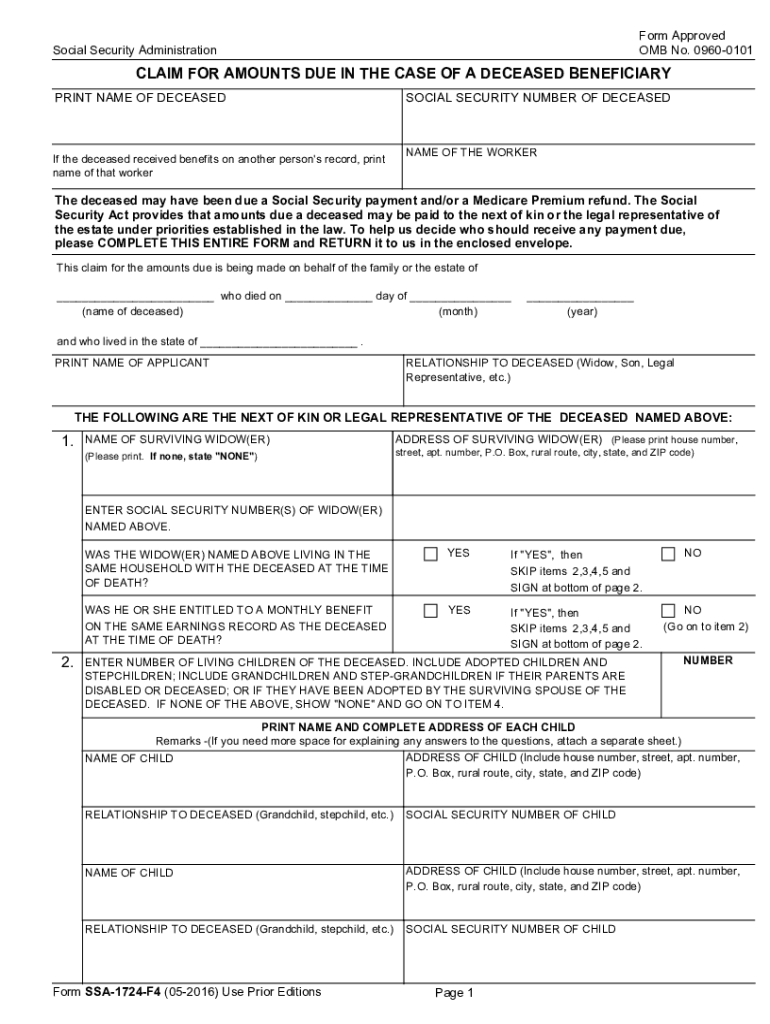
The SSA-1724 form, officially known as the Social Security Administration's "Claim For Amounts Due in the Case of a Deceased Beneficiary," serves a crucial role in processing claims for unpaid benefits that were owed to a deceased Social Security recipient. The form allows family members or legal managers of the deceased's estate to formally claim these leftover benefits. By submitting this form, claimants can ensure that any funds the deceased was entitled to, but had not yet received, are appropriately distributed to their estate or surviving family. The key objective is to ensure all due payments are made in accordance with the legal rights of the surviving parties.
How to Use the SSA-1724
Using the SSA-1724 requires understanding its structure and requirements. This document must be filled out accurately to avoid delays. Claimants need to provide personal information about both the deceased and themselves. Essential details include the deceased’s Social Security Number, date of death, and the claimants' relationship to the deceased. Next, identifying information, including the surviving relatives’ names and addresses, must be included along with any legal representatives. It’s imperative to follow the included instructions carefully to ensure the correct processing of the claim, often in conjunction with legal advice or guidance.
How to Obtain the SSA-1724
The SSA-1724 form can be obtained through several different methods. It is available for download directly from the Social Security Administration's official website, accommodating both digital and physical needs. Alternatively, those who prefer a physical form can collect one from a local Social Security office. Additionally, individuals requiring a form could request it via a phone call or written communication with the Social Security Administration to have it mailed directly to them. Gathering this form is the first step in processing claims and should be done promptly to facilitate timely submission.
Steps to Complete the SSA-1724
-
Collect Necessary Information: Gather all relevant details, including the deceased's Social Security Number, date of death, and potential claimant relations.
-
Fill Personal Information: Provide comprehensive identification details for both the deceased and the claimant(s) on the form.
-
Complete the Relationship Section: Accurately describe the relationship to the deceased and furnish supporting documentation such as death certificates or legal papers if needed.
-
Submit the Form: Choose the submission option that suits you best—mail-in, online, or in-person at a Social Security office.
-
Track Progress: Upon submission, follow up with the Social Security Administration to ensure receipt and processing of your claim.
Key Elements of the SSA-1724
The SSA-1724 comprises critical components that claimants must attentively fill:
- Personal Details of the Deceased: Include full names and Social Security Numbers.
- Claimant Information: Contact information, relationship to the deceased, and any executor or legal representative detail.
- Certification and Signature: Offers a declaration section where applicants confirm the information is true and accurate before signing.
These elements ensure the form meets all administrative requirements for processing without error.
Legal Use of the SSA-1724
The SSA-1724’s legal use is strictly to claim unpaid benefits owed to a deceased Social Security recipient. It cannot be used to alter any benefits or as a substitute for other forms related to ongoing Social Security benefits case management. Ensuring the form's proper use involves abiding by state and federal probate laws and regulations regarding entitlement to the deceased’s unreceived benefits. It operates under the legal umbrella provided by the Social Security Administration to validate claims effectively.
Important Terms Related to SSA-1724
- Beneficiary: The individual who was entitled to receive the benefits.
- Estate: The total of property, assets, and liabilities left by the deceased.
- Claimant: Any person eligible to make a claim on behalf of the deceased, such as a family member or legal representative.
Familiarity with these terms facilitates an understanding of the form’s purpose and how it fits into the broader scope of managing a deceased individual’s affairs.
Required Documents
When submitting the SSA-1724, claimants might need to attach several types of supporting documents:
- Death Certificate: Confirms the date and authenticity of the beneficiary's demise.
- Relationship Proof: Documents like birth certificates or marriage licenses confirm the claimant’s legal standing.
- Legal Representative Authority: Any legal documentation proving the authority of the estate manager or executor if applicable.
These documents substantiate the information provided in the claim and guide its approval by the SSA.