





Definition and Meaning of the RL-1 Summary
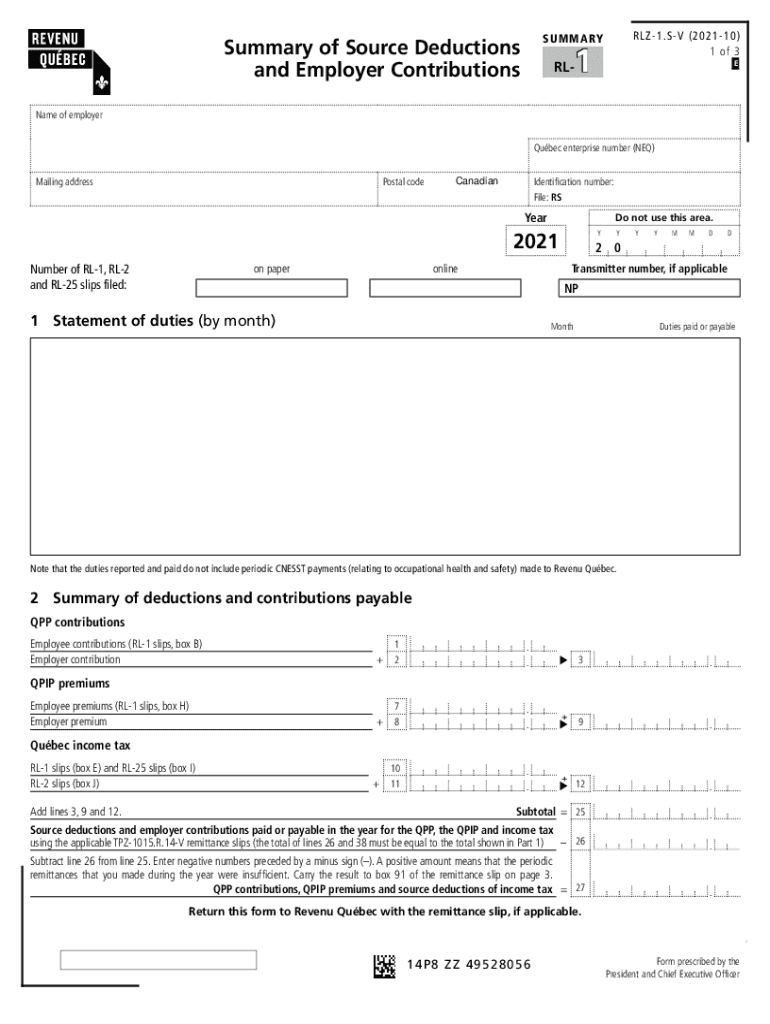
The RL-1 Summary, officially known as "RL-1 Summary of Source Deductions and Employer Contributions," is a critical tax document used primarily in Canada, specifically in Québec. It captures information regarding source deductions and employer contributions for the Québec Pension Plan (QPP), the Québec Parental Insurance Plan (QPIP), and other essential income tax data. The document is a summary form that consolidates the information from various employer reporting forms, making it easier for both employers and employees to understand their tax obligations.
The RL-1 Summary is issued annually, and it must be filed with Revenu Québec by employers who make source deductions from employees’ salaries. Understanding the RL-1 Summary is crucial for compliance with provincial tax laws and for ensuring accurate income reporting for individual employees when they file their personal income tax returns.
Important Terms Related to the RL-1 Summary
Understanding the terminology associated with the RL-1 Summary is essential for accurate completion and compliance. Here are some key terms:
- Source Deductions: Amounts withheld from an employee’s earnings, including income tax, QPP contributions, and QPIP premiums.
- Employer Contributions: Payments made by the employer on behalf of employees into retirement and insurance plans, such as matching QPP contributions.
- Fillable Forms: Digital versions of the RL-1 that can be completed and submitted electronically, including formats such as RL-1 slip fillable or releve 1 summary fillable form.
These terms are integral to understanding the RL-1 process, and familiarity with them will aid in the accurate completion of the form.
How to Use the RL-1 Summary
Using the RL-1 Summary effectively involves several steps:
- Data Collection: Gather all necessary payroll data, including employee earnings, deductions, and employer contributions.
- Completion of the Form: Utilize the RL-1 slip fillable format to enter details accurately. Ensure all amounts are precisely calculated from your payroll records.
- Review and Verification: Check for any inconsistencies or errors in the recorded amounts. It is essential that totals for source deductions and contributions align with your payroll accounts.
- Submission: Once verified, submit the RL-1 Summary to Revenu Québec by the specified deadline.
Each step is critical to ensure compliance and avoid potential penalties for inaccurate reporting.
Filing Deadlines and Important Dates
Timely filing of the RL-1 Summary is essential to avoid penalties. Employers must adhere to the following general deadlines:
- Filing Deadline: Employers are typically required to submit the RL-1 Summary by the last day of February following the tax year. For example, for the tax year ending December 31, 2022, filings are due by February 28, 2023.
- Payment Deadline for Deductions: Any source deductions must be remitted to Revenu Québec by specified monthly or quarterly deadlines, depending on the employer’s remittance frequency.
Understanding these timelines is crucial for maintaining compliance and ensuring that all obligations are met within the designated timeframe.
Steps to Complete the RL-1 Summary
Completing the RL-1 Summary involves a systematic process:
- Obtain the Form: Access the latest RL-1 PDF or fillable form from the official Revenu Québec website or any relevant software that integrates with tax filing.
- Input Employee Information: Enter each employee's name, social insurance number, and total earnings for the year.
- Record Source Deductions: Accurately fill in the amounts deducted for federal and provincial taxes, QPP, and QPIP. Ensure that these figures correlate with your payroll records.
- Include Employer Contributions: Enter the total amounts contributed by the employer towards plans like the QPP.
- Review the Summary: Conduct a thorough check for accuracy before submission. Errors can lead to compliance issues and potential penalties.
- Submit the Completed Summary: Send the summary electronically or via mail to Revenu Québec.
Each step requires diligence and attention to detail to ensure compliance with tax laws.
Legal Use of the RL-1 Summary
The RL-1 Summary is a legally mandated document that holds significant importance for tax compliance in Québec. Utilizing this form correctly is not only a requirement but also a protective measure for both the employer and the employees involved. It ensures that all source deductions and employer contributions are properly documented and reported.
Organizations that fail to comply with the reporting requirements risk facing penalties, which can include financial fines and interest on overdue amounts. The legal implications also extend to employees, as inaccuracies can affect their individual tax filings and potential refunds.
Employers must be proactive in understanding the legal requirements surrounding the RL-1 Summary and implement processes to ensure accurate and timely reporting.
Examples of Using the RL-1 Summary
Consider the following scenarios that illustrate the use of the RL-1 Summary:
- Small Business: A small business owner must accurately report the source deductions for their employees on the RL-1 Summary. This includes calculating the total income, along with QPP and QPIP deductions, ensuring they meet the filing deadline to avoid fines.
- Corporation: A corporation with multiple divisions must consolidate its payroll information to reflect the total source deductions from all employees. This requires careful coordination to compile an accurate RL-1 Summary reflecting contributions across various departments.
In both examples, accurate use of the RL-1 Summary is critical for maintaining legal compliance and ensuring that employees’ tax contributions are properly accounted for.