






Definition and Meaning of the Du Proprio Offer to Purchase
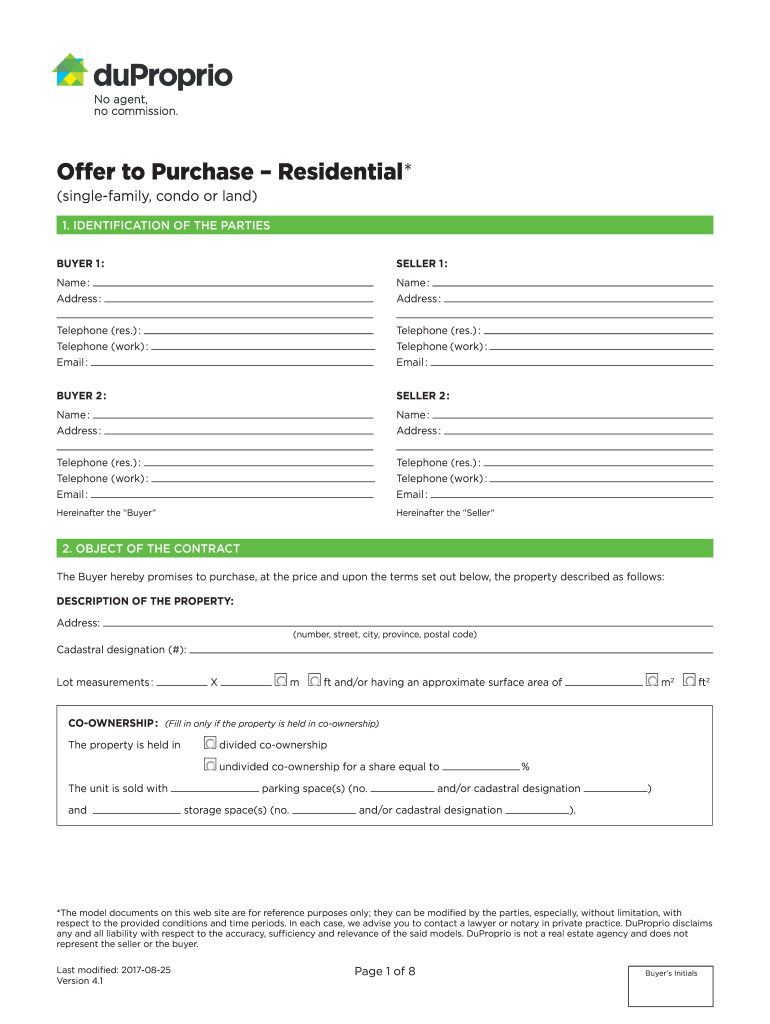
The du proprio offer to purchase refers to a formal declaration made by a prospective buyer to an owner of residential property, indicating the buyer's intent to purchase the property under specific terms. This document serves as a legally binding agreement between the buyer and seller once mutually accepted. Within the context of real estate transactions, it clarifies critical components such as the property description, purchase price, and terms of payment.
Key components of this document include:
- Identification of Parties: Details about the buyer(s) and seller(s) involved in the transaction.
- Property Description: A clear depiction of the property being purchased, including address and any relevant property identifiers.
- Price and Payment Terms: Stipulations regarding the purchase price, methods of payment, and any contingent clauses that may affect the transaction.
- Obligations of Both Parties: Responsibilities of both the buyer and seller during the sale process, including disclosures and inspections.
- Conditions for Acceptance: Any optional clauses that must be satisfied for the contract to be valid and enforceable.
Understanding the significance of the du proprio offer to purchase is essential for both buyers and sellers as it outlines their rights and duties during a real estate transaction.
Steps to Complete the Du Proprio Offer to Purchase
Completing the du proprio offer to purchase is a structured process that requires attention to detail. Below are the key steps involved in preparing this document effectively.
-
Collect Necessary Information: Gather essential details regarding the parties involved and the property. This includes names, contact information, property address, and any unique identifiers tied to the property.
-
Draft the Offer: Utilize the appropriate form, either via a template or a digital tool, to outline all necessary details. Pay close attention to sections that specify price, payment terms, and any contingencies.
-
Specify Conditions and Obligations: Clearly define what conditions need to be met by both parties. This may involve inspections, financing, or any repairs that the seller is required to make.
-
Review and Edit: Before finalizing the document, review all entries for accuracy. Consider having a real estate professional or legal advisor examine the offer to ensure all terms are compliant with state regulations.
-
Present the Offer: Submit the completed du proprio offer to purchase to the seller. This can be done in person, through email, or via postal service, depending on mutual preferences.
-
Await Acceptance or Negotiation: After presenting the offer, be prepared to negotiate terms or accept counter-offers from the seller. It's important to communicate effectively during this phase to reach a mutually agreeable transaction.
By following these steps, buyers can navigate the complexities of purchasing property in a straightforward manner, ensuring clarity and legal compliance throughout the process.
Key Elements of the Du Proprio Offer to Purchase
The du proprio offer to purchase includes several vital elements that ensure clarity and legality in the transaction. Each component plays a significant role in protecting the interests of both parties during and after the negotiation.
-
Buyer and Seller Information: The document begins with the full legal names and contact information of both the buyer and seller, establishing a clear point of communication.
-
Detailed Property Description: This section contains not only the property address but also additional identifiers such as lot numbers or property tax identification numbers, ensuring the exact property is specified.
-
Purchase Price: A critical component, the stated price must reflect the agreed-upon amount and may need to include clauses detailing earnest money or deposits.
-
Financing Terms: If the buyer requires financing, this section may include details regarding pre-approval letters, loan types, and conditions that may impact the sale.
-
Contingencies: These are conditions that, if not met, could nullify the agreement. They may include property inspections, the buyer's ability to secure mortgage financing, or other tailored conditions.
-
Closing Date: The proposed date for the final transaction to take place is essential for both parties to plan accordingly.
-
Legal Language: A legally binding statement that highlights the offer's enforceability once signed by both parties, ensuring that all contractual obligations are upheld.
Understanding these key elements not only facilitates a smoother transaction but also reinforces legal protections for all parties involved, allowing both buyers and sellers to move forward with confidence.
Important Terms Related to the Du Proprio Offer to Purchase
When working through the du proprio offer to purchase, familiarity with several essential terms can help streamline the process and ensure that all parties understand their roles.
-
Earnest Money: A deposit made by the buyer to demonstrate serious interest in purchasing the property, which may be forfeited if they back out without cause.
-
Contingency Clauses: Specific conditions that must be fulfilled for the purchase to proceed, such as satisfactory home inspections or financing approvals.
-
Closing Costs: Fees associated with finalizing the purchase, which can include title insurance, appraisal fees, and attorney fees. Understanding these potential costs is crucial for financial planning.
-
Title Search: An examination of public records to verify that the seller holds clear title to the property and that no liens or claims exist against it.
-
Disclosure Requirements: Laws that mandate sellers to provide buyers with information about the property's condition, including any known defects or hazards. Being transparent can prevent legal issues post-sale.
A solid comprehension of these terms can empower both buyers and sellers, making negotiations more effective and aligning expectations for all parties involved in the transaction.
Who Typically Uses the Du Proprio Offer to Purchase?
The du proprio offer to purchase is primarily utilized in residential real estate transactions, serving both buyers and sellers. The following groups commonly engage with this document:
-
Home Buyers: Individuals or families seeking to purchase residential properties often utilize a du proprio offer to clearly communicate their intent to buy, along with specific terms and conditions.
-
Property Sellers: Owners who wish to sell their properties without employing a real estate agent can use the du proprio offer to outline their terms directly with prospective buyers.
-
Real Estate Investors: Investors looking to acquire properties for rental or resale purposes may also use this offer to purchase, allowing them to negotiate terms favorably.
-
Real Estate Professionals: Although the document can be used independently, real estate agents and attorneys often provide guidance on completing the du proprio offer to purchase, ensuring adherence to legal standards and addressing unique transaction needs.
Understanding the typical users of this form helps clarify the market dynamics of real estate transactions, influencing how buyers and sellers engage with one another effectively.