




01. Edit your 2022 south carolina tax forms online
Type text, add images, blackout confidential details, add comments, highlights and more.

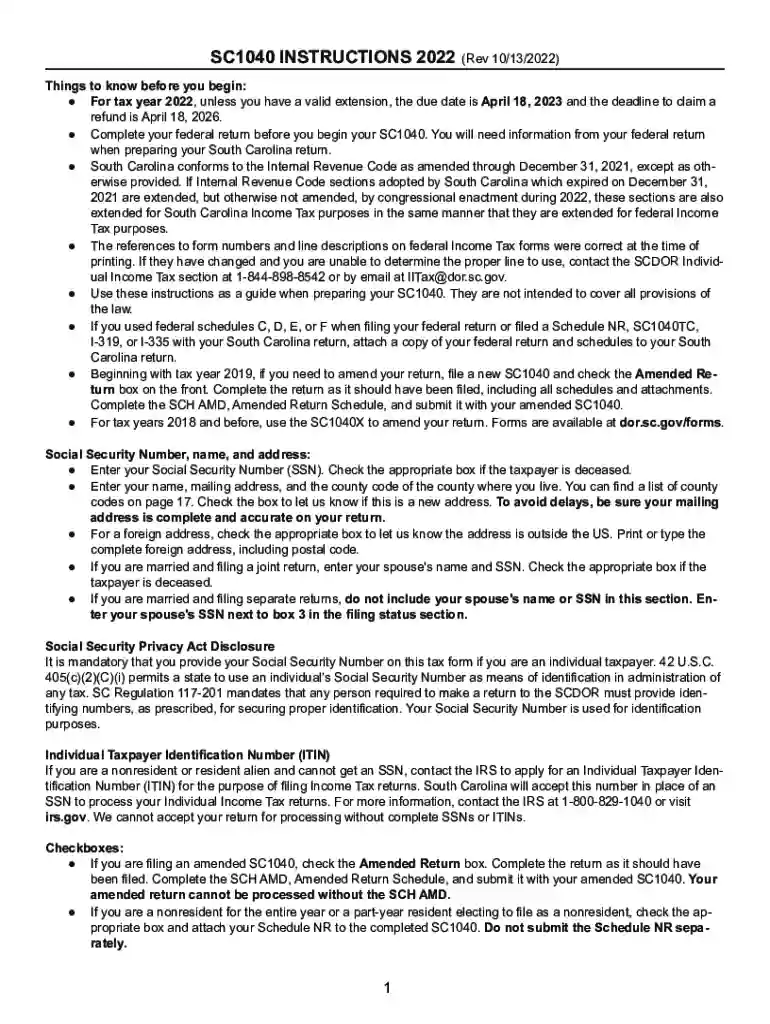
Type text, add images, blackout confidential details, add comments, highlights and more.

Draw your signature, type it, upload its image, or use your mobile device as a signature pad.

Send 2022 sc1040 instructions via email, link, or fax. You can also download it, export it or print it out.
The SC Tax Instructions provide comprehensive guidance for South Carolina residents on how to accurately complete their individual income tax returns. These instructions are essential for understanding the various components required to file a state tax return, including details about income, deductions, and the specific forms needed.
Key Functions:
Importance:
For taxpayers navigating the filing process, the SC Tax Instructions are invaluable. Here's how to use them effectively:
The SC Tax Instructions are available in several formats to ensure accessibility:
Completing the SC Tax Instructions involves several critical steps to ensure all data is accurate and compliant:
The SC Tax Instructions include various terms essential to understanding and successfully filing taxes:
Understanding key deadlines is crucial to avoid penalties:
Penalties are imposed for various forms of non-compliance with SC tax regulations:
Practical examples help clarify the instructions’ application:
South Carolina has unique regulations reflected in its tax instructions:
Not all residents need to file; specific eligibility criteria determine who must submit tax returns:
By using the SC tax instructions effectively, taxpayers can ensure compliance with state tax laws while potentially maximizing deductions and credits to reduce their tax burden.


We've got more versions of the 2022 south carolina tax forms form. Select the right 2022 south carolina tax forms version from the list and start editing it straight away!
| Versions | Form popularity | Fillable & printable |
|---|---|---|
| 2025 | 4.9 Satisfied (37 Votes) | |
| 2024 | 4.9 Satisfied (40 Votes) | |
| 2023 | 4.9 Satisfied (24 Votes) | |
| 2022 | 4.8 Satisfied (87 Votes) | |
| 2021 | 4.2 Satisfied (53 Votes) | |
| 2020 | 4.8 Satisfied (180 Votes) | |
| 2019 | 4.2 Satisfied (89 Votes) | |
| 2018 | 4.3 Satisfied (134 Votes) | |
| 2017 | 4.3 Satisfied (165 Votes) | |
| 2016 | 4.4 Satisfied (1061 Votes) | |
| 2015 | 4 Satisfied (49 Votes) | |
| 2014 | 4 Satisfied (47 Votes) | |
| 2013 | 4 Satisfied (49 Votes) | |
| 2012 | 4.2 Satisfied (143 Votes) | |
| 2011 | 4.3 Satisfied (53 Votes) |
At DocHub, your data security is our priority. We follow HIPAA, SOC2, GDPR, and other standards, so you can work on your documents with confidence.
Attach the CHE-400, Students with Disabilities Tuition Tax Credit. Verification, to your return. The CHE-400 is available at dor.sc.gov/forms. FrequentlyRead more
For tax year 2025, unless you have a valid extension, the due date is April 15, 2026, and the deadline to claim a refund is April 15, 2029.Read more
Feb 1, 2018 Use Form 7004 to request an automatic extension of time to file certain business income tax, information, and other returns.


