Definition & Overview of Form 1023-EZ
Form 1023-EZ is a streamlined application used by organizations to apply for tax-exempt status under Section 501(c)(3) of the Internal Revenue Code. This form is specifically designed for smaller nonprofits that meet certain eligibility criteria provided by the IRS. The streamlined nature of this application simplifies the usual complexities associated with attaining tax-exempt status, making it an appealing option for new or small entities.
Eligibility Criteria
To qualify for Form 1023-EZ, organizations must satisfy several criteria, including:

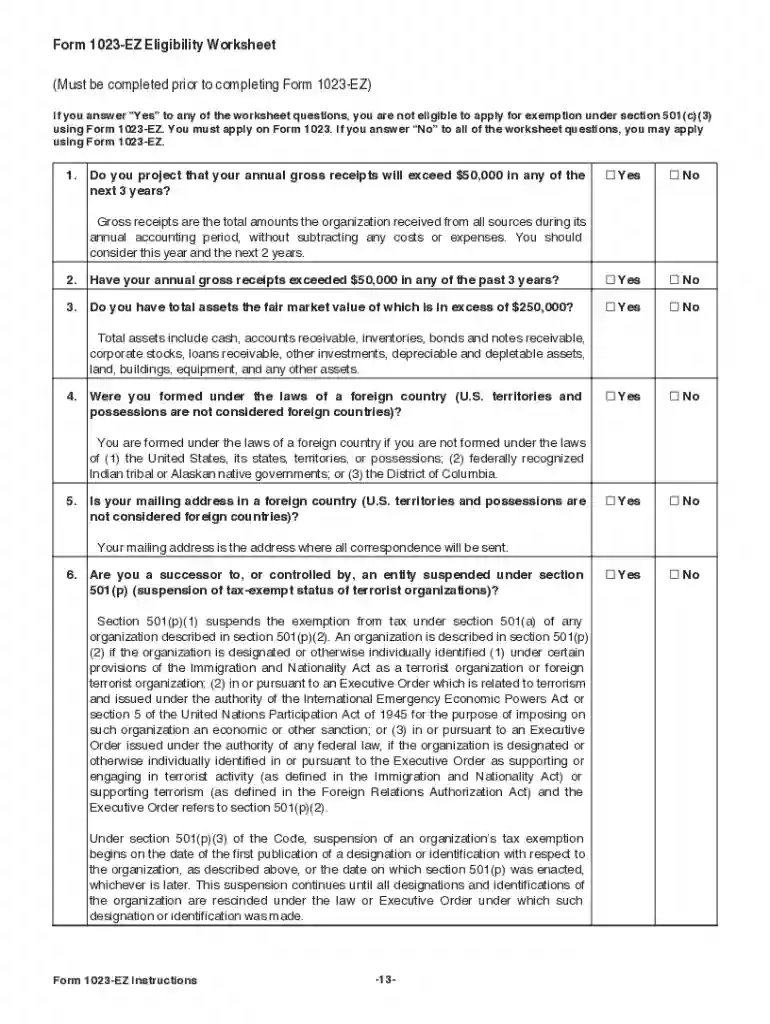
- Projected annual gross receipts of $50,000 or less in the next three years.
- Total assets valued at $250,000 or less.
- Must not be a foreign organization or entity.
- Not classified as a church, school, or hospital.
Key Benefits
Utilizing Form 1023-EZ offers several advantages:
- Faster processing time compared to the standard Form 1023.
- Reduced application complexity, which lowers the likelihood of errors.
- Decreased user fees, making it more accessible to smaller entities.
Steps to Complete Form 1023-EZ
Pre-Application Requirements
- Register on Pay.gov: Users must create an account on Pay.gov, the platform through which the form is submitted.
- Eligibility Worksheet: Complete the eligibility worksheet provided by the IRS to confirm qualification for the streamlined process.
Application Procedures
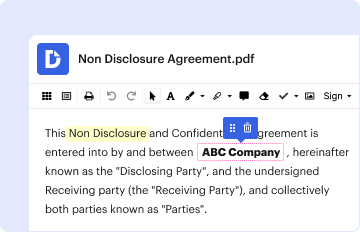
- Access the Form: The form is available exclusively online through the Pay.gov portal.
- Complete the Form: Fill in essential details such as organization's name, EIN, address, and purpose.
- User Fee Payment: Pay the appropriate user fee, which is determined at the time of application submission.
Important Considerations
- Ensure all information matches IRS records to avoid delays.
- Keep a copy of the application and payment receipt for records.
IRS Guidelines for Form 1023-EZ
Compliance and Documentation
- Record Keeping: Maintain thorough records of financial transactions and organizational activities to support your exempt status.
- Annual Filings: Even if exempt, file necessary annual returns using Form 990-N or Form 990-EZ, depending on revenue tiers.
Audit and Verification
The IRS may select certain applications for audit post-approval. Such audits require the organization to provide documentation that substantiates compliance with 501(c)(3) requirements and support statements made in the application.
Important Terms Related to Form 1023-EZ
Commonly Used Terms
- EIN (Employer Identification Number): A unique identification number assigned to your organization for tax purposes.
- User Fee: The fee required for application processing.
- Gross Receipts: Total revenue received by an organization before any expenses.
Compliance Definitions
- 501(c)(3) Status: Refers to the tax-exempt status under the Internal Revenue Code allowing certain organizations to be exempt from federal income tax.
- Charitable Organization: An entity operating exclusively for religious, charitable, scientific, literary, or educational purposes.
Application Process & Approval Time
Timeline and Process
- Application Review: Once submitted, the IRS reviews the application, which can take two to four weeks.
- Notification of Approval: Organizations are notified via email regarding the status of their application.
- Effective Date of Exemption: Exemption is typically effective as of the date of formation if applied within 27 months, or the postmark date of Form 1023-EZ, whichever is later.
Decision Outcomes
- Approval: Upon approval, the IRS issues a determination letter as proof of 501(c)(3) status.
- Rejection: In case of rejection, organizations will receive reasons and are allowed to rectify and resubmit gaps or errors.
Legally Binding Requirements
Signature and Declaration
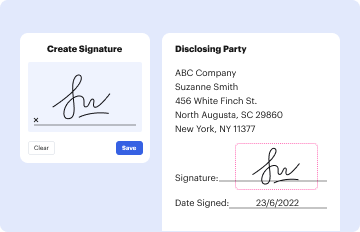
- The individual signing the Form 1023-EZ must be authorized by the organization, attesting to the accuracy and truthfulness of all statements made.
IRS Compliance
- Ensure consistent adherence to operational standards required for 501(c)(3) organizations, such as public benefit operations and limiting private inurement.
State-Specific Requirements
Understanding Variations
Each state might have unique registration or filing requirements for tax-exempt organizations:
- State Registration: Some states require registering as a charitable organization separate from federal applications.
- State Taxes: Verify if state-level tax exemptions are available or need separate applications.
Resourceful Examples
- For instance, California requires nonprofit organizations to register with the Attorney General's Registry of Charitable Trusts, while Texas requires no state-level registration.
Penalties for Non-Compliance
Consequences of Failing to Meet Requirements
- Revocation of Status: Tax-exempt status may be revoked if annual returns are not filed for three consecutive years.
- Monetary Penalties: Failure to comply with IRS regulations can result in fines or penalties.
Maintain strict adherence to annual reporting requirements and operational compliance to avoid any adverse actions from the IRS.