







Definition & Meaning
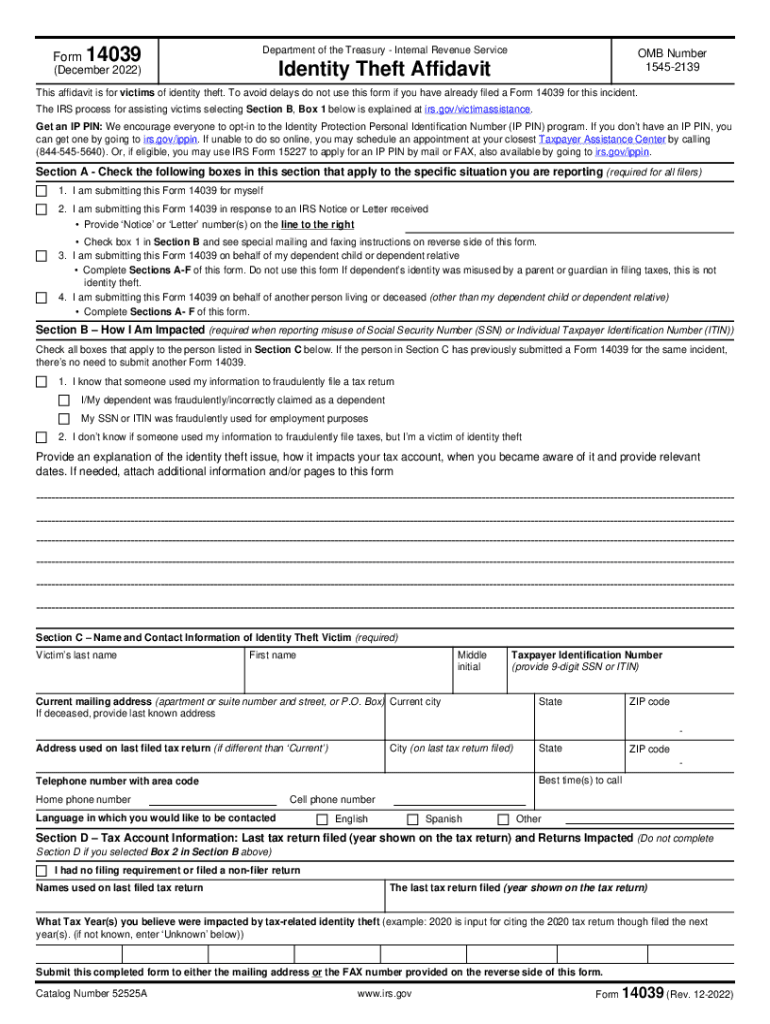
The IRS Form 14039, otherwise known as the Identity Theft Affidavit, is a critical document for individuals who have fallen victim to identity theft, particularly as it relates to tax filings. It is designed to officially report an incident of identity theft to the IRS, ensuring the affected individual's tax matters are protected from fraudulent actions. The form requires detailed reporting of personal information, along with an account of the identity theft incident, to aid the IRS in taking corrective actions. This form also serves as a basis for applying for an Identity Protection Personal Identification Number (IP PIN), a safeguard during future tax filings.
How to Use the Form 14039 (Rev. 12-2022)
The Identity Theft Affidavit should be used when an individual suspects or confirms that someone has fraudulently used their personal information to file tax returns. The form helps in initiating a formal alert with the IRS, marking the taxpayer's records for enhanced scrutiny. Users should complete the form by providing their personal information, a clear description of the identity theft incident, and any relevant supporting documents. If an IP PIN is required, the taxpayer should indicate this within the form, assisting in safeguarding future filings.
Steps to Complete the Form 14039 (Rev. 12-2022)
-
Gather Necessary Information: Before filling out the form, collect any relevant documents, including prior tax returns, identity documents, and any correspondence that supports the identity theft claim.
-
Fill in Personal Details: Enter your full name, Social Security Number, and contact details exactly as they appear on your tax records to avoid discrepancies.
-
Describe the Incident: Provide a detailed account of the identity theft event. This includes when you discovered the unauthorized use of your information and any suspicious activities noted.
-
Select Relevant Checkboxes: Indicate specific reasons for filing the affidavit, such as whether fraudulent tax filings have been made in your name.
-
Submit Required Documentation: Attach copies of any relevant identity verification documents, such as a passport or driver's license, to support the claim.
-
Sign the Affidavit: The form must be signed to confirm the authenticity of the information provided. Unsigned forms may not be processed.
-
Mail or Fax to IRS: Send the completed form and accompanying documents to the appropriate IRS office, as specified in the instructions.
Filing Deadlines / Important Dates
While there is no specific deadline for submitting Form 14039, it is critical to file the affidavit promptly after discovering an incident of identity theft. Delays in reporting can lead to complications in processing your tax returns and addressing fraudulent activities. Users should also be mindful of the general tax filing deadlines, as rectifying records can impact submissions.
Who Typically Uses the Form 14039 (Rev. 12-2022)
Form 14039 is most commonly used by individual taxpayers who have experienced identity theft related to tax filing. This includes scenarios where taxpayers have been notified of suspicious tax returns filed on their behalf, received unexpected tax-related correspondence, or when their personal information has been compromised through data breaches. It can also be used by legal guardians or representatives on behalf of a minor or incompetent person subjected to identity theft.


IRS Guidelines
The IRS provides specific guidelines for the use of Form 14039. Taxpayers are encouraged to file the affidavit as soon as identity theft is suspected, ensuring the agency can immediately take protective measures on their tax accounts. The IRS recommends attaching the form to the top of the fraudulent return if it's being filed with a paper tax return. Follow-up with IRS representatives may be necessary to confirm receipt and processing.
IRS Protection and IP PIN
One of the key protections available through Form 14039 is the issuance of an Identity Protection Personal Identification Number (IP PIN). This six-digit number is assigned to eligible taxpayers and serves as an added layer of security, preventing unauthorized individuals from filing returns in their name. Taxpayers who complete Form 14039 benefit from increased vigilance by the IRS and clearer pathways to resolving tax-related identity theft.
Required Documents
Completing Form 14039 necessitates the submission of supporting documents to verify the claimant’s identity. These include:
- Copies of a government-issued identification, such as a driver’s license or passport.
- Any IRS notices or correspondence related to the identity theft.
- Documentation demonstrating the identity theft, like police reports or affidavits filed with creditors.
These documents aid the IRS in verifying the taxpayer's identity and processing the form efficiently.
Form Submission Methods (Online / Mail / In-Person)
Form 14039 can be submitted by mail or fax directly to the IRS. The specific mailing address or fax number depends on the taxpayer’s geographical location and whether an accompanying tax return is filed. Currently, there is no option to submit Form 14039 online. Taxpayers should carefully review submission instructions outlined in the form's guidelines to ensure accurate and timely delivery to the correct IRS office.




