Policy headwear 2026

Get Form
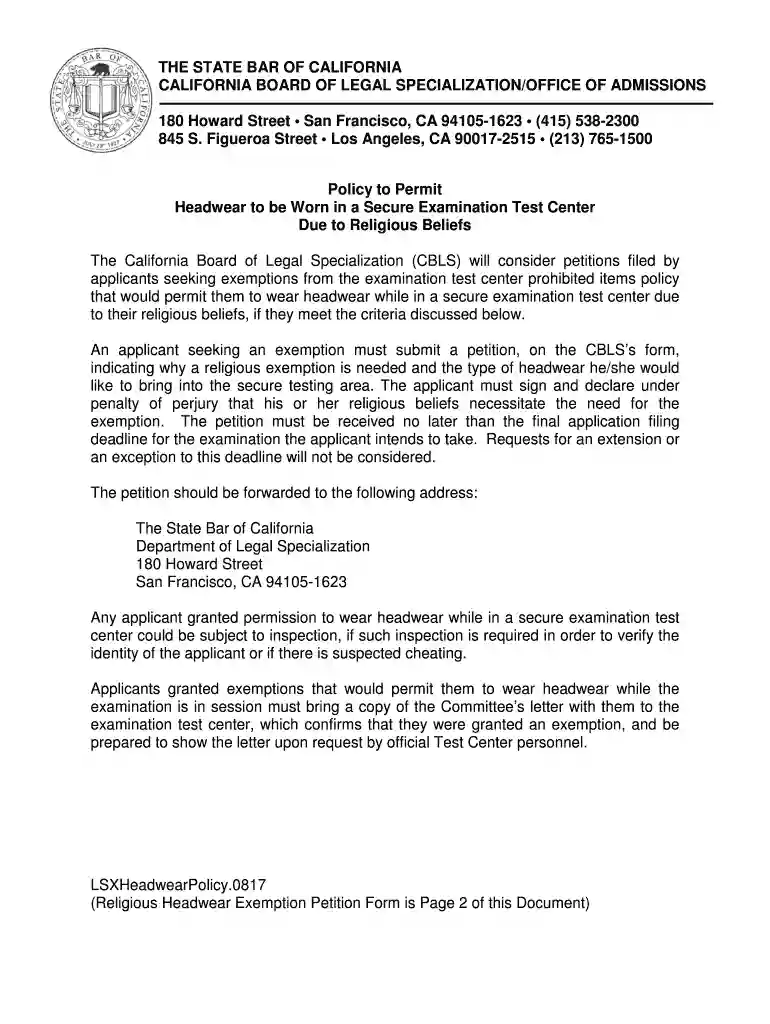
policy headwear Preview on Page 1

Here's how it works

01. Edit your form online
Type text, add images, blackout confidential details, add comments, highlights and more.

02. Sign it in a few clicks
Draw your signature, type it, upload its image, or use your mobile device as a signature pad.

03. Share your form with others
Send it via email, link, or fax. You can also download it, export it or print it out.

Definition and Meaning of Policy Headwear

Policy headwear refers to regulations that allow individuals to wear headwear under specific conditions, such as religious beliefs, in secure environments like examination centers. The policy sets guidelines on how individuals can petition for permission to wear headwear and stipulates the necessary documentation required for submission.

How to Use the Policy Headwear

To utilize the policy, applicants must understand the procedures for submitting a request. The process typically involves completing an application form where the individual outlines their reasons, such as religious obligations, for wearing headwear. Applicants must ensure they understand the submission guidelines, which may include deadlines for submission and required supporting documents.

  • Application Form: Most institutions provide a standard form to request an exemption.
  • Documentation: Supportive documents might include a letter from a religious leader or community.
  • Submission Guidelines: Ensure adherence to deadlines and procedural requirements for consideration.

Steps to Complete the Policy Headwear Application

  1. Obtain the Form: Identify and download the relevant form from the examining institution's website or request it directly.
  2. Fill Out Personal Information: Include complete personal details as required by the form.
  3. Specify the Reason: Clearly document why headwear is essential for you, emphasizing religious or cultural significance.
  4. Attach Supporting Documents: Include letters or certifications from religious authorities if necessary.
  5. Submit the Form: File the form and all supporting documents by the specified deadline through the preferred submission method.

Key Elements of the Policy Headwear

The policy contains specific elements that define its structure and function. Key elements include:

  • Eligibility Criteria: The policy defines who can apply, usually based on religious needs or cultural practices.
  • Documentation Requirements: Details on what documents must accompany an application.
  • Review Process: How each application will be assessed and the criteria used in decision-making.
  • Approval Conditions: Conditions under which approvals are typically granted.

Who Typically Uses the Policy Headwear

Policy headwear is most commonly used by individuals who belong to religious groups that prescribe wearing certain types of headwear as an essential part of their faith. These could include:


  • Religious Observers: Such as Muslims, Sikhs, or Jews who are required to wear headscarves, turbans, or yarmulkes.
  • Cultural Practitioners: Participants in cultural traditions that involve specific headwear.
  • Intersectional Groups: People who belong to multiple categories where wearing headwear is a requirement or expectation.
decoration image ratings of Dochub

Legal Use of Policy Headwear

Legal frameworks support the use of policy headwear, especially under laws that protect religious freedoms. The policy must align with broader legal principles, ensuring that:

  • Religious Freedom: Individuals' rights to express their religious beliefs are protected.
  • Non-Discrimination: Applicants are treated fairly without discrimination.
  • Compliance with Local Laws: The policy observes relevant local and federal legislation protecting individual rights.

Examples of Using the Policy Headwear

Several real-world scenarios illustrate how individuals navigate these policies:

  • Student Examinations: A Muslim student petitions to wear a hijab during standardized testing due to religious practice.
  • Professional Certifications: A Sikh lawyer requests to wear a turban during a bar exam for religious observance.
  • Cultural Events: An individual wishes to retain traditional headwear during a cultural certification exam or event.

Who Issues the Policy Headwear Form

These forms are generally issued by the governing body responsible for the examination or certification process. Organizations such as:

  • Educational Boards: For standardized educational exams at the state or national level.
  • Certification Authorities: Professional bodies overseeing exams in fields like law or medicine.
  • Cultural Institutions: Boards that may require recognition of traditional cultural practices during certified events.

Software Compatibility and Submission Methods

Understanding the technological aspects and submission types for policy headwear is crucial:

  • Digital Compatibility: Ensure that submission forms can be filled digitally or scanned for electronic submission.
  • Submission Methods: Usually available online, via mail, or in-person, depending on the institution.
  • Software Integration: Some institutions may use specific software platforms for managing submissions, requiring compatibility checks.

Important Terms Related to Policy Headwear

A firm grasp of terminology is necessary to navigate the policy efficiently:

  • Exemption: An official permission allowing deviation from standard regulations.
  • Petition: A formal request application submitted to obtain approval.
  • Cultural Headwear: Headgear worn for cultural or traditional reasons, specific to a community or ethnic group.

Filing Deadlines and Important Dates

Staying informed about critical timelines is essential for a successful application:

  • Submission Deadlines: Understand the cut-off dates by which applications must be submitted.
  • Decision Dates: Dates when applicants can expect responses regarding their requests.
  • Additional Documentation: Schedule for filing any additional required supporting documents post-initial submission.

State-Specific Rules for Policy Headwear

Recognizing variations in policy implementation across states is important:

  • State Regulations: Some states may impose additional requirements or modifications based on local laws.
  • Diverse Cultural Practices: States with more significant cultural diversity may have more flexible or comprehensive policy adaptations.
  • Compliance Requirements: Ensuring adherence to both state-specific and federal regulations.

See more policy headwear versions

We've got more versions of the policy headwear form. Select the right policy headwear version from the list and start editing it straight away!
Versions Form popularity Fillable & printable
2017 4.9 Satisfied (26 Votes)
be ready to get more

Complete this form in 5 minutes or less

Get form

Got questions?

We have answers to the most popular questions from our customers. If you can't find an answer to your question, please contact us.
Contact us
Headdresses across different religions serve as powerful symbols of faith, modesty, and cultural identity. They reflect the deep spiritual beliefs and practices of individuals and communities, emphasizing the importance of humility, reverence, and commitment to religious principles.
In the world of headwear, Pillbox hats have held iconic status since the 1950s. Synonymous with Jackie Kennedy and Audrey Hepburn and favoured today by the Duchess of Cambridge, pillbox hats ooze sophistication, elegance and understated style.
Headgear can be an article of fashion, usually hats, caps or hoods.
Bigger than a barrette, modern fascinators are commonly made with feathers, flowers or beads. They need to be attached to the hair by a comb, headband or clip. They are particularly popular at premium horse-racing events, such as the Grand National, Kentucky Derby and the Melbourne Cup.
Identity and Belonging: Headwear often signifies membership in a religious group, tribe, or social class. Adornment and Beauty: In many cultures, hats and headwraps are adorned with intricate designs, showcasing creativity and cultural pride.

Security and compliance

At DocHub, your data security is our priority. We follow HIPAA, SOC2, GDPR, and other standards, so you can work on your documents with confidence.

Learn more
ccpa2
pci-dss
gdpr-compliance
hipaa
soc-compliance