



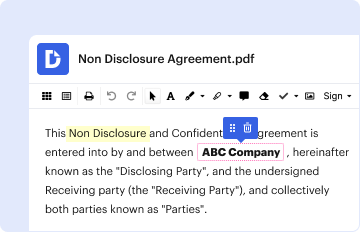
01. Edit your hw 14 online
Type text, add images, blackout confidential details, add comments, highlights and more.

Type text, add images, blackout confidential details, add comments, highlights and more.
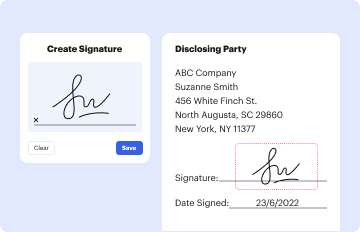
Draw your signature, type it, upload its image, or use your mobile device as a signature pad.

Send hawaii hw 14 via email, link, or fax. You can also download it, export it or print it out.
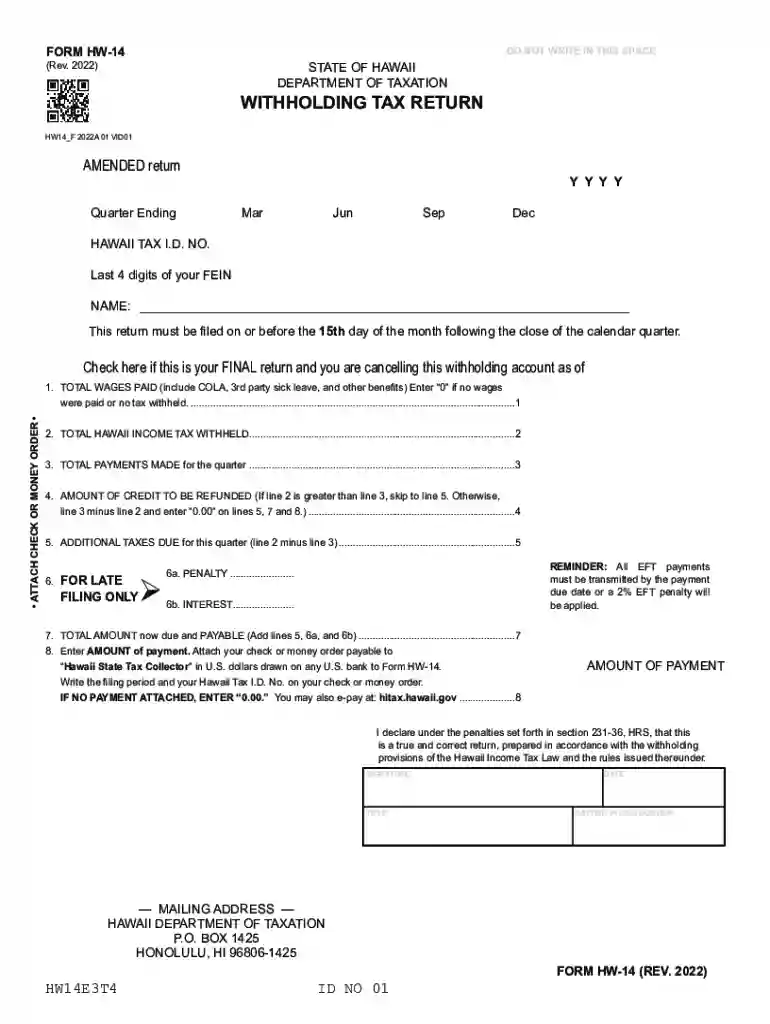
Form HW-14, also known as the Hawaii Withholding Tax Return, is a mandatory document used by employers in the state of Hawaii. It facilitates the quarterly reporting of wages paid to employees and the corresponding income tax withheld. The document is crucial for maintaining compliance with state tax regulations, ensuring that the employer accurately accounts for taxes deducted from employee wages.
Employers must accurately report total wages, taxes withheld, and any penalties or interest incurred due to late submissions. This tax return is essential for transparency between employers and the state tax authorities, substantiating the financial interactions involving employee wages.
To properly utilize the Form HW-14, employers should begin by gathering all necessary payroll information for the relevant quarter. This includes details about employee wages, as well as the total amounts deducted for state withholding taxes.
Form HW-14 serves as a record of financial accountability for employers, reflecting due diligence in adhering to state tax requirements.
Ensure all entries are backed by thorough documentation as inaccuracies can lead to processing delays and possible penalties.
Familiarity with these terms simplifies the process of completing and understanding the implications of Form HW-14 filings.
Employers must submit Form HW-14 by the 15th day following the end of each quarter. The specific due dates are:
Meeting these deadlines is crucial to avoid late penalties and ensure compliance with state tax regulations.
Form HW-14 is primarily used by employers in Hawaii to report the taxes withheld from employee wages. This form is essential for:
By fulfilling HW-14 requirements, these entities demonstrate adherence to state laws governing employee taxation.


Failure to submit Form HW-14 on time can result in substantial penalties. The state imposes fines for late submissions, inaccurate reporting, or failure to remit the correct withholding amount. Employers may be liable to pay:
Prompt submission and accurate reporting are key to avoiding these punitive measures.
Employers can choose between digital and paper formats for submitting Form HW-14.
Online filing is generally recommended, given its advantages in speed and convenience.
We've got more versions of the hw 14 form. Select the right hw 14 version from the list and start editing it straight away!
At DocHub, your data security is our priority. We follow HIPAA, SOC2, GDPR, and other standards, so you can work on your documents with confidence.


