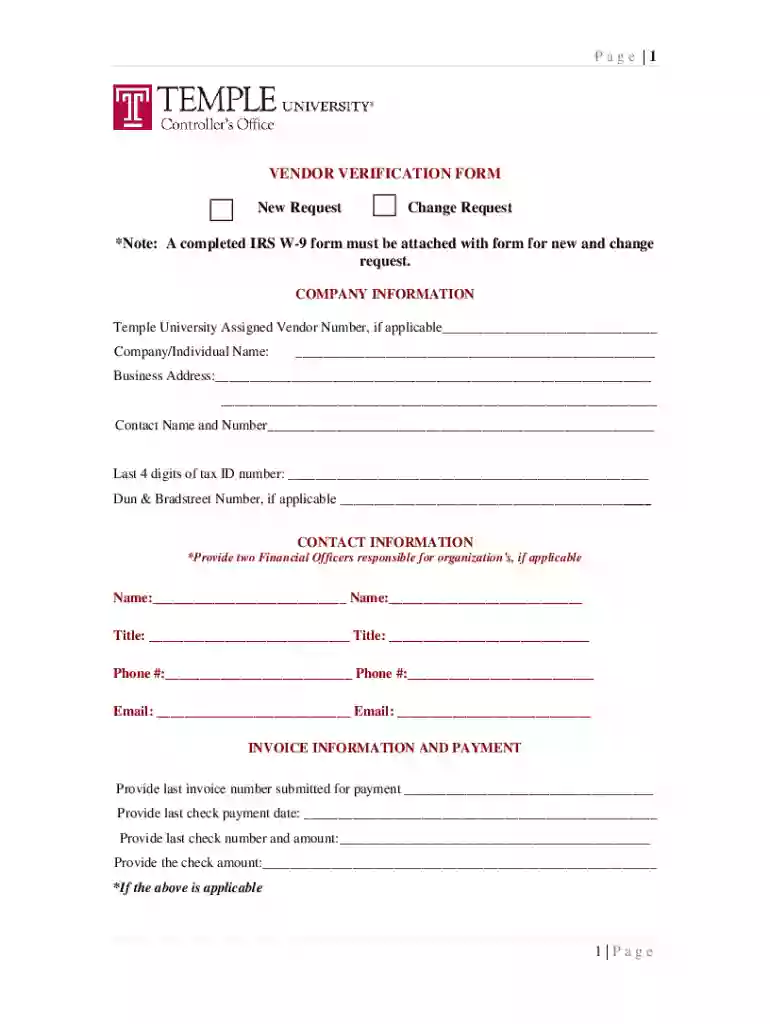
Definition and Meaning of a Change Request
A Change Request is a formal proposal for an adjustment to a system or document. This form is often used in various industries to modify vendor information, project plans, or systems. In a business setting, a Change Request typically involves updating significant data, such as vendor details, financial officer contacts, invoice terms, or remittance addresses. The purpose is to maintain accurate, up-to-date records, ensuring that all operations, payments, and communications align with current realities. This process helps prevent discrepancies and errors, facilitating more efficient business operations.
Common Use Cases
- Vendor Information Updates: Organizations use Change Requests to update or alter vendor information, integral for maintaining accurate financial and communication records.
- Project Management: In project management, such requests may involve changes to project scope, timelines, or specifications, requiring careful documentation and approval to align stakeholders.
- IT and System Adjustments: For IT departments, Change Requests are essential for modifying systems, managing software upgrades, or implementing new features without disrupting existing operations.
Steps to Complete the Change Request
Completing a Change Request involves several key steps to ensure accuracy and compliance. The process typically begins with identifying the need for the change and ends with implementing the approved request.
Step-by-Step Instructions
- Identify the Need for Change: Determine what aspect of the current setup requires modification. Clearly articulate the reason for the change and its intended outcomes.
- Complete Change Request Form: Fill out necessary sections of the form, including detailed information about the change, its impact, and justification. Ensure all data, such as vendor updates or system modifications, are accurately captured.
- Attach Supporting Documents: Gather and attach any additional documentation required, such as the IRS W-9 form, prior approvals, or financial statements, to provide context and validate the necessity of the change.
- Submit for Approval: Send the completed form to the appropriate department or individual for review. This may involve your manager, a project lead, or a financial officer.
- Implement Change: Once approved, proceed to implement the necessary changes, whether updating records, altering system settings, or informing relevant stakeholders.
- Monitor and Review: After implementation, monitor the change for its intended effect, ensuring there are no adverse impacts or further adjustments required.
Considerations and Exceptions
- Urgent Changes: Certain situations, such as immediate security risks, may necessitate expedited processing.
- Interdepartmental Changes: Changes affecting multiple departments require broader consultation and approval to ensure all parties are on board.
Required Documents for Change Requests
Completing a Change Request often requires supporting documentation to provide comprehensive background and validation for the proposed alteration.
Essential Documents
- IRS W-9 Form: Often mandatory when updating vendor-related financial information, providing taxpayer identification and certification of information.
- Financial Reports: Current financial statements or budget reports might be needed to justify changes affecting financial aspects.
- Approval Forms: Previous approvals or managerial sign-off can strengthen the request, demonstrating consensus.
Document Submission Tips
- Digital Copies: Whenever possible, submit digital copies through secure channels, ensuring the documents are easily accessible and protected.
- Proper Labeling: Clearly label all attachments with relevant information, such as document type and applicable dates, to streamline review processes.
Typical Users
- Project Managers: Use the form to adjust project plans, timelines, and resources to align with revised goals or constraints.
- Financial Officers: Often manage changes to vendor agreements, payment terms, or financial reporting structures.
- IT Professionals: Implement system changes, updates, or new software features to improve operational efficiency and security.
- Vendors: Submit Change Requests to update their contact information, bank details, or product listings to the companies they supply.
Industry-Specific Applications
- Healthcare: Medical facilities might use Change Requests to update equipment maintenance schedules or vendor contracts.
- Education: Universities may require Change Requests for curriculum adjustments or changes to staff assignments.
Legal Use of the Change Request
The Change Request process must adhere to legal standards and contractual obligations, ensuring that all modifications comply with applicable laws and agreements.
Compliance Requirements
- Contractual Obligations: Must reflect any contract terms that specify allowable changes and required approvals, protecting all parties' legal interests.
- Data Protection Laws: Changes involving personal or sensitive information must comply with data protection regulations like HIPAA or GDPR.
- Legal Binding: Include signatures from authorized individuals to legally bind the parties to the agreed changes, ensuring accountability.
Legal Considerations
- Audit Trails: Maintain clear records of all Change Requests and approvals to support legal inquiries and audits.
- State-Specific Laws: Be aware of any specific state regulations that might affect how and when changes can be made, particularly in government contracts or public sector engagements.
Key Elements of a Change Request
Understanding the fundamental components of a Change Request ensures that the form is completed accurately and effectively.
Core Sections
- Identification Information: Includes the requestor's and affected party's names, contact information, and relevant vendor IDs.
- Change Description: Clearly defines what is changing and why, detailing the proposed modifications and expected outcomes.
- Impact Analysis: Assesses the change's potential impact on operations, stakeholders, and any associated costs or timelines.
- Approval Signatures: Provides spaces for required signatories to authorize the change, validating the requester's and reviewer's roles.
Optional Sections
- Risk Assessment: Evaluates potential risks and mitigation strategies, guiding decision-makers in approving the change.
- Timeline for Implementation: Proposes a schedule for when the change should take effect, accounting for preparation and follow-up activities.
Examples of Using the Change Request
Practical examples of Change Requests illustrate their application and utility across various scenarios.
Real-World Scenarios
- Vendor Change: A hospitality company submits a Change Request to update payment details for a catering vendor, ensuring timely invoice processing.
- Project Scope Adjustment: An IT firm uses a Change Request to alter project scope, incorporating additional features responsive to client feedback.
- System Update: A healthcare network issues a Change Request to upgrade software that manages patient records, improving data handling and security.
Case Studies
- Successful Implementation: A retail chain streamlined communication with suppliers by implementing standardized Change Requests for all vendor updates.
- Improved Efficiency: A construction company reduced project delays by institutionalizing a robust Change Request process, prioritizing clear documentation and rapid approval.