
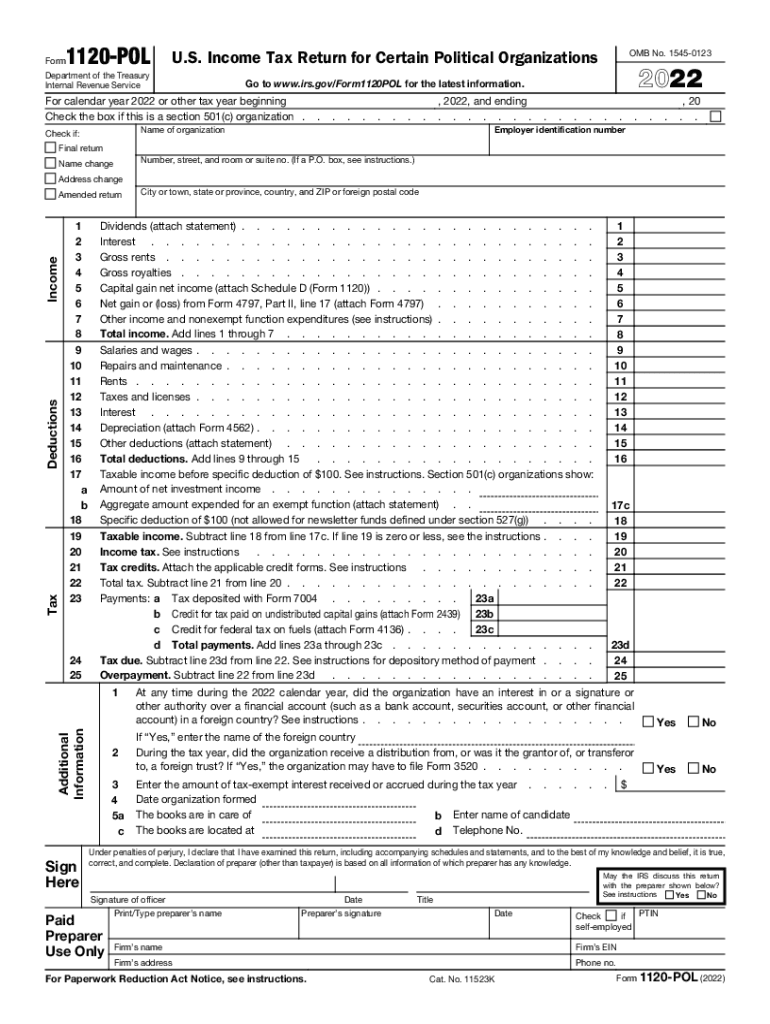







Definition and Purpose of Form 1120-POL
Form 1120-POL, U.S. Income Tax Return for Certain Political Organizations, is used by qualifying political organizations to report their taxable income and tax liability under section 527 of the Internal Revenue Code. This form is essential for any political organization that has taxable income and seeks to comply with federal tax obligations. By understanding the intricacies of this form, political organizations can accurately calculate and report any taxes owed, avoiding potential penalties for non-compliance.
What is a Political Organization?
For Form 1120-POL purposes, a political organization is defined as a party, committee, association, fund, or similar group organized and operated primarily for the purpose of directly or indirectly accepting contributions or making expenditures to influence the selection, nomination, election, or appointment of any individual to a public office or political organization.
Primary Tax Obligations
Political organizations with any taxable income must report it using Form 1120-POL. This includes both gross income and any deductions the organization is entitled to under the tax code. The key sections of the form cover income, deductions, and tax calculations, providing a comprehensive framework for the organization’s fiscal responsibilities.
Steps to Complete Form 1120-POL
Understanding the Form Structure
Completing Form 1120-POL requires a thorough understanding of its structure and the types of information each section demands. The main components include the title section, where basic organizational information is recorded, and several schedules that require precise data entry related to income, deductions, and tax credits.
- Income Section: Start by reporting all sources of taxable income, including interest, dividends, capital gains, and other applicable revenues.
- Deductions and Credits: Identify and claim all eligible deductions. This can include ordinary business expenses that are typically permitted under the Internal Revenue Code.
- Tax Calculation: Use the reported figures from the income and deductions sections to calculate the organization’s taxable income and ultimately, the tax owed.
- Signature and Date: End by having an authorized individual sign and date the form, affirming its accuracy and completeness.
Eligibility Criteria for Form 1120-POL


Who Must File?
Not every political organization is required to file Form 1120-POL. Only those with taxable income after allowable deductions exceeding $100 during the fiscal year must submit this form. To determine liability, organizations must assess whether they had gross income from sources outside of political functions, such as investment income.
Exceptions to Filing Requirements
Certain small political organizations with negligible taxable income may not need to file if their income remains under the reporting threshold. However, all political organizations are advised to maintain thorough records and consult with a tax professional to ensure compliance with IRS requirements.
Important Deadlines for Submission
Filing deadlines for Form 1120-POL adhere to the standard fiscal year-end used by the organization. For example, if your organization's fiscal year aligns with the calendar year, the deadline for submission typically falls on April 15 of the following year. Timeliness is crucial, as delays can result in penalties and interest charges on unpaid taxes.
Extension Procedure
If an organization is unable to meet the filing deadline, it can request an extension using Form 7004, Application for Automatic Extension of Time to File Certain Business Income Tax, Information, and Other Returns. The extension request generally provides an additional six months for filing, but not for paying any taxes due.
Required Supporting Documents
Completing Form 1120-POL accurately requires accessibility to various supporting documents that verify reported income and deductions. These might include bank statements, invoices, receipts for expenditures, and documentation of contributions received or made.
Maintaining Proper Record
Political organizations should implement a robust system for record-keeping, ensuring that all documentation can be retrieved efficiently for both current and past tax years. This is essential not only for factual accuracy when filing but also in case of an IRS audit or request for clarification.
Submission Methods for Form 1120-POL
Form 1120-POL can be filed using several methods, each offering different conveniences. While traditional mail submission is widely utilized, electronic filing through IRS e-file is recommended for its speed and efficiency. This platform allows instantaneous submission and confirmation of receipt.
Benefits of Electronic Filing
- Error Reduction: The e-filing system provides real-time checking for common errors, reducing the likelihood of mistakes that can delay processing.
- Speed: Faster processing times mean quicker assessments of potential refunds or confirmations of amounts owed.
- Confirmation: Receive immediate confirmation of form acceptance by the IRS, giving you peace of mind.
Penalties for Non-Compliance
Failure to file Form 1120-POL or incorrectly filing it can lead to significant penalties for political organizations. Incomplete forms, inaccuracies, or missed deadlines can result in financial penalties, which can strain the organization’s resources.
Common Penalties
- Late Filing Penalty: Imposed for forms submitted past the due date without an approved extension.
- Accuracy-Related Penalty: Charged when there’s significant understatement of taxable income.
Organizations are encouraged to seek professional advice if uncertainty exists regarding their tax reporting responsibilities to avoid these costly penalties.
IRS Guidelines for Political Organizations
The IRS provides comprehensive guidance for completing Form 1120-POL effectively. Official publications outline specific requirements and examples, helping political organizations navigate the complexities of tax reporting.
Seeking Further Assistance
For those requiring additional clarification, the IRS website is a resourceful tool. Tax professionals can further aid organizations by ensuring all required criteria and documentation are satisfied effectively and efficiently.
Common Scenarios Affecting Form 1120-POL Filing
Political Committees
Committees that raise or spend money to influence elections or policy should be particularly attentive to Form 1120-POL requirements to ensure all revenue is appropriately reported and taxed.
Non-Profit Organizations
Non-profit entities with political arms may also need to file Form 1120-POL if they engage in political activities resulting in taxable income.
By approaching Form 1120-POL filing with an accurate understanding of its structure, deadlines, and requirements, political organizations can ensure compliance with U.S. tax law, avoiding potential penalties and fostering transparency in their financial operations.




