Definition and Meaning
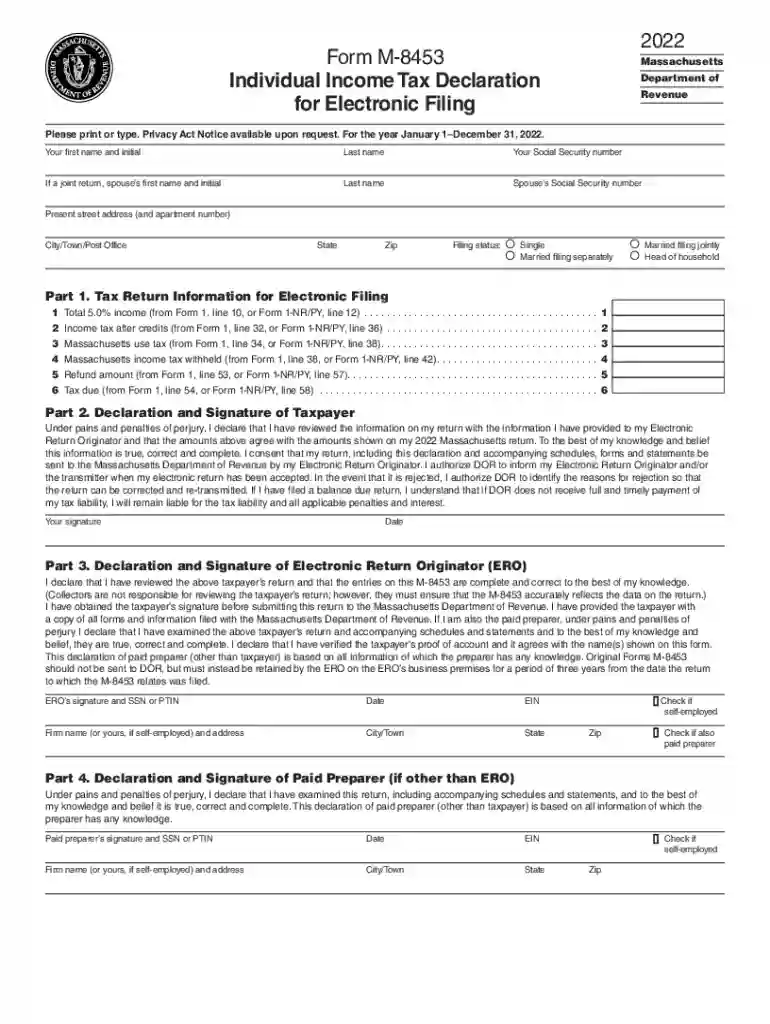
The PA-8453 (EX) 10-21 form is a tax declaration document used by those filing an extension for their Pennsylvania state taxes electronically. Officially issued by the Pennsylvania Department of Revenue, the form serves as an Electronic Declaration for Tax Extensions. It contains essential information such as taxpayer identification details, the type of tax extension being requested, and a declaration of accuracy. The form acts as a bridge between taxpayers and electronic filing systems, facilitating a formal request to extend the timeframe for tax submission while ensuring compliance with state requirements.
Purpose of the Form
The primary purpose of the PA-8453 (EX) 10-21 form is to validate and authorize the electronic extension request made by a taxpayer. This form confirms that the taxpayer understands and agrees with the information provided within the electronic filing system. Additionally, it helps the Pennsylvania Department of Revenue maintain accurate records of extension requests, ensuring their database reflects all pending tax submissions accurately.
Form Components
- Taxpayer Information: Includes name, Social Security Number (SSN), and contact details.
- Extension Type: Specifies the type of tax or return for which the extension is being sought.
- Signatures: Both the taxpayer and Electronic Return Originator (ERO) must sign the form to authenticate the extension request.
Steps to Complete the PA-8453 (EX) 10-21
Filling out the PA-8453 (EX) 10-21 involves several distinct steps to ensure the form is completed correctly:
- Gather Required Information: Collect necessary details such as taxpayer identification, income figures, and extension type.
- Access the Form: Obtain the latest version of the PA-8453 (EX) 10-21 from the Pennsylvania Department of Revenue or authorized electronic filing platforms.
- Complete Taxpayer Details: Fill in personal information like name, SSN, and address.
- Select Extension Type: Indicate the type of extension being requested by checking the appropriate box.
- Verify Data Accuracy: Double-check all entries for correctness and completeness.
- Sign the Declaration: Sign the form alongside the ERO to validate the electronic extension request.
Common Mistakes to Avoid
- Omitting the taxpayer or ERO signature.
- Entering incorrect or outdated personal information.
- Failing to specify the correct extension type.
How to Obtain the PA-8453 (EX) 10-21
Acquiring the PA-8453 (EX) 10-21 form is a straightforward process:
- Online Access: Visit the Pennsylvania Department of Revenue website to download the form. It's available under the forms or publications section.
- Tax Software Services: Many electronic filing services provide direct access to this form as part of their tax extension filing package.
- Tax Professional Services: Engage with a licensed tax professional who can supply the form and assist in its completion.
Factors Influencing Retrieval Method
- Filing Preferences: Those who prefer online solutions may opt for downloading, while others might rely on professionals.
- Technological Comfort: Individuals with limited internet access or technological expertise may choose paper copies from professionals.
Usage By Different Taxpayers
- Self-Employed Individuals: Often require extension requests due to fluctuating income reports.
- Retirees with Multiple Income Sources: May need more time to consolidate information from various retirement accounts.
Important Terms Related to PA-8453 (EX) 10-21
Understanding specific terminologies associated with the PA-8453 (EX) 10-21 form is essential to completing it successfully:
- Taxpayer Identification Number (TIN): A unique identifier for individuals or businesses used for tax purposes.
- Electronic Return Originator (ERO): An individual or business authorized to manage electronic tax filings on behalf of others.
- Declaration of Accuracy: A formal acknowledgement asserting that the information provided is true and accurate to the best of the signer's knowledge.
Key Acronyms
- SSN: Social Security Number.
- PA DOR: Pennsylvania Department of Revenue.
Legal Use of the PA-8453 (EX) 10-21
The legal framework surrounding the PA-8453 (EX) 10-21 ensures compliance with Pennsylvania tax regulations:
- Authorizes Tax Extensions: Legally permits taxpayers to submit their returns after the initial deadline without incurring penalties.
- Validation of Electronic Submissions: Acts as a legal certification that the taxpayer has requested an extension via electronic filing methods.
- Implications for Non-Compliance: Failure to submit the form within specified timelines may result in penalties or interest charges on unpaid taxes.
Legal Frameworks
- State Regulations: Governed by Pennsylvania state laws dictating tax submission processes and extension authorization.
- Federal Considerations: Ensures alignment with federal electronic filing standards for comprehensive compliance.
Filing Deadlines and Important Dates
The PA-8453 (EX) 10-21 form must be submitted by specific deadlines to qualify for an extension:
- Standard Filing Deadline: Typically April 15, aligning with federal tax deadlines.
- Extension Filing Deadline: Generally allows a six-month extension, moving the deadline to October 15.
- Early Notification: Taxpayers are advised to file the PA-8453 (EX) well before the standard deadline to ensure proper processing.
Key Timing Considerations
- Business vs. Personal Extensions: Business entities may have varying deadlines, necessitating awareness of specific filing requirements.
- Impact of Weekends and Holidays: Extensions that fall on weekends or holidays may shift deadlines to the next business day.
Required Documents for Form Completion
Before completing the PA-8453 (EX) 10-21, gather the necessary documents to streamline the process:
- Personal Identification: Copy of SSN or TIN documentation.
- Income Records: Previous year's tax return, current income statements, and any relevant financial documents.
- Authorization Identification: Proof of ERO status, if applicable.
Additional Documentation for Businesses
- Business Registration Details: Necessary for corporate entities.
- Financial Forecasts: May help justify the need for an extension in complex financial scenarios.
Key Elements of the PA-8453 (EX) 10-21
Identifying the crucial components of the PA-8453 (EX) 10-21 ensures thorough understanding and accurate completion:
- Taxpayer's Declaration: Critical for confirming awareness and acceptance of the terms and conditions related to the requested extension.
- Signature Sections: Essential for validating the form's authenticity and legal compliance.
- Date of Submission: Indicates the precise timing of the extension request, vital for meeting deadlines.
Understanding Each Element
- Data Consistency: Ensures that details entered are consistent with those on file with the Pennsylvania Department of Revenue.
- Reference to Applicable Laws: These sections often cite specific legal requirements, underscoring the form’s regulatory framework.
Examples of Using the PA-8453 (EX) 10-21
Practical examples highlight common scenarios where the PA-8453 (EX) 10-21 form is typically utilized:
- Case Study 1: An independent contractor anticipates challenges in compiling all income sources by the April deadline. By filing this form, they secure a deadline extension, allowing for accurate completion.
- Case Study 2: A small business facing unexpected resource constraints uses the form to extend their filing deadline, ensuring compliance without penalties.
- Scenario 3: A couple undergoing significant life changes, such as relocation or family expansion, chooses to extend their state tax filing to accommodate required adjustments.
Illustrative Scenarios
- Self-Employed Complexities: Often feature multiple revenue streams, complicating immediate calculations.
- Corporate Financial Reviews: Detailed fiscal audits may necessitate extension requests for comprehensive reporting.