




01. Edit your 2021 ohio it 1040 online
Type text, add images, blackout confidential details, add comments, highlights and more.

Type text, add images, blackout confidential details, add comments, highlights and more.

Draw your signature, type it, upload its image, or use your mobile device as a signature pad.

Send ohio it 1040 instructions 2022 via email, link, or fax. You can also download it, export it or print it out.
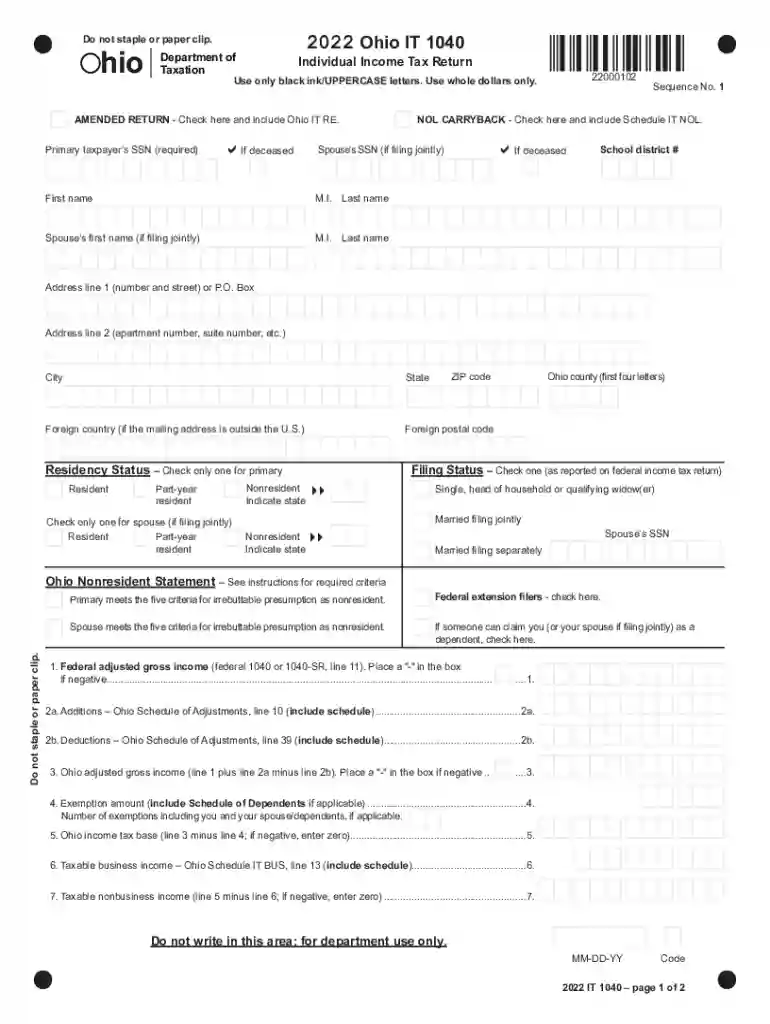
The Ohio IT 1040 form is the standard individual income tax return used by residents to report their income and calculate any state tax liabilities. This form is integral for Ohio residents to declare their earnings, claim applicable deductions, determine credits, and finalize their tax responsibilities. The Ohio IT 1040 requires meticulous data entry on various types of income streams, including wages, business income, and investment revenues. It also allows filers to specify their residency status and choose among different filing statuses.
Personal Information: Begin by entering your personal information, including your name, address, and Social Security number. Ensure accuracy to avoid processing delays.
Income Sources: Report all income sources for the fiscal year, including salaries, wages, dividends, and other earnings. Ensure each entry corresponds to the correct fields.
Deductions and Credits: Identify and record eligible deductions and credits. This section can involve mortgage interest, education credits, or retirement savings contributions.
Tax Calculations: Use the form’s instructions to calculate your total income taxes due. Compare your total tax liability with any estimated payments or withholdings already made.
Review and Sign: Double-check all entries for accuracy. Complete the form by signing it, affirming the truthfulness of all information provided.
Ohio tax returns are generally due by April 15th each year. If the date falls on a weekend or holiday, the deadline moves to the next business day. Taxpayers filing after the deadline without an approved extension may face penalties. Extensions can be requested if submitted before the original due date, granting an additional six months to file.
Filing the Ohio IT 1040 accurately and on time ensures compliance with state tax regulations, avoiding penalties and interest from overdue taxes. The form's submission verifies that taxpayers have calculated their taxes correctly and have met payment obligations. It also assists the state in maintaining an accurate record of taxpayer contributions.
This form is utilized by various individuals, including:
It is also applicable to self-employed individuals and retirees to meet state income tax filing requirements.


Ohio has unique tax regulations that differ from federal guidelines. For example, Ohio offers a specific exemption for Social Security income that may not apply to other states. It also has a distinct set of credits and reduced rates for pass-through entity income, emphasizing the importance of adherence to state-specific instructions.
While the Ohio IT 1040 form adheres to state tax codes, it still requires consistency with federal tax returns. Aligning both filings will reduce discrepancies that might trigger audits or amendments. The IRS does not receive the Ohio IT 1040, but your federal forms serve as a baseline for state tax return validation.
Keeping these documents organized is crucial for a smooth and accurate filing process. They support the entries made on the Ohio IT 1040, serving as evidence in cases of audit or review.
We've got more versions of the 2021 ohio it 1040 form. Select the right 2021 ohio it 1040 version from the list and start editing it straight away!
| Versions | Form popularity | Fillable & printable |
|---|---|---|
| 2024 | 4.6 Satisfied (30 Votes) | |
| 2023 | 4.6 Satisfied (37 Votes) | |
| 2022 | 4.2 Satisfied (24 Votes) | |
| 2021 | 4.2 Satisfied (43 Votes) | |
| 2020 | 4.8 Satisfied (113 Votes) | |
| 2019 | 4.4 Satisfied (193 Votes) | |
| 2018 | 4.2 Satisfied (94 Votes) | |
| 2017 | 4.4 Satisfied (219 Votes) | |
| 2016 | 4.4 Satisfied (161 Votes) | |
| 2016 | 4 Satisfied (25 Votes) | |
| 2015 | 4 Satisfied (67 Votes) | |
| 2013 | 4.2 Satisfied (95 Votes) | |
| 2009 | 4 Satisfied (54 Votes) |
At DocHub, your data security is our priority. We follow HIPAA, SOC2, GDPR, and other standards, so you can work on your documents with confidence.
Learning to Live Without Form 1040, 75 TAX LAW. 411 (2022). The Curious State U.S. Tax Law Distinction Between. Medical Care and Cosmetic SurgeryRead more
Apr 23, 2026 Use Form 8888 to directly deposit your refund (or part of it) to one or more accounts at a bank or other financial institution.Read more


