
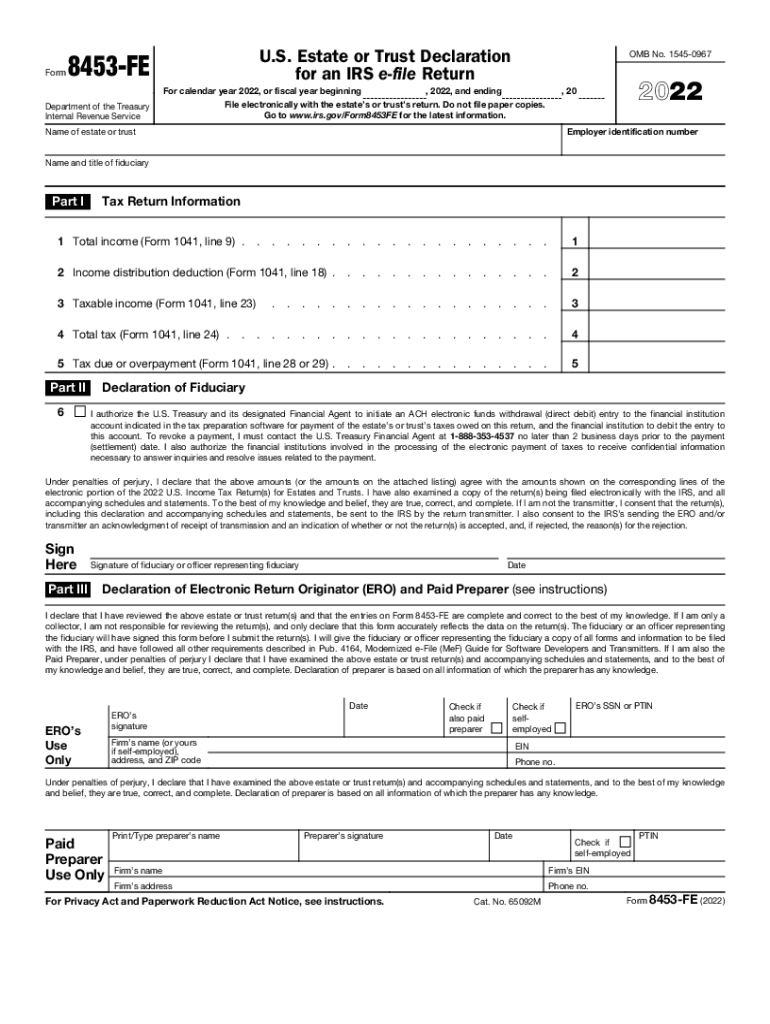







Definition and Purpose of the 2022 Form 8453-FE
The 2022 Form 8453-FE, known officially as the U.S. Estate or Trust Declaration for an IRS e-file Return, plays a crucial role in fulfilling IRS requirements for electronically filed tax returns for estates and trusts. This form serves three primary purposes: it authenticates the electronically filed U.S. Income Tax Return for Estates and Trusts (Form 1041), authorizes a third-party transmitter to send the return, and permits any electronic funds withdrawal for tax payments. By requiring fiduciary declarations and signatures from involved parties, including EROs, Form 8453-FE ensures legal compliance and smooth processing.
IRS Guidelines for Form 8453-FE
Authentication and Authorization
- Authentication of Return: Form 8453-FE acts as a manual endorsement of the electronic return by the fiduciary, adding a layer of authenticity.
- Third-Party Authorization: Permits the designated ERO or tax preparer to transmit the return electronically, ensuring a clear chain of responsibility.
Privacy and Security
- Privacy Notices: Contains required disclosures to inform about the use and sharing of information included in the return.
- Data Encryption: Adheres to IRS guidelines on securing data during transmission and storage.
Steps to Complete the 2022 Form 8453-FE
Gathering Necessary Information
- Identify Participants: Determine the fiduciary, ERO, and any paid preparers involved.
- Financial Details: Collect tax return information relevant to the estate or trust.
Completing the Form
- Fill in Fiduciary Information: Input the estate or trust’s legal name and EIN.
- Authorize Third Parties: Add details of any third-party transmitters.
- Signatures: Secure signatures from the fiduciary, ERO, and other preparers.
Submission
- Electronic Filing: Attach the completed 8453-FE form when filing Form 1041 electronically.
- Deadlines: Ensure submission aligns with IRS filing deadlines to avoid penalties.
Key Elements of the 2022 Form 8453-FE
Fiduciary Declarations
- Accurate Reporting: Ensures all information is reported accurately and verifiably.
- Legal Responsibility: Confirms the fiduciary’s acknowledgment of their role and responsibilities.
Signatures and Authorizations
- Multiple Signatories: Requires signatures from all involved parties to validate the form’s contents.
- Role Clarification: Distinguishes between fiduciary, paid preparer, and ERO duties.
Who Typically Uses the 2022 Form 8453-FE
The use of Form 8453-FE is largely by fiduciaries managing estates or trusts, as well as professional tax preparers and EROs. These participants use the form to meet legal filing requirements when filing Form 1041 electronically. The form is essential for:
- Fiduciaries: Those overseeing estate or trust financial management.
- Tax Professionals: CPAs and EROs ensuring compliance with e-file mandates.


Legal Use and Compliance for Form 8453-FE
Compliance Requirements
- Filing Accuracy: Ensures legal obligations are met for e-filing under IRS regulations.
- Penalties for Non-Compliance: Failure to submit accurate and signed forms can lead to IRS penalties.
Legal Implications
- Binding Declarations: Represents an agreement to the truthfulness and completeness of all submitted tax information.
Form Variants and Versions
Associated Forms
- Form 8453 Series: Includes variants like Form 8453-C or 8453-S for corporate or S corporation filings.
Updates from Previous Versions
- Annual Revisions: The 2022 version may include IRS updates and changes from prior year requirements, impacting form completion.
Required Documents and Information
Essential Documentation
- Tax Records: Includes income statements, deductions, and credits related to Form 1041.
- Identity Verification: EIN and identifying details for the estate or trust are necessary.
Integration with Filing Systems
- Software Compatibility: Systems such as TurboTax and QuickBooks can facilitate e-filing by integrating with form requirements for seamless submission.
These comprehensive insights into the 2022 Form 8453-FE provide a valuable resource for understanding its purpose, completion, and compliance requirements, ensuring that fiduciaries and involved parties can navigate IRS e-file processes effectively.




