







Definition & Meaning
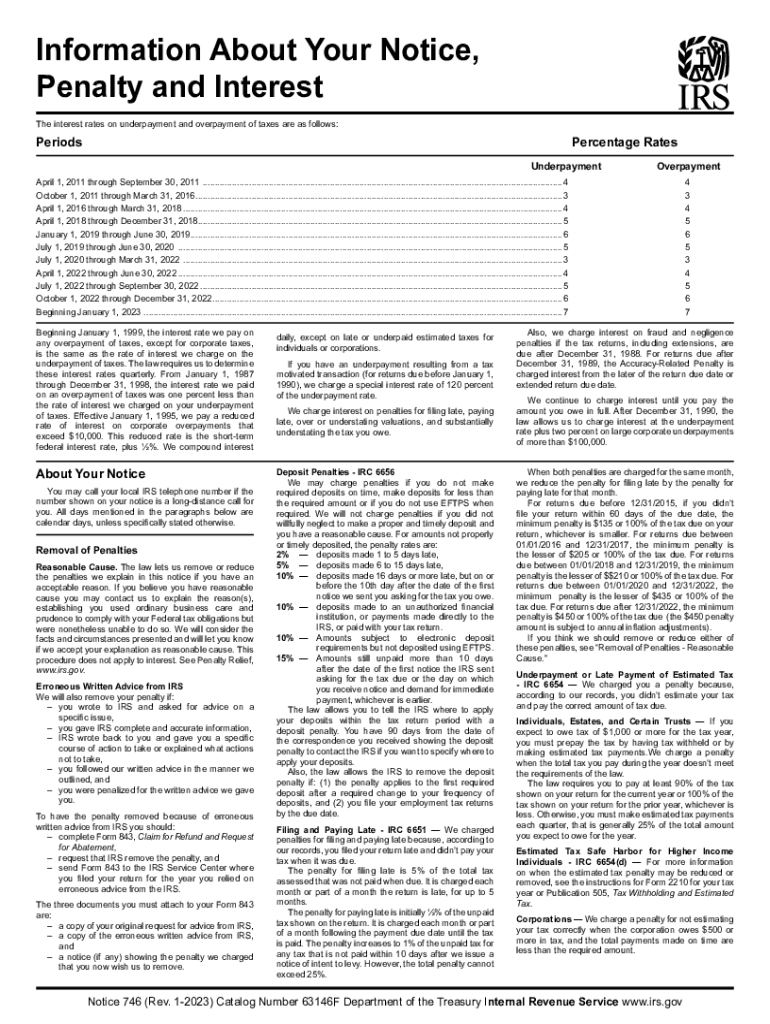
The "Information About Your Notice, Penalty and Interest - IRS" is a critical document issued by the Internal Revenue Service (IRS) that details the specific penalties and interest accrued on a taxpayer's account due to late payments or filing inaccuracies. This form elucidates various tax-related penalties mandated under specific Internal Revenue Code (IRC) sections, and it serves as an informative guide to understand why these charges were applied and the amounts involved. It is essential for taxpayers to comprehend this document to manage their tax obligations accurately and avoid further complications.
How to Use the Information About Your Notice, Penalty and Interest - IRS
To effectively utilize this document, taxpayers should carefully review each section to assess the penalties and interest calculated by the IRS. This involves:
-
Identifying the Penalties: Understand the reason behind each penalty. Common penalties include late filing, late payment, and accuracy-related penalties.
-
Interest Overview: Note the interest rates applied on overdue taxes. This section is crucial for evaluating how quickly additional interest might accrue.
-
Assessing Compliance: Compare the penalties listed with compliance history to verify their accuracy. Misunderstandings can often be rectified through direct communication with the IRS.
-
Exploring Options for Remediation: If any penalties appear unjust, the document serves as a foundation for appeals or discussions with the IRS. This may involve completing additional forms or providing supplementary explanations.
Key Elements of the Information About Your Notice, Penalty and Interest - IRS
The document is structured to provide a comprehensive breakdown of penalties and interest charges:
-
Penalty Details: Details regarding the type of penalties (late filing, late payment, etc.) and their corresponding IRC sections.
-
Interest Rates Applied: A clear outline of the interest rates and how they are calculated over time.
-
Total Amount Due: An overview of the total penalties and interest, alongside the outstanding tax amount.
-
Explanation of Charges: Narrative sections explaining why penalties and interest were applied, providing a clear context for each charge.
-
Contact Information: Details on how to reach IRS representatives for further inquiries or dispute resolution.
Who Typically Uses the Information About Your Notice, Penalty and Interest - IRS
This document is primarily intended for individual taxpayers and business entities such as LLCs, corporations, and partnerships who have received an IRS notice regarding overdue taxes or penalties.
-
Self-Employed Individuals: They often use this document to better understand penalties due to the complexity of self-employment taxes.
-
Businesses: Corporations and partnerships utilize it to ensure compliance with federal tax obligations and avoid further interest accumulation.
-
Tax Advisors and Accountants: Professionals use this document to advise clients on how to address the penalties and interest efficiently.


Legal Use of the Information About Your Notice, Penalty and Interest - IRS
Legally, this form serves as a binding notice from the IRS that delineates the taxpayer’s obligations regarding penalties and interest. It holds:
-
Evidence of Notification: It confirms that the taxpayer has been officially notified of their liabilities.
-
Basis for Dispute or Resolution: It can be used as a basis for legal disputes or settlement arrangements with the IRS.
-
Record for Tax Compliance: This document is essential to maintain accurate records for future tax filings and audits.
IRS Guidelines
The IRS provides specific guidelines regarding the penalties and interest covered in this document:
-
Penalty Reduction Options: Steps to apply for abatement or reduction of penalties under certain favorable conditions.
-
Payment Plans: Information on setting up installment agreements to manage repayment systematically.
-
Documented Appeal Process: Guidelines on how taxpayers can contest the penalties if they believe there are errors.
Penalties for Non-Compliance
Failure to address the "Information About Your Notice, Penalty and Interest - IRS" can lead to severe consequences:
-
Increased Penalties and Interest: Additional charges may accrue if the initial penalties are not paid promptly.
-
Enforcement Actions: Possible garnishments or levies on assets if the amount due remains unpaid.
-
Credit Impact: Long-term damage to credit ratings affecting future financial capabilities.
Filing Deadlines / Important Dates
The document emphasizes critical dates concerning penalty assessments:
-
Payment Due Dates: Specified dates by which payments must be made to avoid additional penalties or interest.
-
Response Deadlines: Dates by which the taxpayer must respond to the notice if they plan to dispute or negotiate terms.
-
Amendment Windows: Time frames within which taxpayers can amend their filings to potentially reduce assessed penalties.
By meticulously analyzing each of these sections, the document empowers taxpayers to effectively manage their financial responsibilities with the IRS and avoid further complications.


