







Definition & Meaning of the Equipment Inspection Form
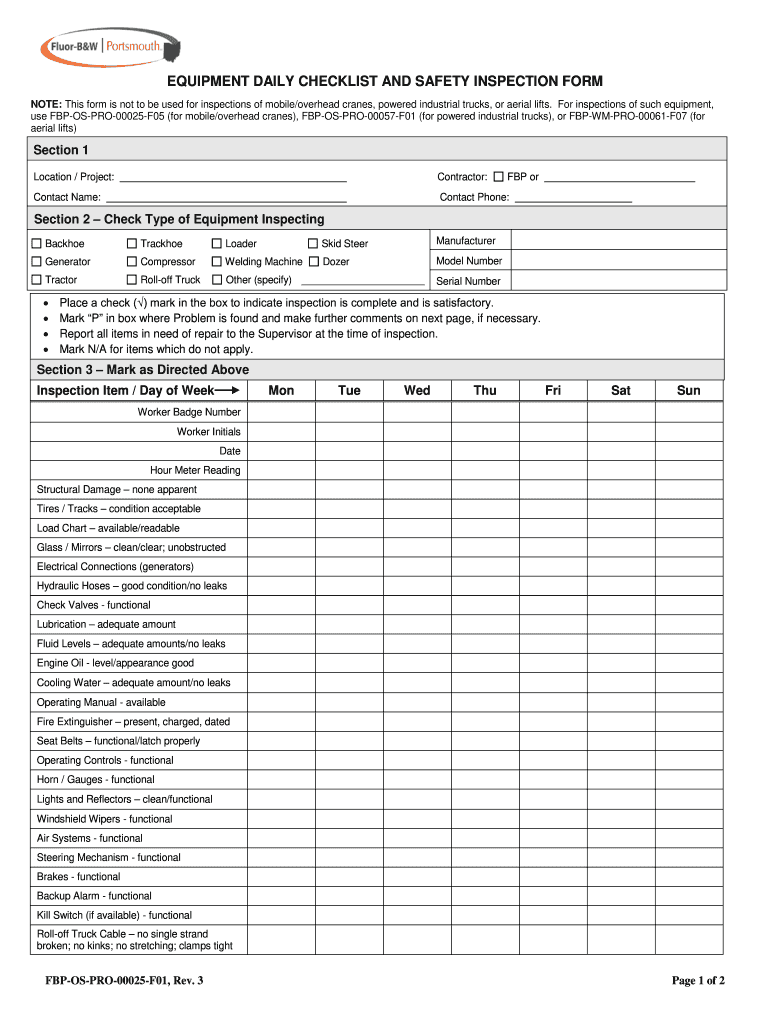
An equipment inspection form is a structured document used to evaluate the condition and safety of various types of machinery and equipment. This form serves as a checklist to identify any issues, ensuring compliance with safety standards and regulations. Typically employed in industries such as construction, manufacturing, and transportation, it provides a standardized approach to assessing equipment functionality and safety.
The form includes sections for equipment details like serial numbers, operating hours, and inspection dates. Inspections can cover a range of equipment from cranes and loaders to more specialized machinery such as forklifts or generators. Adopting this form is crucial for maintaining operational safety, preventing accidents, and ensuring that equipment remains compliant with legal regulations.
Key Elements of the Equipment Inspection Form
An effective equipment inspection form comprises several key elements that facilitate thorough evaluations. Understanding these components ensures comprehensive inspections are conducted regularly.
-
Identification Section: This part records vital information regarding the equipment, including:
- Equipment type
- Make and model
- Serial number
- Location and department
- Operator name
-
Inspection Criteria: A detailed list of items to check during the inspection, such as:
- Mechanical integrity (check for leaks, wear, and tear)
- Safety features (functionality of alarms and emergency stops)
- Operational readiness (testing equipment during operation)
-
Condition Assessment: Inspectors must document their findings, categorizing the equipment's condition as:
- Acceptable
- Needs maintenance
- Out of service
-
Signature Lines: Sections for signatures from the inspector and supervisor, indicating completion of the inspection and validation of findings.
This structured approach not only enhances accountability but also streamlines communication regarding equipment safety.
Steps to Complete the Equipment Inspection Form
Completing an equipment inspection form involves systematic steps to ensure thorough assessments. Following these outlined steps ensures that no critical checks are overlooked:
-
Preparation: Gather all equipment and documentation necessary, including prior inspection reports, maintenance records, and the form itself.
-
Equipment Identification: Fill out the identification section, ensuring all relevant details are accurate to prevent confusion in records.
-
Conduct Inspection:
- Progress through the inspection criteria, methodically checking each item.
- Accurately note any issues found and categorize them appropriately.
-
Assessment Reporting: Summarize the condition of the equipment based on the inspections:
- Note any immediate repairs needed.
- Indicate equipment that may need monitoring over time.
-
Sign and Date: Once the inspection is complete and all findings documented, obtain the necessary signatures from relevant personnel for accountability.
Following these steps helps maintain a transparent process, ensuring all equipment is continuously assessed for operational safety and compliance.
Who Typically Uses the Equipment Inspection Form
The equipment inspection form is utilized by a variety of professionals across different sectors. Understanding the audience can provide insight into its applications:
-
Operators and Technicians: Individuals who operate or maintain the equipment often fill out the forms before commencing work. Their practical experience allows them to identify issues from a user perspective.
-
Safety Officers: These personnel oversee compliance with safety regulations and use inspection forms to evaluate risks associated with equipment operations.
-
Supervisors and Managers: They review the submitted forms to ensure that maintenance protocols are followed and address any highlighted issues.
-
Regulatory Inspectors: Government agencies may mandate inspections and require completed forms as part of compliance checks. These inspections help confirm operations meet established safety standards.
This broad use across various tie workers ensures operational safety and efficiency in managing machinery.


Importance of the Equipment Inspection Form
Using an equipment inspection form serves multiple critical functions that enhance workplace safety and compliance:
-
Prevention of Accidents: Regular inspections help identify potential hazards before they lead to accidents, reducing workplace injuries and fatalities.
-
Compliance with Regulations: Many industries are regulated by safety standards that require regular equipment inspections to ensure compliance, safeguarding organizations from legal repercussions.
-
Maintenance Planning: The data collected through these inspections can be instrumental in scheduling routine maintenance, prolonging equipment life and reducing unexpected downtime.
-
Documentation and Record Keeping: A completed inspection form serves as a record that can be referenced in the case of machinery failure or accidents, providing insights into the maintenance history and decision-making processes.
-
Training Tool: Forms can also guide new operators in understanding critical safety checks and the importance of maintaining equipment.
Overall, the equipment inspection form is vital in fostering a culture of safety, efficiency, and accountability within any operational environment.
Examples of Using the Equipment Inspection Form
Real-world applications of the equipment inspection form illustrate its versatility and importance in various settings:
-
Construction Sites: On a construction site, an equipment inspection form is used daily to assess the safety of heavy machinery like bulldozers and cranes. Operators inspect equipment before use to prevent accidents, documenting their findings to ensure compliance with OSHA regulations.
-
Manufacturing Facilities: In a manufacturing context, the form can guide the assessment of equipment such as conveyor belts and forklifts. The inspection process can lead to identifying issues that may cause production delays, thus prompting immediate maintenance actions.
-
Transportation Industries: In vehicle fleets, drivers often fill out the inspection form before embarking on deliveries. Checks on vehicle brakes, lights, and tires ensure vehicle safety, reducing the risk of breakdowns and accidents during transportation.
These examples highlight the form's critical role in promoting safety, efficiency, and regulatory compliance across various industries.




