
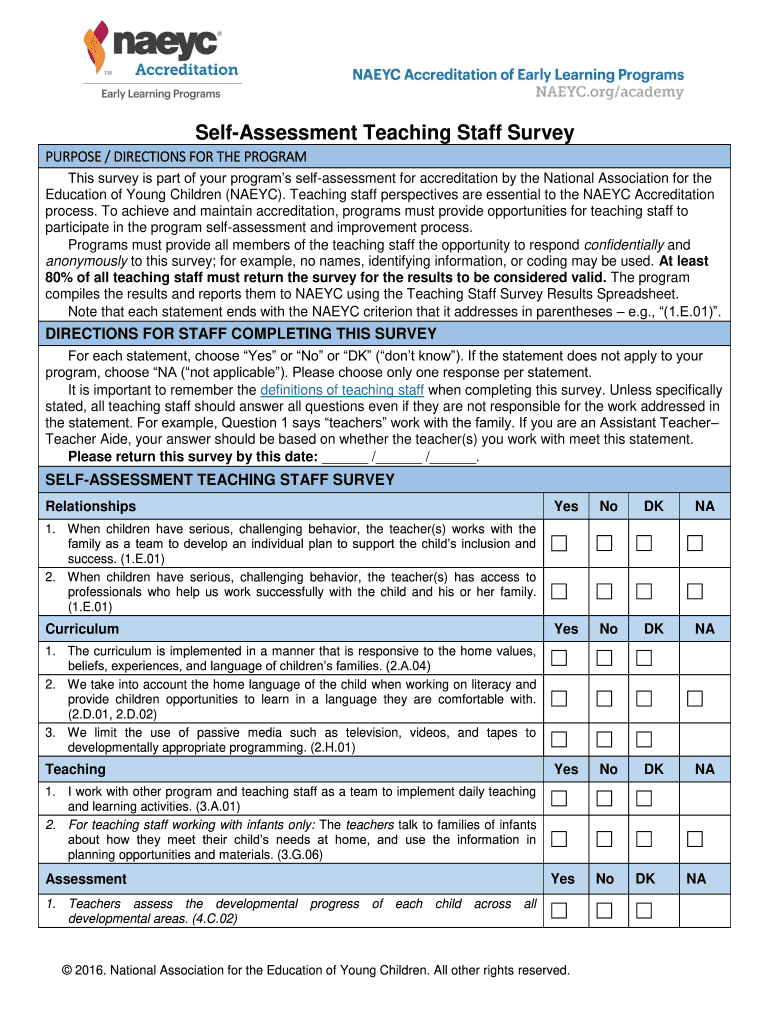







Definition and Significance of NAEYC Teacher Evaluation Forms
NAEYC teacher evaluation forms are structured tools utilized in early childhood education settings to assess teaching effectiveness and contribute to professional development. Developed in alignment with the National Association for the Education of Young Children (NAEYC) standards, these forms are essential for maintaining high teaching quality, enhancing student learning outcomes, and supporting teacher growth. They emphasize measurable competencies across various critical areas, including relationships, curriculum implementation, assessment strategies, and family engagement practices.
The significance of these forms extends beyond mere compliance; they foster a culture of reflective practice among educators. By providing teachers with structured feedback based on specific criteria, they encourage continuous improvement and collaboration within educational environments.
Key Areas Assessed in NAEYC Teacher Evaluation Forms
- Relationships: Evaluation forms assess the quality of interactions between educators and children, as well as with families.
- Curriculum Implementation: These forms evaluate how effectively teachers deliver and adapt the curriculum to meet the diverse needs of learners.
- Assessment Strategies: They also cover how teachers assess children's learning and progress, ensuring assessment strategies are appropriate and effective.
- Professional Engagement: The forms gauge teachers' involvement in ongoing professional development and community engagement efforts.
Steps to Complete the NAEYC Teacher Evaluation Forms
Completing NAEYC teacher evaluation forms involves a systematic approach to ensure accuracy and comprehensiveness. The following steps outline the typical process:
- Preparation: Gather all necessary documentation, including previous evaluations, lesson plans, and any relevant feedback.
- Self-Assessment: Begin with self-assessing your performance based on the criteria outlined in the evaluation forms. This reflection is crucial for identifying strengths and areas for improvement.
- Gathering Evidence: Compile specific examples and evidence that demonstrate proficiency in the required areas. This may include worksheets, lesson videos, and communications with families.
- Engagement with Peers: If applicable, involve colleagues or a mentor in the process to gain additional insights and perspectives on your performance.
- Submission: After completing the evaluation form, submit it according to your institution's guidelines, ensuring all parts are filled out thoroughly.
Importance of Collaboration During the Evaluation Process
Collaboration with peers can enhance the quality of the evaluation. By discussing insights and best practices, educators can receive constructive feedback that can be included in the evaluation process.
How to Obtain NAEYC Teacher Evaluation Forms
Teachers and administrators can obtain NAEYC teacher evaluation forms through several avenues:
- NAEYC Website: The official NAEYC website provides access to resources and links to teacher evaluation forms designed specifically for diverse educational contexts.
- Educational Institutions: Many early childhood programs that are NAEYC accredited have tailored versions of these evaluation forms available to their staff.
- Professional Development Workshops: Participating in workshops and training sessions offered by educational organizations may provide access to evaluation tools and best practices related to their use.
Obtaining the right evaluation form is critical, as different early childhood programs may have unique requirements based on specific services provided.
Examples of Using NAEYC Teacher Evaluation Forms
Practical implementation of NAEYC teacher evaluation forms can vary based on institutional needs. Here are several scenarios illustrating their use:
- Self-Reflective Practice: A preschool teacher uses the NAEYC teacher evaluation form to reflect on her teaching methods after attending a professional development series on effective classroom management. She identifies specific techniques she can implement, like incorporating more family input into her lesson planning.
- Peer Collaboration: A group of teachers at an early childhood center engage in a peer review session using the forms to provide feedback on each other’s instructional approaches. This collaboration allows for shared knowledge and accountability.
- Administrative Review: Administrators utilize the evaluation forms during performance reviews to provide constructive feedback and set professional goals for teachers based on observed practices and outcomes.
Key Elements Found in NAEYC Teacher Evaluation Forms
NAEYC teacher evaluation forms typically contain several essential elements that guide the evaluation process:
- Criteria: Clearly defined performance standards aligned with NAEYC benchmarks, ensuring evaluations are objective and measurable.
- Rating Scales: Structured scales to rate competency levels, often ranging from unsatisfactory to exemplary performance.
- Comments Section: Space for written feedback to provide qualitative insights into individual performance, offering a balance between quantitative ratings and qualitative evaluations.
- Action Plans: Sections for outlining personal development goals and timelines, fostering a proactive approach to professional growth.
These key elements ensure the forms are comprehensive and facilitate meaningful discussions about teaching practices and professional development.
Understanding the Legal Use of NAEYC Teacher Evaluation Forms
The utilization of NAEYC teacher evaluation forms is subject to various legal and ethical considerations that educators and administrators must understand to ensure compliance and fairness:
- Confidentiality and Privacy: The evaluation process must protect the confidentiality of the individuals being assessed. Evaluation data should only be shared with authorized personnel within the organization.
- Fair and Objective Assessment: It's imperative that evaluations are conducted fairly, relying on observable and documented evidence rather than personal biases.
- Continued Professional Development: Utilizing these forms legally includes the commitment to supporting teachers in their professional growth through targeted training and resource allocation.
Educational institutions should periodically review their policies to align with current legal standards and best practices regarding the evaluation of teaching staff.




