







Definition & Meaning
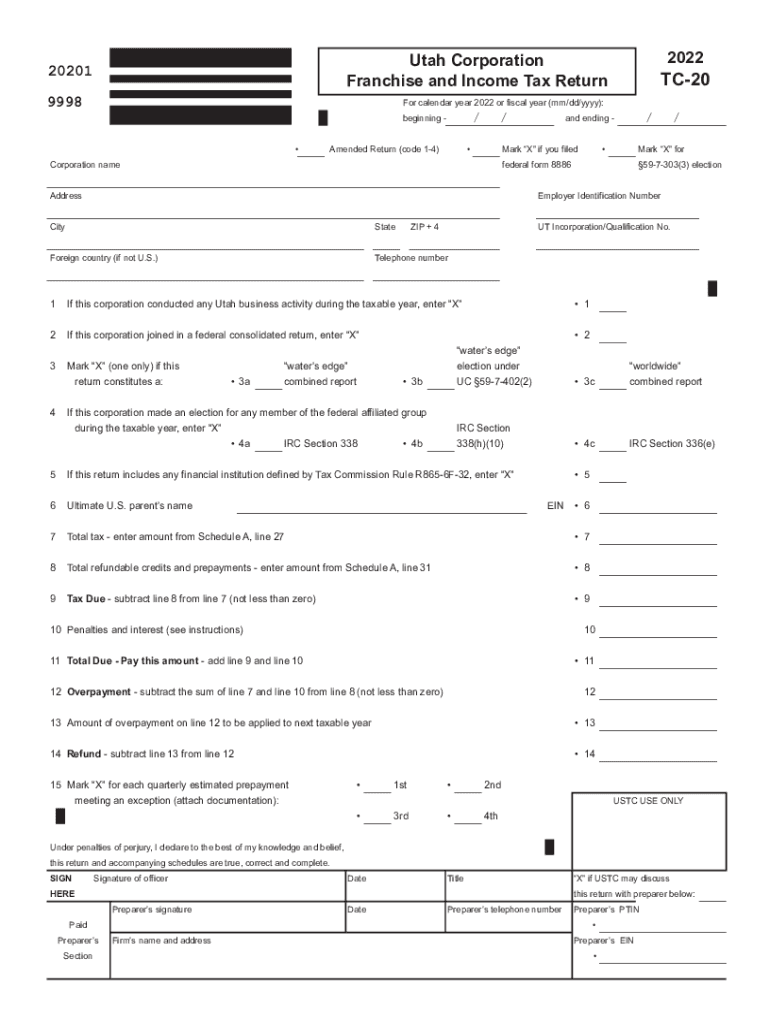
The 2022 TC-20 form is the Utah Corporation Franchise or Income Tax return form for corporations operating in Utah. This form is essential for corporations, including domestic and foreign entities, to report and pay franchise and income taxes to the state. It encompasses various sections that cover corporate identification, income adjustments, tax calculations, and disclosures related to ownership structures and federal tax adjustments.
Key Elements of the 2022 TC-20 Form
- Corporate Identification: This section includes basic information about the corporation, such as name, address, and taxpayer identification number.
- Income Adjustments: Corporations must report various income adjustments that factor into the final tax liability calculation.
- Tax Calculations: This critical element involves computing the tax owed based on income, credits, or other factors specified in the form.
- Apportionment of Income: For multistate corporations, income must be apportioned according to Utah’s apportionment formula to determine the tax due.
- Disclosures: Corporations must disclose ownership structures and any relevant federal tax adjustments that impact state tax reports.
How to Use the 2022 TC-20 Form
To utilize the 2022 TC-20 form effectively, corporations must:
- Gather Required Documents: Ensure all relevant financial statements, federal tax returns, and records of income and expenses are at hand.
- Complete Corporate Identification Section: Fill in all identifying information accurately.
- Calculate Taxable Income: Consider any adjustments, deductions, or contributions.
- Calculate Apportionment: If necessary, determine how much income is subject to Utah tax using the provided formula.
- Complete and Review the Form: Double-check all calculations and entries to ensure accuracy.
- Sign and Submit: An authorized officer must sign the form before submission.
Important Terms Related to TC-20
- Franchise Tax: This is a levy on corporations for the privilege of operating in Utah.
- Income Tax: A tax on the income generated by a corporation during the fiscal year.
- Apportionment: Process of determining income attributable to Utah for tax purposes.
- Deductions: Specific expenses that reduce taxable income.
Steps to Complete the Form
Filling out the TC-20 form correctly is crucial to avoid penalties. The process involves several steps:
- Prepare the Necessary Information: Ensure you have financial records, federal tax forms, and supporting documents for deductions and credits.
- Fill Out the Income Section Carefully: Accurately record income figures, including adjustments.
- Apply Apportionment Methods: Use statutory formulas to allocate income across states if applicable.
- Calculate Tax and Apply Credits: Utilize available credits to reduce taxable liability.
- Review Form for Compliance: Ensure all fields are filled out correctly and all computations are verified.
- Sign and Date: The form must be signed by a corporate officer and dated to be valid.
Filing Deadlines & Important Dates
The TC-20 form is typically due on the 15th day of the fourth month following the end of the corporation’s taxable year. For corporations operating on a calendar year basis, this is usually April 15. Extensions may be requested if more time is needed to complete the form, but payment must be made by the original deadline to avoid interest and penalties.
Who Typically Uses the TC-20 Form
The TC-20 form is predominantly used by:
- Corporations: Any corporate entities operating within Utah, including domestic and foreign corporations.
- Multistate Corporations: Entities with income sourced from multiple states that must apportion income for Utah tax purposes.
- Non-Profit Corporations: If applicable, certain non-profit organizations engaged in unrelated business activities.


Business Entity Types
- C Corporations: Required to file TC-20 annually.
- Foreign Corporations: Operating within Utah must file according to state laws.
- Non-corporate Entities: May need a similar form if they engage in activities subject to corporate tax.
Steps to Obtain the TC-20 Form
Corporations can acquire the TC-20 form through:
- Utah State Tax Commission Website: Download the latest version directly from the official site.
- Tax Software Applications: Tools like TurboTax and QuickBooks usually offer tax forms and filing options.
- Tax Professional Assistance: Accountants typically provide these forms and assist with completion and filing.
Digital vs. Paper Submission
- Online Filing: Generally recommended for convenience and speed, allowing direct submission to the state tax authority.
- Paper Filing: An option for those who prefer traditional methods or lack digital accessibility. Ensure correct mailing addresses and deadlines for submissions.
Penalties for Non-Compliance
Failing to file the TC-20 form, or filing inaccurately, can result in significant penalties:
- Late Filing Penalty: Charged if the form is submitted after the due date without an approved extension.
- Underpayment Penalty: Imposed when taxes due are underestimated and underpaid.
- Interest Charges: Accumulated on unpaid tax from the due date until paid in full.
Compliance with the 2022 TC-20 form requirements ensures corporations avoid these penalties while adhering to state tax obligations.
State-Specific Rules for Utah Corporations
Utah has particular requirements that corporations must follow:
- Nexus Standard: Determines tax liability based on business presence in Utah.
- Apportionment Rules: Specific methods prescribed for allocating income to Utah.
- Specific Non-Deductible Items: Certain expenses are statutorily non-deductible under Utah law.
Adhering to these regulations is critical for accurate tax reporting.


