







Definition and Meaning
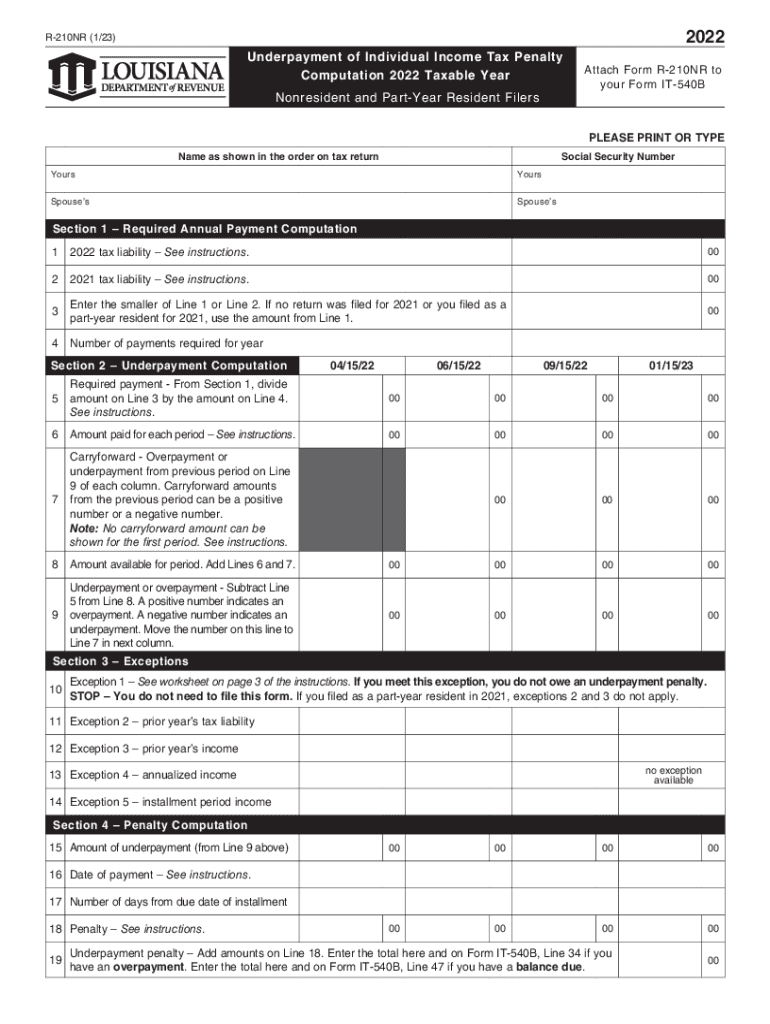
Form 2210, Underpayment of Estimated Tax, is a document used by taxpayers to report and calculate a penalty related to underpayment of estimated taxes. The form helps taxpayers determine if their estimated tax payments or withholding were sufficient according to IRS requirements for the applicable tax year.
Key Points
- Estimated tax refers to anticipated tax obligations that aren't fully covered through tax withholding and must be paid through quarterly installments.
- Taxpayers might owe a penalty if they don't meet the required thresholds for withholding or have not made sufficient estimated payments throughout the year.
Steps to Complete Form 2210
Filling out Form 2210 involves several methodical steps to ensure accuracy. Always refer to the IRS instructions specific to the tax year for comprehensive guidance.
-
Basic Information: Begin by entering your name and identifying information. This section helps attribute the document to the correct taxpayer.
-
Sections Overview: Familiarize yourself with the form's structure — it comprises parts for calculating required payments, comparing actual payments versus required amounts, and identifying applicable penalties.
-
Calculate Required Annual Payment:
- Assess your annual tax liability and calculate the required estimated tax payment.
- Utilize prior year tax data and current year projections for accurate estimates.
-
Determine Underpayment: Use the form to compute any shortfall between what was paid during the year and what was owed as estimated tax.
-
Penalty Calculation: Complete the penalty section by applying IRS penalty rates to any identified underpayment amounts.
Important Terms Related to Form 2210
Understanding terminology specific to Form 2210 is crucial for accurate completion and submission.
- Estimated Tax: Projected payment required when withholding taxes do not completely cover anticipated tax liabilities.
- Underpayment: This occurs when the sum of withholdings and estimated payments fails to meet required levels.
- Penalty Waiver: Potential relief available under certain conditions, like unforeseen events impacting income.
- Safe Harbor Rule: A provision allowing taxpayers to avoid penalties if they meet specific minimum payment thresholds, generally a percentage of the prior year's tax obligation.
IRS Guidelines for Form 2210
The IRS provides a comprehensive guide to ensure taxpayers accurately report and compute penalties.
- Safe Harbor Guidelines: To avoid penalties, pay at least 100% of the previous year's tax liability or 90% of the current year's liability, whichever is less.
- Waiver of Penalties: Circumstances under which penalties may be waived include casualties, disasters, or other unusual circumstances.
Penalties for Non-Compliance
Failing to accurately complete Form 2210 can result in significant penalties.
Examples of Penalties:
- Late Payment Penalty: Regular monthly penalty on unpaid taxes.
- Underpayment Penalty: Charge for not meeting required estimated tax payments.
Taxpayers should use Form 2210 to document their actions and reasons for any underpayment, possibly leading to penalty reductions or elimination.
Filing Deadlines and Important Dates
Tax-related deadlines are strict, and knowing them is essential for compliance.
- Quarterly Payments: Due typically mid-April, mid-June, mid-September, and mid-January of the following year.
- Annual Filing: Include Form 2210 with your tax return, due by the April tax deadline.
Software Compatibility
Leveraging tax software can streamline preparation and filing for Form 2210.
- Supported Software: Applications like TurboTax and QuickBooks offer built-in guidance and automate calculations.
- Integration: Ensure your software choice allows for importing data directly from tax documents and exporting Form 2210 to IRS-compliant formats.
Who Typically Uses Form 2210
Various taxpayer groups frequently interact with Form 2210 based on their income and tax situations.
- Self-Employed Individuals: Often need to make estimated tax payments due to lack of employer withholding.
- Retirees: Those with distributions from retirement accounts necessitating tax payments.
- Investors: Individuals with significant investment income beyond withholding must carefully plan estimated tax payments to avoid penalties.
Examples of Using Form 2210
Understanding practical scenarios can aid in grasping Form 2210's utility.
- Case Study 1: A freelance graphic designer with fluctuating income uses Form 2210 to reconcile estimated taxes after quarterly payment miscalculation.
- Case Study 2: A couple with rental property income reviews the past year's tax liabilities to ensure compliance under the Safe Harbor rule, reducing potential penalties.
These examples underscore Form 2210's role in minimizing financial repercussions arising from underestimating tax liabilities.




