
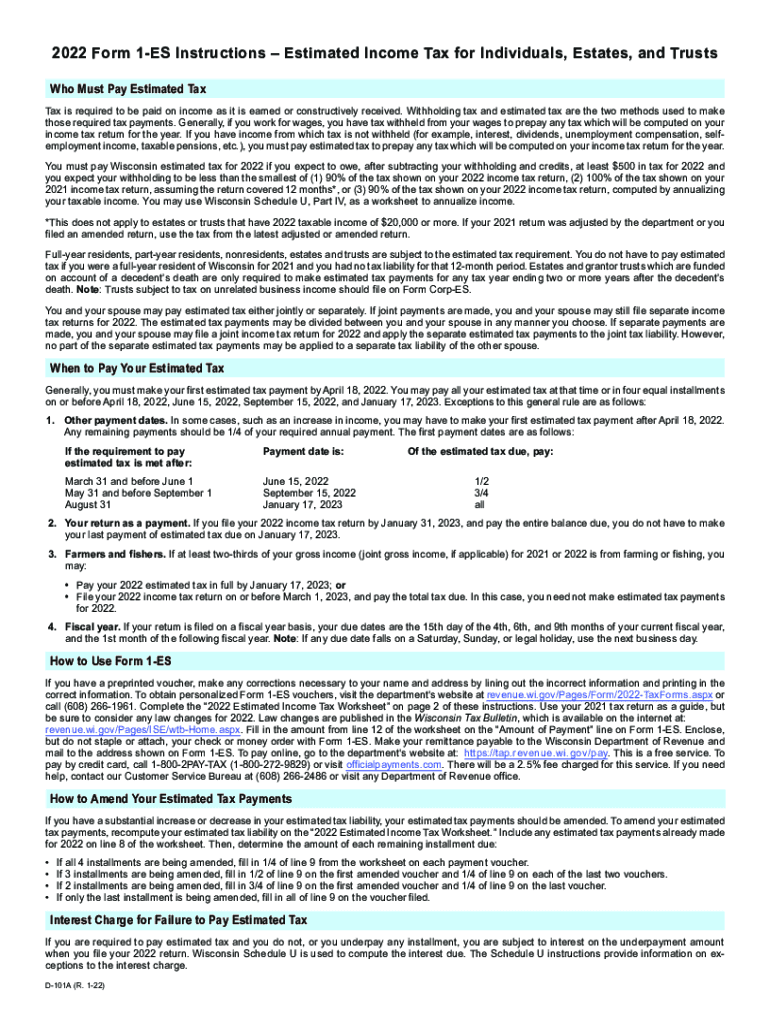







Definition and Purpose of the 2022 D-101a Form 1-ES
The 2022 D-101a Form 1-ES Instructions - Estimated Income Tax for Wisconsin provides a detailed guide for individuals, estates, and trusts on managing their estimated income tax obligations. It outlines essential information regarding who must pay estimated taxes and offers guidance on how to use Form 1-ES effectively. This document is vital for ensuring compliance with tax laws and understanding the financial obligations associated with estimated tax payments.
How to Use the 2022 D-101a Form 1-ES Instructions
-
Determine Obligation to Pay: The first step is to assess if you are required to pay estimated taxes. This generally applies if you anticipate owing at least $500 in taxes after subtracting withholdings and credits.
-
Calculate Estimated Tax: Use the worksheets provided in the instructions to calculate your estimated tax payments accurately. This involves estimating your income, deductions, credits, and tax rate for 2022.
-
Schedule Payments: The instructions include a payment schedule that outlines due dates throughout the year. Timely payments are crucial to avoid penalties.
-
Amend Payments if Necessary: If your financial situation changes, you may need to amend your estimated payments. The instructions provide guidance on how to adjust your payments accordingly.
-
Submit Payments: The instructions detail various methods for submitting your estimated tax payments, such as through mail or online systems.
Steps to Complete the 2022 D-101a Form 1-ES
-
Gather Financial Information: Collect all necessary financial data, including income statements, deductions, and credits you are eligible for.
-
Use the Calculation Worksheets: Utilize the worksheets provided within the form instructions to ensure accurate calculation of your estimated taxes.
-
Complete Form 1-ES: Fill out the form with the calculated amounts and personal information required.
-
Make Your Estimated Payment: Follow the outlined payment methods to submit your estimated tax payments by the due dates provided.
-
Review for Accuracy: Double-check all provided information to ensure it is correct to avoid any errors that could lead to penalties.
Who Typically Uses the 2022 D-101a Form 1-ES
Typically, taxpayers who are self-employed, have significant income not subject to withholding, or those who earn income from dividends, interest, or capital gains might need to use Form 1-ES. Trusts and estates that have income requiring estimated tax payments are also primary users. Understanding the necessity of this form is crucial for avoiding underpayment penalties.


Filing Deadlines and Important Dates
The 2022 D-101a Form 1-ES Instructions specify specific payment dates for estimated taxes throughout the tax year. Generally, these payments are due quarterly, with dates usually being April 15, June 15, September 15, and January 15 of the following year. Adhering to these deadlines ensures compliance and avoids late penalties.
Key Elements of the 2022 D-101a Form 1-ES
- Calculation Instructions: Detailed steps to determine estimated tax payments accurately.
- Amendment Procedures: Guidance on adjusting payments if necessary due to changes in income or deductions.
- Payment Methods: Options for payment submission, ensuring flexibility and convenience for taxpayers.
- Penalty Information: Clear explanations of potential penalties for underpayment or late payments.
Important Terms Related to 2022 D-101a Form 1-ES
- Estimated Tax: The tax you expect to owe for the current year, considering income, credits, and deductions.
- Withholding: The portion of your income deducted for tax purposes.
- Underpayment Penalty: A penalty for not paying enough tax throughout the year via estimated payments or withholding.
Penalties for Non-Compliance
Failure to comply with the instructions outlined in the 2022 D-101a Form 1-ES can result in penalties. These penalties are generally assessed if you do not pay enough tax during the year or miss the payment deadline. It's essential to accurately calculate and distribute your payments to avoid these potential financial penalties.




