




Here's how it works
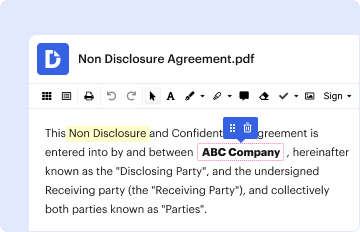
01. Edit your it 203 b instructions online
Type text, add images, blackout confidential details, add comments, highlights and more.
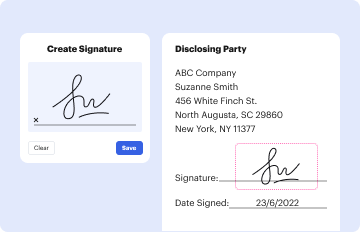
02. Sign it in a few clicks
Draw your signature, type it, upload its image, or use your mobile device as a signature pad.

03. Share your form with others
Send it 203 b via email, link, or fax. You can also download it, export it or print it out.
How to use or fill out Form IT-203-B Nonresident and Part-Year Resident Income Allocation and College Tuition Itemized Deduction Worksheet Tax Year 2022

- Click ‘Get Form’ to open it in the editor.
- Begin with Schedule A, where you will allocate your wage and salary income. Complete a separate Schedule A for each job. Fill in the total days worked, including nonworking days such as weekends and holidays.
- Calculate the total nonworking days by adding all nonworking categories. Subtract this from the total days worked to find the number of days worked in New York State.
- Proceed to Schedule B to indicate if you maintained living quarters in New York State. Provide addresses and mark the appropriate boxes.
- Finally, complete Schedule C for college tuition deductions. Indicate if you are claimed as a dependent, then list eligible students and their tuition expenses, ensuring to follow instructions for each section.
Start using our platform today to fill out your Form IT-203-B easily and for free!
Fill out Form IT-203-B Nonresident and Part-Year Resident Income Allocation and College Tuition Itemized Deduction Worksheet Tax Year 2022 online
It's free
It's free
See more Form IT-203-B Nonresident and Part-Year Resident Income Allocation and College Tuition Itemized Deduction Worksheet Tax Year 2022 versions
We've got more versions of the Form IT-203-B Nonresident and Part-Year Resident Income Allocation and College Tuition Itemized Deduction Worksheet Tax Year 2022 form. Select the right Form IT-203-B Nonresident and Part-Year Resident Income Allocation and College Tuition Itemized Deduction Worksheet Tax Year 2022 version from the list and start editing it straight away!
Got questions?
We have answers to the most popular questions from our customers. If you can't find an answer to your question, please contact us.
Contact us
What is an IT-203 nonresident income tax return?
To determine how much tax you owe, use Form IT-203, Nonresident and Part‑Year Resident Income Tax Return. You will calculate a base tax as if you were a full-year resident, then determine the percentage of your income that is subject to New York State tax and the amount of tax apportioned to New York State.
Do I have to file a NY nonresident return?
You must file Form IT-203, Nonresident and Part-Year Resident Income Tax Return, if you: were not a resident of New York State and received income during the tax year from New York State sources, or. moved into or out of New York State during the tax year.
Where to file NY IT 203?
How to File NY Form IT-203. You can file NY Form IT-203 online, by mail, or by phone. To file online, go to the New York State Department of Taxation and Finance website and click on the File Your Taxes link. You will need to create an account and enter your personal information.
Do I need to file it-203 B?
You need to file Form IT-203-B if you have income from a New York State source and your New York adjusted gross income is more than your New York State standard deduction.
Do I need to file 1099B?
File Form 1099-B for each customer who received cash, stock, or other property from a corporation that you know, or have reason to know based on readily available information, must recognize gain under section 367(a) from the transfer of property to a foreign corporation in an acquisition of control or substantial
Security and compliance
At DocHub, your data security is our priority. We follow HIPAA, SOC2, GDPR, and other standards, so you can work on your documents with confidence.
Learn more


People also ask
What is the difference between IT-201 and 203 in NY?
How do I determine if I need to file Form IT-201 or IT-203? It depends on your residency status. If you were a full-year resident of New York, youd file IT-201. If you moved during the year, IT-203 is more likely applicable.
Do I have to file a New York State income tax return?
Full year New York State residents must file Form IT-201, Resident Income Tax Return.
How do I know if I have to file a schedule B?
Use Schedule B (Form 1040) if any of the following applies: You had over $1,500 of taxable interest or ordinary dividends. You received interest from a seller-financed mortgage and the buyer used the property as a personal residence. You have accrued interest from a bond.