




01. Edit your copart bill of sale online
Type text, add images, blackout confidential details, add comments, highlights and more.

Type text, add images, blackout confidential details, add comments, highlights and more.

Draw your signature, type it, upload its image, or use your mobile device as a signature pad.

Send copart bill of sale pdf via email, link, or fax. You can also download it, export it or print it out.
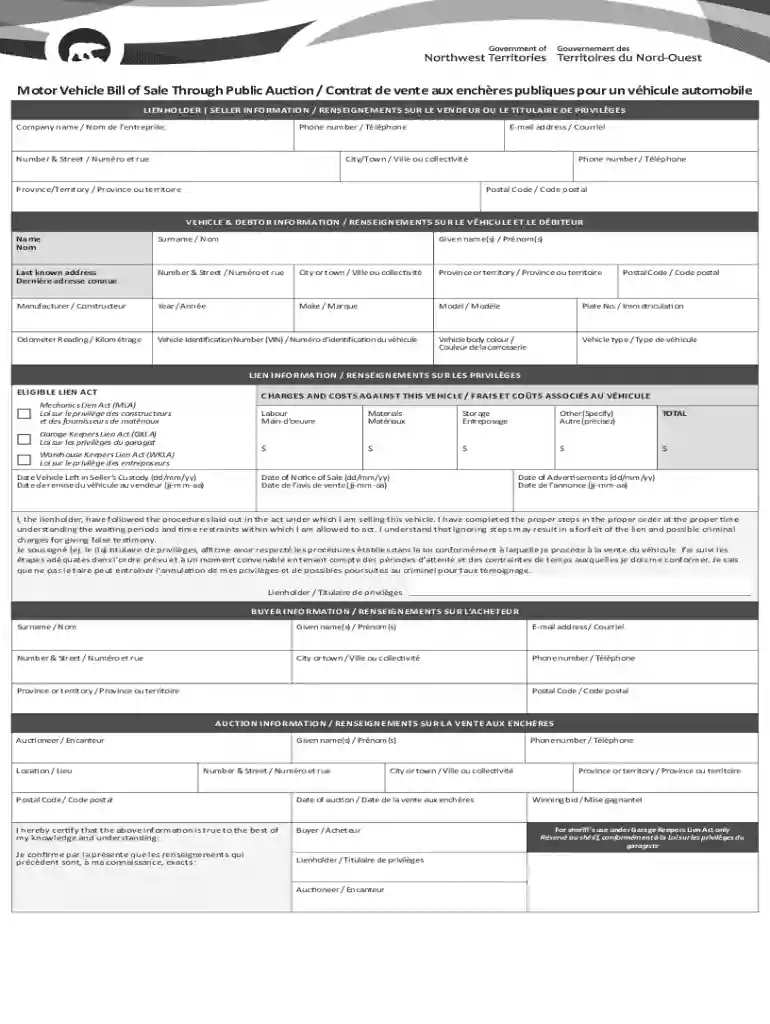
The Motor Vehicle Bill of Sale Through Public Auction is a legal document that serves as evidence of the transfer of ownership of a vehicle sold at auction. This bill of sale encapsulates essential information regarding the transaction, including the details of the lienholder, seller, buyer, and the vehicle itself. It is a crucial document for validating the sale and complying with state regulations governing vehicle ownership transfers.
Key components included in this document often are:
Understanding the meaning and purpose of this bill of sale is vital for both buyers and sellers engaged in vehicle transactions at public auctions.
The Motor Vehicle Bill of Sale is used as a formal record documenting the sale of a vehicle through a public auction. To effectively utilize this document, follow these steps:
Complete Necessary Information: Fill in all required fields accurately, including details about the vehicle, buyer, seller, and auction particulars. This ensures that the document is legally binding and serves its purpose in property transfer.
Signatures: Both the seller and buyer should sign the document to acknowledge the sale. This step is crucial as it validates the transfer of ownership.
Retain Copies: After completion, both parties should retain a copy of the bill of sale. This document serves as proof of ownership that may be needed for registration with state authorities or in case of disputes.
File with Appropriate Authorities: Some states require a copy of the bill of sale to be submitted to the Department of Motor Vehicles (DMV) or similar entities when registering the vehicle. Check local regulations to ensure compliance.
Using the Motor Vehicle Bill of Sale through public auction appropriately ensures a smooth transition of ownership and protects the rights of both the seller and the buyer.
Completing the Motor Vehicle Bill of Sale requires careful attention to various components to ensure legality and accuracy. Here is a structured approach to completing the document effectively:
Gather Required Documents: Collect all relevant documents, including the auction catalog, VIN, title, and any lien disclosures.
Fill in Seller and Buyer Information: Clearly list names, addresses, and contact numbers of both the seller and buyer. This step facilitates easy communication and verification.
Detail Vehicle Specifications: Accurately input the vehicle's make, model, year, and VIN. This specificity helps to prevent misunderstandings regarding the vehicle being sold.
Include Lien Information: If applicable, provide information about any liens. Specify if there are any outstanding fees or mortgages tied to the vehicle.
Auction Information: Document auction details including the auction date, auctioneer’s name, and any identification number related to the auction for record-keeping.
Ensure Signatures: Both parties need to sign and date the document, acknowledging the terms of the sale.
Provide Copies: After signing, ensure that each party receives a copy for their records, as it serves as a legal record of the transaction.
Following these steps ensures a high level of detail and accuracy in completing the Motor Vehicle Bill of Sale, essential for legal compliance and future reference.
Understanding specific terminology is crucial when dealing with the Motor Vehicle Bill of Sale through public auction. Here are important terms to familiarize yourself with:
Lien: A legal claim on the vehicle as security for a debt. Understanding lien status is essential for both the seller and buyer to avoid future liabilities.
VIN (Vehicle Identification Number): A unique code used to identify individual motor vehicles, crucial for tracking ownership and vehicle history.
Seller Disclosure: Information that the seller must provide about the vehicle's condition and history. Full disclosure aids in building trust between parties.
Auctioneer: The individual responsible for leading the auction process, including calling for bids and ensuring the sale is conducted fairly.
As-Is Sale: A common stipulation in auction sales indicating that the buyer accepts the vehicle in its current condition without guarantees from the seller about its condition.
Familiarization with these terms enhances clarity and aids in navigating the complexities of the Motor Vehicle Bill of Sale process.
Different states have varying legal requirements and regulations governing the Motor Vehicle Bill of Sale through public auction. It is essential to be aware of these nuances:
Registration Requirements: Some states mandate that a bill of sale be submitted to the DMV to complete vehicle registration, while others do not require it for private sales. Verify local registration rules to ensure compliance.
Sales Tax Policies: Several states impose a sales tax on vehicle sales documented by the bill of sale. Understanding these taxes can impact the total cost of ownership for a buyer.
Disclosures and Warranties: Certain states require sellers to disclose vehicle history or any known issues, while others may allow 'as-is' sales without warranties. Knowing the obligations protects both parties.
Signature Requirements: States may have specific rules regarding who must sign the bill of sale. For instance, some may require both parties, while others might allow a notary endorsement.
Familiarizing yourself with state-specific regulations ensures that the transaction is compliant with local laws, thereby protecting both the buyer and seller.
The Motor Vehicle Bill of Sale must adhere to legal standards to be considered valid. This document typically serves several purposes in legal terms:
Proof of Ownership Transfer: Once completed and signed, the bill of sale acts as proof that ownership has transferred from the seller to the buyer.
Protection Against Fraud: By documenting the sale, the bill of sale protects both parties from fraudulent claims regarding ownership or vehicle condition.
Tax Compliance: It is often necessary for registering the vehicle and may require sales tax payments, which vary by state.
Establishing Liability: The document can clarify liability for any future issues related to the vehicle, such as accidents or liens.
Additionally, in the case of disputes, the Motor Vehicle Bill of Sale can serve as an important legal document in court, providing evidence of the agreed-upon transaction terms and the transfer of ownership.
To illustrate how the Motor Vehicle Bill of Sale functions in real scenarios, consider these examples:
Private Buyer Acquisition: At a public auction, an individual bids on a vehicle and successfully wins. They fill out the Motor Vehicle Bill of Sale, documenting their bid amount, vehicle information, and details of the seller. This enables them to register the vehicle legally.
Dealer Transactions: A car dealership purchases several vehicles through auction. The Motor Vehicle Bill of Sale documents each transaction, providing a record for inventory management and compliance with tax requirements.
Collector Purchases: An automotive enthusiast attends a public auction looking for classic cars. After winning a bid, they complete the Motor Vehicle Bill of Sale to ensure proper ownership documentation for future registration and potential insurance coverage.
Each example highlights the importance of the bill of sale in various contexts, underscoring its role in facilitating legal vehicle transactions and protecting the interests of buyers and sellers.
We've got more versions of the copart bill of sale form. Select the right copart bill of sale version from the list and start editing it straight away!
At DocHub, your data security is our priority. We follow HIPAA, SOC2, GDPR, and other standards, so you can work on your documents with confidence.
A dealer and wholesale motor vehicle auction shall maintain a complete record of all vehicle purchases and sales for a minimum period of 48 months.Read more
Jul 25, 2023 Parts only title A parts only designation is typically found on a bill of sale or transfer form, not on a title. However, if a parts only billRead more


