
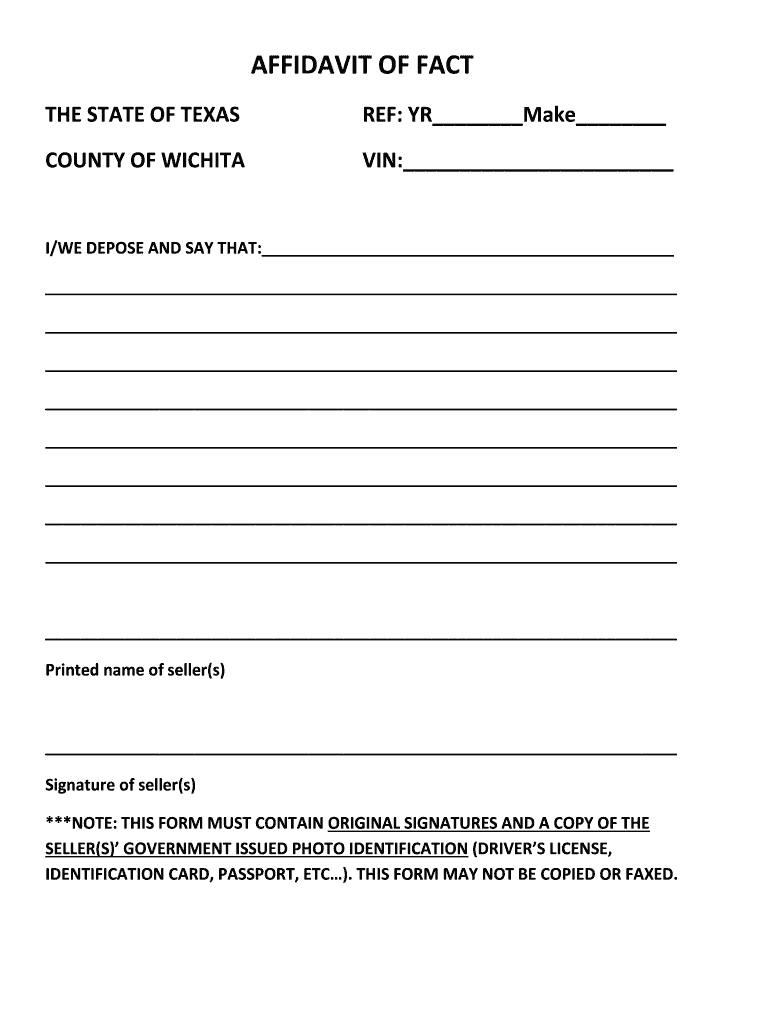







Definition & Meaning of the Affidavit of Fact in Texas
An affidavit of fact in Texas serves as a sworn statement detailing specific facts pertinent to a legal matter. This document is often required in various transactions, particularly concerning property, assets, or legal claims. It stands as a formal declaration that the information presented is true to the best of the affiant's knowledge. In the context of vehicle transactions, for instance, the affidavit may require the seller to confirm details about the vehicle, such as its make, model, and Vehicle Identification Number (VIN). This process adds a layer of verification and integrity, crucial in ensuring transparency in legal and financial processes.
Unlike declarations or informal statements, an affidavit of fact holds more weight in court, as it is completed under oath, signifying its truthfulness. In Texas, this document must also adhere to specific legal formats and guidelines, which vary based on the context in which it is used. Therefore, understanding the proper format and requirements is essential for anyone needing to file an affidavit in the state.
Key Elements of the Affidavit of Fact in Texas
An affidavit of fact in Texas typically comprises several essential elements necessary for it to be legally binding:
- Title and Jurisdiction: The document should be clearly titled as "Affidavit of Fact" and include the jurisdiction in which it is filed, typically highlighting Texas.
- Affiant Information: This section includes the name and contact details of the person making the affidavit, known as the affiant.
- Statement of Facts: The core of the affidavit, where specific facts relating to the matter at hand are listed. Each fact should be presented clearly and concisely.
- Oath or Affirmation: A declaration indicating the affiant's affirmation that the information provided is true. This section usually includes a statement that the affiant is aware of the legal implications of providing false information.
- Signature and Notary: The affidavit must be signed by the affiant in the presence of a notary public, who will then affix their seal to the document, signifying its authenticity.
Each of these elements plays a critical role in ensuring the affidavit is properly constructed and legally enforceable. Specific instances may require additional documentation, such as government-issued identification, particularly in transactions involving significant assets.
Important Terms Related to the Affidavit of Fact in Texas
Understanding the terminology associated with the affidavit of fact is crucial for proper execution and comprehension. Key terms include:
- Affiant: The individual who swears to the information in the affidavit.
- Notary Public: An authorized individual who verifies the identity of the affiant and witnesses the signing of the affidavit.
- Sworn Statement: A declaration made under oath that carries legal consequences, marking the information as factual.
- Jurisdiction: The court or region's authority responsible for enforcing laws relevant to the affidavit.
- Testimony: Evidence or statements made by the affiant based on their knowledge and belief.
Familiarity with these terms is essential as they not only represent legal concepts but also assist in understanding the process surrounding the affidavit of fact in Texas.
How to Use the Affidavit of Fact in Texas
Utilizing an affidavit of fact in Texas involves several practical applications and situations where its validity is paramount. Here are common usage scenarios:
-
Vehicle Transactions: In the case of buying or selling a vehicle, an affidavit may be necessary to affirm the details about the vehicle's history, ownership, and condition.
-
Financial Transactions: When seeking loans or financial assistance, lenders may require an affidavit of fact to confirm the accuracy of the information provided by the borrower.
-
Real Estate Matters: In property sales, affidavits can confirm the seller’s relationship to the property, resolving disputes about ownership or claims.
Each application requires strict adherence to local regulations and understanding the implications of the affidavit's contents, given its legal standing.
Steps to Complete the Affidavit of Fact in Texas
Completing an affidavit of fact requires careful attention to detail. Here are the necessary steps:
-
Determine the Purpose: Understand the specific reason why the affidavit is needed and ensure it is the correct form.
-
Gather Required Information: Collect all relevant facts that will be included in the affidavit, ensuring accuracy and completeness.
-
Complete the Form: Fill out the affidavit of fact using clear and precise language. Include the title, affiant’s information, and the factual statements.
-
Review for Accuracy: Carefully review the affidavit for errors or omissions. Ensure all facts are backed by evidence if necessary.
-
Sign in Front of a Notary: Present the form before a notary public for signature and notarization. The notary verifies your identity and authenticates the document.
-
Distribute the Affidavit: Provide copies of the signed and notarized affidavit to all relevant parties, ensuring each receives a valid document.
Following these steps ensures that the affidavit complies with Texas law and serves its intended purpose effectively.
Legal Use of the Affidavit of Fact in Texas
In Texas, the legal implications of an affidavit of fact can be significant. The document can be used in various legal contexts, including:
- Court Proceedings: Affidavits can serve as evidence in court cases, providing sworn facts that support one party's claims.
- Real Estate Transactions: They may be required to affirm property ownership or other facts related to property sales.
- Family Law Cases: In divorce or custody situations, affidavits can clarify financial statements or living arrangements.
The legal authority of an affidavit means that providing false information can lead to perjury charges, making it essential to ensure that all statements made in the document are truthful and accurately represent the facts at hand.




