




01. Edit your 720 2013 online
Type text, add images, blackout confidential details, add comments, highlights and more.

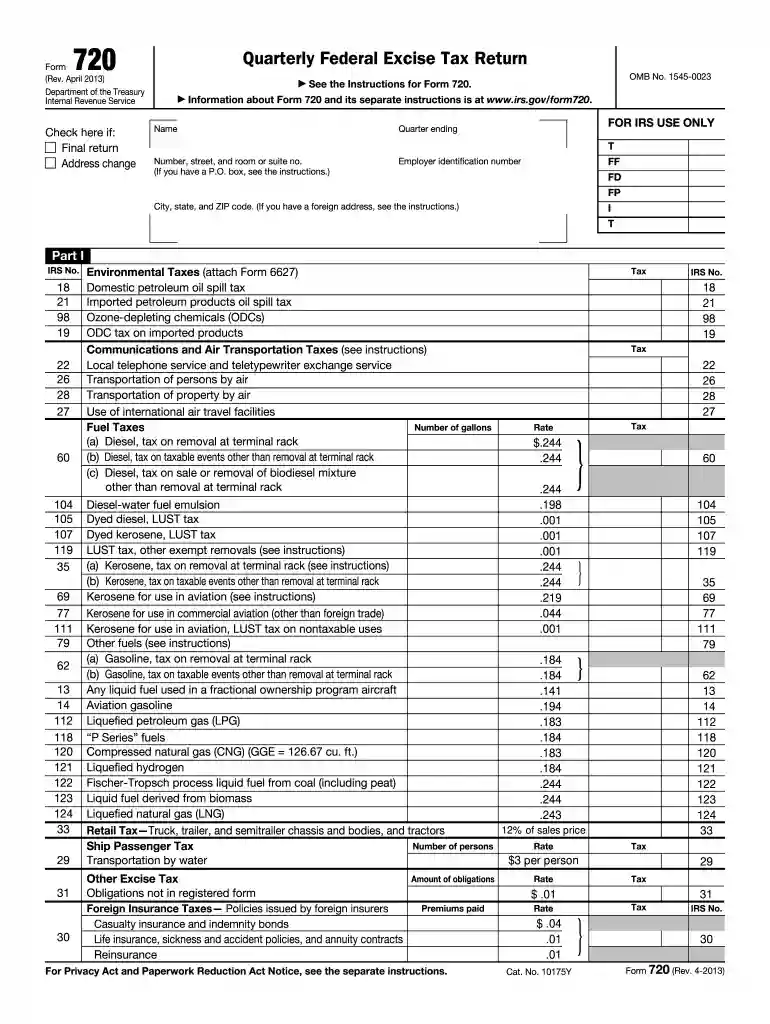
Type text, add images, blackout confidential details, add comments, highlights and more.

Draw your signature, type it, upload its image, or use your mobile device as a signature pad.

Send 2290 form 2021 printable via email, link, or fax. You can also download it, export it or print it out.
Form 720, also known as the Quarterly Federal Excise Tax Return, is utilized by businesses and individuals to report and remit federal excise taxes. These taxes apply to specific activities and goods, including environmental taxes, fuel taxes, and communication services. The form is fundamental for accurately reporting excise tax liabilities and ensuring compliance with federal tax laws. Understanding the purpose and requirements of Form 720 helps taxpayers correctly fulfill their tax obligations while minimizing potential errors.
The 2013 version of Form 720 can be acquired directly from the official Internal Revenue Service (IRS) website. Here's how to obtain it:
You can also obtain the form through tax preparation software or by visiting a local IRS office. It's vital to ensure you're using the correct version for the tax period being reported.
Completing Form 720 requires careful attention to its sections and information fields:
Make sure to double-check all entries for accuracy to avoid potential errors or penalties.
The IRS provides comprehensive guidelines for accurately completing and filing Form 720. These guidelines include detailed instructions on which taxes are covered, how to calculate them, and the filing procedures. Taxpayers should familiarize themselves with these instructions to ensure compliance. The IRS also updates these guidelines periodically, so it's crucial to reference the latest edition to account for any changes or additional requirements.
Form 720 must be filed quarterly. The filing deadlines for the four quarters are as follows:
Adhering to these deadlines helps avoid late filing penalties. If the due date falls on a weekend or holiday, the form is due the next business day.
To complete Form 720 adequately, you will need several documents:
Having accurate and comprehensive documentation on hand ensures that reported information is correct and verifiable.
Failing to file Form 720 or filing inaccurately can result in penalties from the IRS:
To mitigate these risks, ensure timely submission and double-check all entries on the form for precision.
Various business structures may be required to file Form 720 depending on their operations:
It's crucial for each business type to understand its obligations based on its structure and activities, ensuring full compliance with federal tax regulations.
We've got more versions of the 720 2013 form. Select the right 720 2013 version from the list and start editing it straight away!
| Versions | Form popularity | Fillable & printable |
|---|---|---|
| 2025 | 4.5 Satisfied (21 Votes) | |
| 2025 | 4.5 Satisfied (23 Votes) | |
| 2024 | 4.2 Satisfied (28 Votes) | |
| 2024 | 4.3 Satisfied (26 Votes) | |
| 2023 | 4.6 Satisfied (31 Votes) | |
| 2023 | 4.4 Satisfied (58 Votes) | |
| 2022 | 4.1 Satisfied (22 Votes) | |
| 2022 | 4.8 Satisfied (140 Votes) | |
| 2021 | 4.3 Satisfied (170 Votes) | |
| 2021 | 4.4 Satisfied (97 Votes) | |
| 2020 | 4.2 Satisfied (117 Votes) | |
| 2020 | 4.4 Satisfied (333 Votes) | |
| 2019 | 4.3 Satisfied (79 Votes) | |
| 2018 | 4.3 Satisfied (189 Votes) | |
| 2017 | 4.3 Satisfied (128 Votes) |
At DocHub, your data security is our priority. We follow HIPAA, SOC2, GDPR, and other standards, so you can work on your documents with confidence.
You must complete Schedule A if you have a liability for any tax in Part I of Form 720. Do not complete Schedule A for. Part II taxes or for a one-time filingRead more
Oct 29, 2025 OIG also offers a FOIA Electronic Reading Room, where it provides frequently requested records for public inspection in electronic form.Read more
Tax Form 720 - Quarterly Federal Excise Tax Return PCORI fee from the Affordable Care Act payable annually from 2013 - 2019; filed annually with IRS by JulyRead more


