




01. Edit your maldives service change form online
Type text, add images, blackout confidential details, add comments, highlights and more.

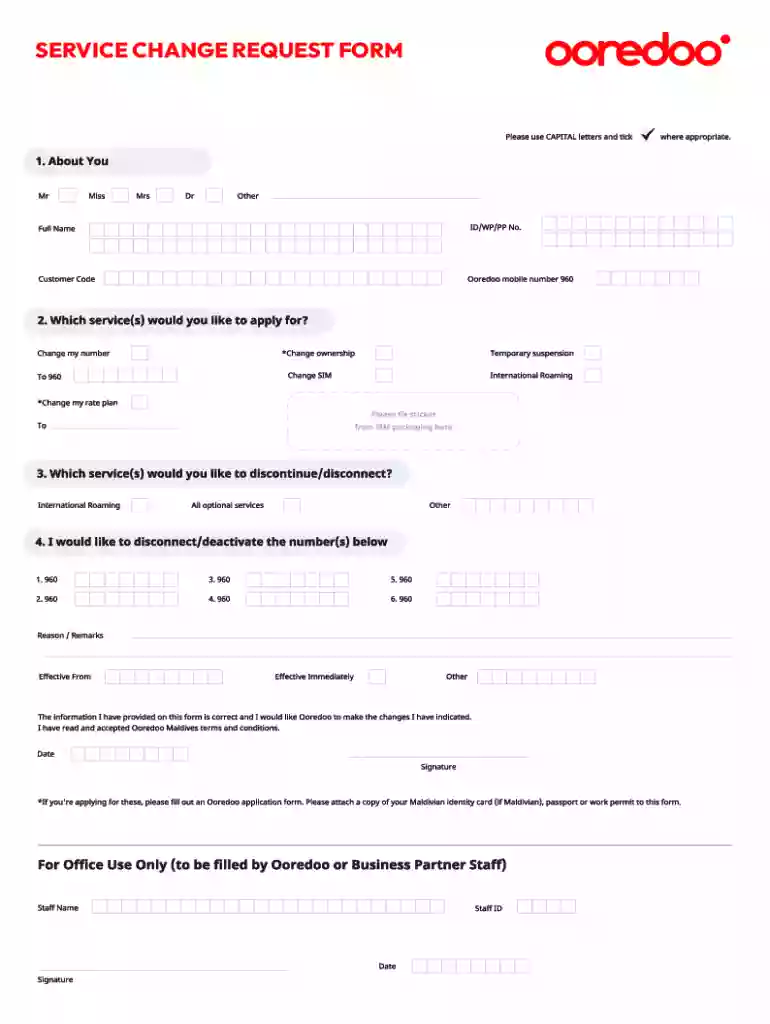
Type text, add images, blackout confidential details, add comments, highlights and more.

Draw your signature, type it, upload its image, or use your mobile device as a signature pad.

Send it via email, link, or fax. You can also download it, export it or print it out.
The Service Change Request Form-rebrand.cdr is a crucial document designed to formally request modifications to existing services within an organization. Typically used in business and IT settings, this form ensures that any changes to services are clearly documented, approved, and efficiently executed. The form generally includes sections to identify the type of service to be altered, the specific nature of the requested change, justification for the change, and any additional information necessary for processing the request.
To effectively use the Service Change Request Form-rebrand.cdr, follow these steps:
The form is primarily used by project managers, IT administrators, operations teams, and other organizational leaders tasked with overseeing service modifications. It is instrumental in environments where structured documentation is crucial for maintaining service integrity, compliance, and communication between departments.


Utilizing the form ensures a structured and auditable process for requesting service changes. This reduces the risk of unauthorized changes, helps in managing the change lifecycle, and facilitates effective resource allocation. Moreover, it aids in maintaining continuity by ensuring all parties affected by the change remain informed and aligned with organizational goals.
The Service Change Request Form-rebrand.cdr is often managed and edited using software like CorelDRAW due to its .cdr file format. Additionally, integration with document management and workflow systems, such as DocHub, streamlines the process of completing, submitting, and tracking the form. This compatibility ensures that users can seamlessly edit and share the form across various digital platforms and devices.
Using the form legally requires adherence to company policies concerning documentation and change management processes. It is essential that the form is accurately completed, approved by the relevant authorities, and stored according to organizational retention policies. This ensures compliance with internal audit requirements and external regulatory standards, safeguarding the organization against potential disputes or penalties.
We've got more versions of the maldives service change form form. Select the right maldives service change form version from the list and start editing it straight away!
At DocHub, your data security is our priority. We follow HIPAA, SOC2, GDPR, and other standards, so you can work on your documents with confidence.
Aug 1, 2024 This report summarizes analyses and findings from Oregon Health Authoritys preliminary review of the proposed material change transactionRead more
Aug 10, 2023 Evaluation Service Request Form Evaluation Service Structure CDR Appeals Procedure - Students Local Medical and Mental HealthRead more


