




01. Edit your form online
Type text, add images, blackout confidential details, add comments, highlights and more.

Type text, add images, blackout confidential details, add comments, highlights and more.

Draw your signature, type it, upload its image, or use your mobile device as a signature pad.

Send it via email, link, or fax. You can also download it, export it or print it out.
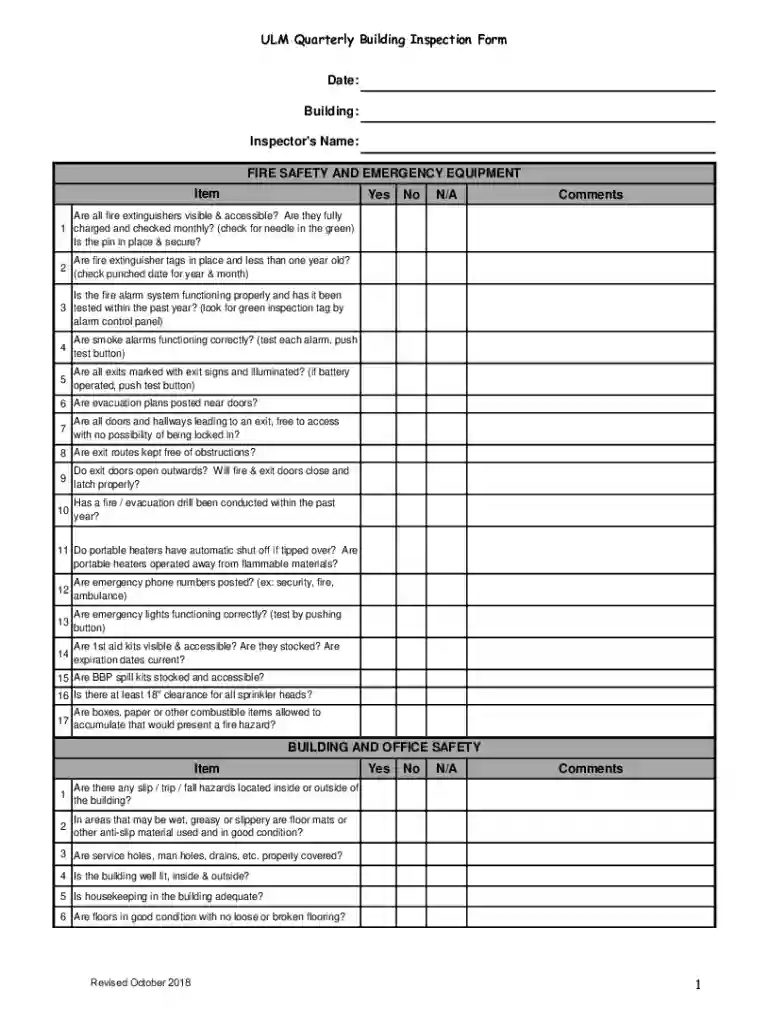
A building inspection form is a structured document used to assess the safety and condition of a building. This comprehensive checklist encompasses various aspects such as fire safety, electrical systems, emergency equipment, and general building conditions. The form serves as a tool to ensure that a facility complies with established safety standards by identifying potential hazards and maintenance needs. It is indispensable for property managers, building owners, and safety inspectors committed to maintaining a safe environment.
Utilizing the building inspection form effectively involves several steps to ensure thorough evaluation and accurate documentation. First, retrieve the most current version of the form, ensuring it adheres to local safety standards. Inspectors should systematically go through each section, checking components like fire extinguishers and smoke alarms. It's crucial to record findings accurately and address any deficiencies immediately. Training programs can further aid inspectors in understanding the nuances of each checklist item, ensuring no detail is overlooked.
The building inspection form comprises several critical elements that facilitate a thorough examination of the facility. These include:
The building inspection form is primarily used by a range of professionals:


Using a building inspection form holds legal significance as it can be part of compliance checks required by law. It helps in maintaining a record that buildings meet safety regulations and codes. Failure to properly use or complete these forms can result in penalties, fines, and potential legal liability if inspections do not meet statutory requirements. Moreover, building inspection forms are often included in due diligence processes in property sales and leasing, ensuring all safety parameters are verified.
Real-world application is crucial for understanding the form's relevance. For instance, a recent inspection of a commercial office building revealed faulty emergency lighting, which was subsequently rectified to minimize liability. In another case, incorrect labeling of electrical panels was documented, prompting immediate corrective action to prevent hazards. These examples underline the form's role in preemptive safety management and ensuring compliance with national safety codes.
Building inspection forms must align with state-specific rules, which can vary considerably:
Understanding these variations is critical in tailoring inspection forms to meet regional standards, preventing oversights, and ensuring comprehensive compliance.
Technological advancements have sought to improve the efficiency of the building inspection form through digital versions. These tools offer several advantages over traditional paper methods:
While electronic forms are becoming increasingly popular, some organizations may still rely on paper versions, especially where digital infrastructure support is limited. The choice between digital and paper often depends on the specific needs and preferences of the organization.
We've got more versions of the building inspection form form. Select the right building inspection form version from the list and start editing it straight away!
Of course, you’ll find numerous applications for this on the web. Nevertheless, if you need to eSign your building inspection form without installing additional software, DocHub is the best choice you can make. This robust editor works on mobile devices just as on desktops. Open our editor in your preferred internet browser, register or log in to your account, and start managing your paperwork.
If you edit your building inspection form with DocHub, you simply will not need to look for other software or services to sign it. An electronic signature is a component of DocHub’s comprehensive editing toolset, which enables you to apply changes in your form without jumping between websites. Just complete your form, double-check the correctness of the data and place your electronic signature at the end to make it submission-ready within minutes.
At DocHub, your data security is our priority. We follow HIPAA, SOC2, GDPR, and other standards, so you can work on your documents with confidence.
The following webform can be filled out online and will automatically be submitted to the Building Division.Read more
A tent review and inspection is required for tents greater than 400 square feet. Any fire code exceptions to this size will be reviewed by the Fire Marshal UnitRead more
Scary Photos asks commissioned inspectors to submit images of situations from the field that can be of help and a warning. See the latest submissions.Read more


