
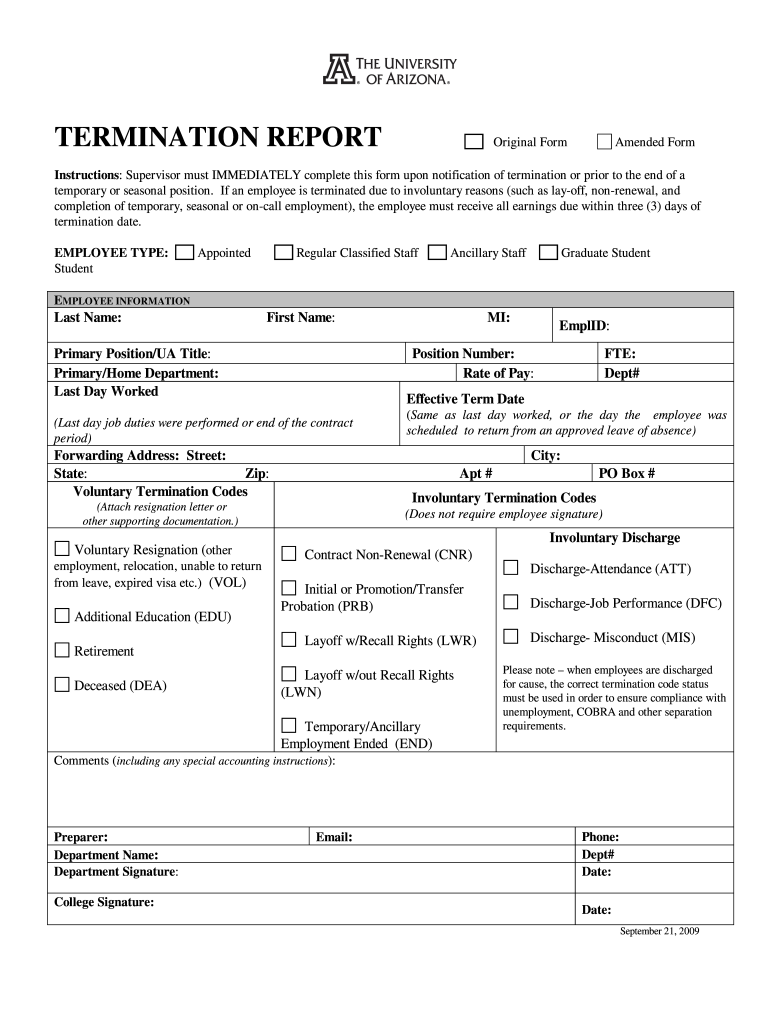







Definition and Meaning of a Termination Report
A termination report is a formal document used to record the circumstances and reasons for an employee’s departure from an organization. This report serves multiple purposes, including providing clear documentation for human resources, aiding in compliance with legal requirements, and serving as a reference for final pay and benefits.
Termination reports can outline various scenarios such as voluntary resignation, retirement, layoffs, or dismissals due to performance issues or misconduct. The primary goal of the report is to ensure that all relevant information regarding the termination is documented accurately, minimizing any potential misunderstandings or disputes later on. This documentation may also include policy references, final paycheck calculations, and information regarding the continuation of benefits under COBRA.
In addition to providing a record for the employer, a termination report can serve as a critical resource for the employee, allowing them to understand the specifics of any final transactions and obligations. Properly completed, this document is essential in meeting both organizational and legal standards regarding employment termination.
Steps to Complete the Termination Report
Completing a termination report involves a systematic approach to ensure accuracy and comprehensiveness. Below is a step-by-step guide to help streamline the process.
-
Gather Initial Information:
- Collect details such as the employee's name, position, and employment dates.
- Note the specific reason for termination (voluntary vs. involuntary) and relevant dates.
-
Document the Termination Reason:
- Clearly indicate whether the termination is due to resignation, layoffs, performance issues, or other reasons.
- Support the reason with any documentation, such as performance reviews or relevant emails.
-
Calculate Final Pay:
- Specify the last date of work and calculate any owed wages, including unused vacation or sick leave.
- Include information on deductions for benefits or reimbursements required.
-
Include Benefit Information:
- Detail information regarding the continuation of benefits under COBRA, if applicable.
- Offer resources for the employee to access necessary health benefits.
-
Confirm Property Return:
- List any company property that must be returned, such as keys, uniforms, or electronic devices.
- Verify the status of these items with a checklist to ensure nothing is overlooked.
-
Obtain Signatures:
- Secure the signatures of both the employee and supervisor to acknowledge the report's accuracy.
- This step is essential for legal protection and maintaining records.
By following these steps, employers can ensure their termination reports are thorough, clear, and compliant with organizational policies and legal requirements.
Important Terms Related to Termination Reports
Understanding the key terminology associated with termination reports can assist both employers and employees in navigating the process effectively. Familiar terms include:
- Voluntary Termination: When an employee chooses to leave the organization, either by resignation or retirement.
- Involuntary Termination: When the employer decides to terminate the employee's position, which can include layoffs or dismissals.
- COBRA: Consolidated Omnibus Budget Reconciliation Act, which allows employees to continue their health insurance coverage after leaving an employer under certain conditions.
- Final Paycheck: The last payment issued to an employee, which may include accrued vacation pay, bonuses, and other compensation.
- Documentation: Any records or evidence that support the reasons for termination, including performance reviews or disciplinary actions.
Familiarizing oneself with these terms can facilitate smoother discussions surrounding termination processes and expectations.
Who Typically Uses the Termination Report?
Termination reports are utilized by various parties within an organization, each with different roles in the termination process. Key users include:
- Human Resources Departments: HR is responsible for creating, maintaining, and processing termination reports. They ensure that all proper procedures are followed and that the reports meet legal compliance requirements.
- Supervisors and Managers: Direct supervisors are typically responsible for initiating the termination process and completing the report. They provide essential context regarding the employee’s performance and the reasoning behind the termination.
- Employees: Affected employees receive a copy of the termination report. It serves as a reference for them regarding their final pay and any benefits.
- Legal and Compliance Teams: Legal advisors may review termination reports to identify any potential liabilities or compliance concerns related to the termination.
Understanding the stakeholders involved ensures that all necessary parties are engaged effectively in the termination process and fosters accountability throughout the organization.


Legal Use of the Termination Report
Termination reports hold significant legal value and can serve as critical documentation in various scenarios. Employers must use these reports ethically and in compliance with labor laws to mitigate risks of wrongful termination claims. Here are key legal considerations:
- Documentation of Employment History: A termination report provides a formal record of the employee’s tenure, which can be vital if disputes arise.
- Proof of Compliance with Employment Laws: By detailing the reasons and processes involved in the termination, organizations can demonstrate adherence to federal, state, and local employment laws, including those related to equal opportunity employment.
- Defense Against Claims: In cases where an employee may file a grievance or lawsuit regarding their termination, the report can serve as evidence that the employer followed standard procedures and made fair decisions based on documented performance or behavior.
Employers should consistently utilize termination reports in a manner that reflects transparency and respect for employee rights, maintaining organized and fair record-keeping practices.
Key Elements of the Termination Report
An effective termination report should include several key components to provide a complete overview of the termination process. Essential elements to include are:
- Employee Information: Names, job title, department, and dates of employment.
- Reason for Termination: A factual statement encompassing whether the termination was voluntary or involuntary, with supporting reasoning.
- Final Pay Calculations: Detailed information regarding final salary, including any outstanding leave or benefits.
- Benefit Continuation Information: References to COBRA or other applicable benefits that the employee may access post-termination.
- Asset Return Confirmation: A checklist of company property to be returned by the employee, ensuring accountability.
- Acknowledgment and Signatures: Sections for both employee and supervisor signatures to verify the report's accuracy and completeness.
Including these elements ensures that the termination report is comprehensive, effective, and ready to address any potential legal requirements or inquiries.
Examples of Using the Termination Report
Practical applications of termination reports can vary across different scenarios within an organization. Here are several examples:
- Voluntary Resignation: An employee decides to resign for personal reasons. The termination report documents the resignation date and acknowledges any benefits to be received.
- Involuntary Termination Due to Performance Issues: A supervisor must terminate an employee for ongoing performance issues. The report outlines the specific performance metrics that were not met and summarizes any prior disciplinary actions taken.
- Layoffs During Economic Downturn: In situations where financial constraints lead to layoffs, the termination report can outline the economic reasons for the decision, helping to justify the layoffs if questioned later.
- Retirement: When an employee retires, the termination report can document the retirement date, any final compensation details, and the retirement benefits available under company policies.
These examples illustrate the diverse situations where termination reports can be effectively used to formalize employee departures and maintain comprehensive records.




