







Understanding Positive Office Referrals
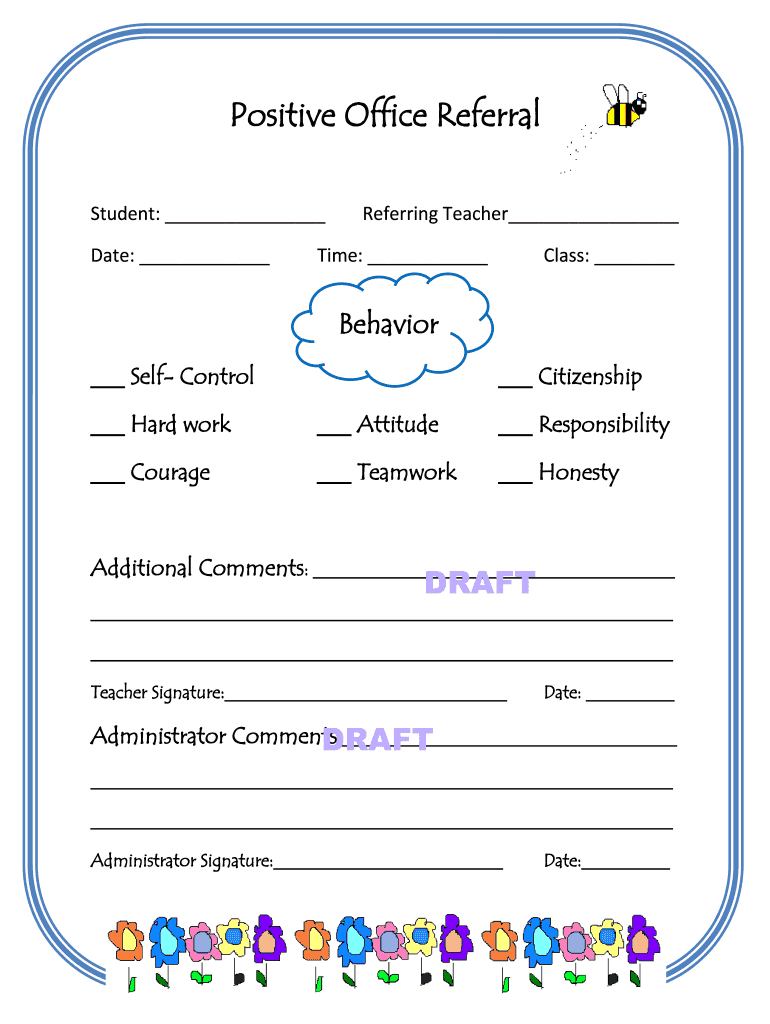
Positive office referrals are formal acknowledgments provided by educators to commend students for exemplary behaviors. These referrals play a significant role in fostering a positive learning environment and encouraging a culture of respect and responsibility among students.
Purpose of Positive Office Referrals
The main objective of a positive office referral is to recognize and celebrate positive student behaviors. By issuing these referrals, educators can:
- Reinforce desired behaviors such as self-control, teamwork, and honesty.
- Promote a positive school culture where good behavior is acknowledged.
- Encourage students to continue exhibiting positive behaviors and serve as role models for their peers.
Key Components of a Positive Office Referral Template
A well-structured positive office referral template typically includes several crucial elements:
- Student Information Section: Captures the student's name, grade, and teacher's name to identify the individual receiving the recognition.
- Behavior Description: A section dedicated to outlining the specific positive actions or behaviors exhibited by the student. This could include examples of how they demonstrated leadership, responsibility, or collaboration.
- Teacher Comments: Educators can offer additional observations and insights into the student's contributions, providing context that highlights the significance of the behavior.
- Administrator Signature: Often, the referral requires an endorsement from an administrator, underscoring the importance of the acknowledgment.
Steps to Complete a Positive Office Referral
Educators can follow a straightforward process to fill out a positive office referral:
- Identify the Student: Start by entering the student's name and relevant details.
- Describe the Behavior: Write a detailed account of the positive behavior observed, using specific examples.
- Add Comments: Include any additional comments or context that may enhance the understanding of the student's actions.
- Obtain Signatures: Have the appropriate staff members, such as the teacher and administrator, sign the referral to validate the acknowledgment.
- Distribute the Referral: Provide a copy to the student to take home, reinforcing the positive behavior at home and in school.
Examples of Positive Office Referrals
Here are practical examples of behaviors that can be cited in a positive office referral:
- A student who assists a classmate struggling with their assignment.
- A student who consistently shows enthusiasm during group activities, encouraging peers to participate.
- A student who demonstrates honesty by reporting a mistake rather than covering it up.
Legal Considerations for Positive Office Referrals
When using positive office referrals, educators must observe privacy and sensitivity concerns. It's important to:
- Ensure that any comments are constructive and do not embarrass the student.
- Maintain confidentiality in discussions surrounding student behavior.
- Follow school district policies that may regulate the documentation and distribution of office referrals.
Benefits of Implementing Positive Office Referrals
Adopting a system of positive office referrals can lead to numerous benefits for both students and educators:
- Encourages a positive reinforcement approach that enhances student morale.
- Strengthens relationships between educators and students as recognition fosters a sense of belonging.
- Supports a collaborative environment in which students feel valued and motivated to improve.
Popular Positive Office Referral Templates
Educators seeking to implement a structured approach can benefit from using established templates that simplify the process. Various free templates are available online, enabling educators to:
- Customize templates to fit unique needs.
- Ensure consistency across different classrooms and educators.
- Save time by leveraging pre-designed formats that include all essential information.
Integrating Positive Office Referrals in School Culture
For schools to maximize the impact of positive office referrals, they should consider:
- Training staff on best practices for recognizing and documenting positive behaviors.
- Creating a school-wide initiative that promotes acknowledgment of students to cultivate enthusiasm among educators and students alike.
- Monitoring the outcomes of referrals to assess their effectiveness in promoting positive behavior across the student body.
By thoughtfully implementing the positive office referral process, schools can create an environment where respectful and responsible behavior is celebrated, thereby fostering student success and well-being.




