
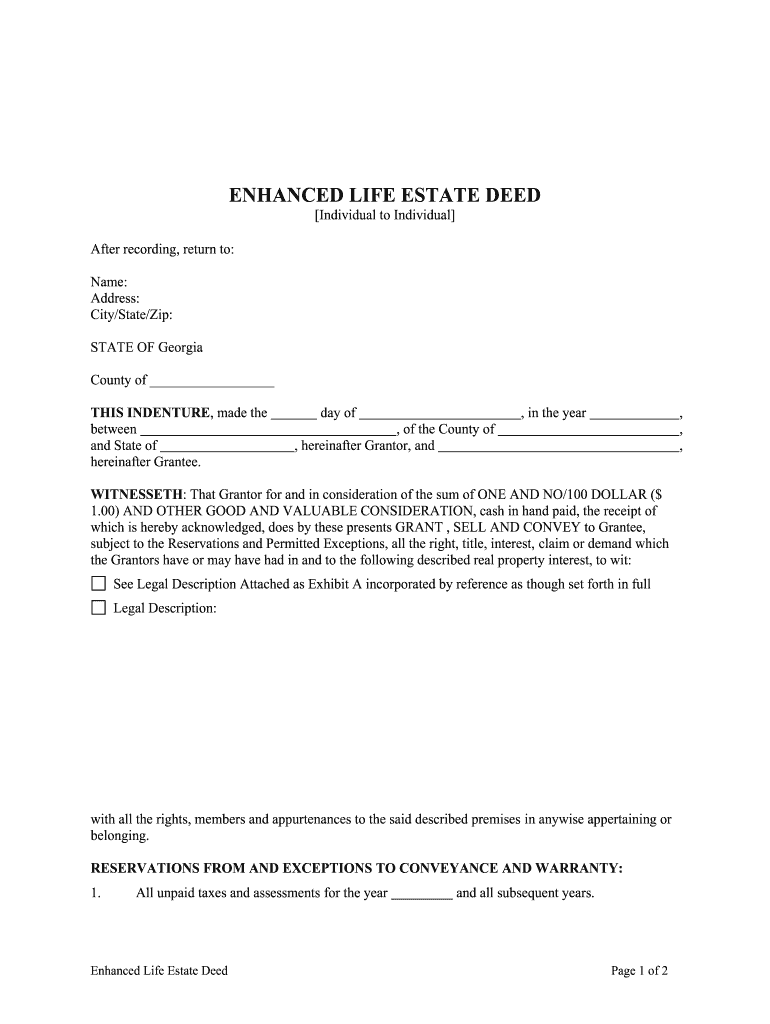







Definition and Meaning of a Life Estate Deed
A life estate deed is a legal document that allows a property owner (known as the Grantor) to retain possession and control of a property during their lifetime. This type of deed simultaneously grants a remainder interest to a secondary party (the Grantee), ensuring they receive full ownership upon the Grantor's death. A life estate enables the Grantor to continue using the property while providing a seamless transfer to the Grantee, avoiding probate. Typically, the deed includes provisions outlining the rights and responsibilities of each party during the life estate period.
Practical Examples
- Grantor Retention: An elderly homeowner may use a life estate deed to remain in their home for the rest of their life while arranging for their child to own the home once they pass away.
- Joint Ownership: If there are multiple Grantees, a life estate deed can specify how the property should be divided or managed after the Grantor's death.
How to Use the Life Estate Deed
When using a life estate deed, all involved parties should clearly understand the rights and responsibilities outlined in the document. The Grantor maintains the right to use, reside in, or lease the property for their lifetime, while the Grantee holds an irrevocable interest in the property. Beneficially, a life estate deed avoids disruption or legal hassle upon the Grantor's death, as property ownership automatically transfers to the Grantee.
Steps for Execution
- Draft the Deed: Consult with a legal professional to draft the deed, ensuring it includes all necessary legal jargon and details pertaining to the property and parties involved.
- Sign the Deed: All parties must sign the document in the presence of a notary public to formalize the deed.
- Record the Deed: Submit the deed to the local county recorder's office for it to take legal effect.
- Maintain Records: Keep a copy of the recorded deed for personal records and future legal references.
How to Obtain a Life Estate Deed
Obtaining a life estate deed involves steps similar to those of crafting other legal property documents. Typically, individuals work with attorneys or legal consultants to ensure accuracy and compliance with state-specific laws. A thorough understanding and articulation of the Grantor's intentions are crucial for this process.
Necessary Steps
- Legal Consultation: Engaging a real estate attorney is recommended to ensure the document meets all legal requirements and captures the Grantor’s wishes accurately.
- Property Valuation: Assess the property's current value, which may influence decisions and negotiations.
- Information Gathering: Collect detailed information regarding the property, including its legal description, and the full names and addresses of all parties involved.
Steps to Complete the Life Estate Deed
Completing a life estate deed requires careful attention to detail and adherence to local regulations. The process generally allows the Grantor to outline specific terms and perms based on their personal needs and intentions.
Detailed Instructions
- Preparation: Gather all necessary documentation, including identification for all parties, the property's legal description, and any existing legal agreements that may affect ownership.
- Draft the Document: Outline all details necessary for the deed, including the timeline and specific conditions of the life estate.
- Review and Formalize: Review the drafted deed with legal aid to ensure clarity and lawful correctness before signing in the presence of a notary.
- File and Record: Submit the finalized deed to the county recorder's office, fulfilling legal obligations and ensuring the document is part of public records.
Key Elements of the Life Estate Deed
A life estate deed typically includes several key components that ensure its adequacy and enforceability. Each component serves a functional and legal purpose, contributing to the document’s overall effectiveness and clarity.
Essential Components
- Grantor and Grantee Details: Accurate identification and contact information of all parties involved.
- Property Description: A legal description of the property, including pertinent boundary details and any existing liens.
- Rights and Responsibilities: Clearly defined roles and responsibilities for the Grantor and Grantee during the life estate.
State-Specific Rules for Life Estate Deeds
The implementation of life estate deeds can vary by state. Local laws influence eligibility criteria, tax implications, and legal enforcements, requiring a thorough understanding of state-specific requirements.
Important Considerations
- Variation in Requirements: Some states may require additional forms or disclosures when drafting life estate deeds.
- Impact on Taxes: Understanding how a life estate impacts state and local taxes, particularly in regard to property and inheritance taxes.
- Legal Compliance: Ensuring the deed complies with relevant state real estate and property laws to maintain its validity.
Examples of Using the Life Estate Deed
Real-world examples highlight the practical utility of a life estate deed, offering insights into typical scenarios where such a document can be useful.
Common Scenarios
- Elder Care Planning: Seniors may use life estate deeds to plan property succession while maintaining control in their lifetime.
- Wealth Transfer: Families might employ a life estate deed to smoothly transfer property to descendants, minimizing disputes and legal costs.
Legal Use of the Life Estate Deed
Legal use of a life estate deed involves understanding its application within the boundaries of the law. Proper use ensures owners respect the document's stipulations while complying with state and local regulations.
Legal Aspects
- Restrictions on Property Changes: A life estate deed often limits significant changes or alterations to the property by the Grantor without Grantee’s agreement.
- Irrevocability: Once executed, changes to the life estate generally require mutual consent from both the Grantor and the Grantee.
Important Terms Related to Life Estate Deed
Understanding terminology unique to life estate deeds enhances comprehension and reduces misinterpretations that might arise during drafting or execution.
Commonly Used Terms
- Life Tenant: Refers to the individual (Grantor) retaining rights to live on and use the property during their lifetime.
- Remainderman: The Grantee who gains full ownership of the property upon the life tenant’s passing.
- Remainder Interest: The future interest held by the Grantee until they fully acquire the property.
Who Typically Uses the Life Estate Deed
Life estate deeds are popular among certain demographics, often dictated by necessity or strategic planning intentions. Recognizing typical users can provide context for its relevance and application.


User Profiles
- Elderly Property Owners: Desire to maintain home control while planning estate transitions.
- Strategic Estate Planners: Use life estate deeds for seamless, probate-free distribution of property to heirs.
- Financial Advisers: Recommend these deeds for clients seeking efficient estate planning vehicles.
Enhanced Life Estate Warranty Deed: The Lady Bird Deed
One well-known variant of the life estate deed is the Enhanced Life Estate Warranty Deed, termed the "Lady Bird Deed." This document offers unique features and benefits, particularly popular in specific states for its distinctive advantages.
Features of the Lady Bird Deed
- Flexibility: Allows Grantors to change their beneficiaries or sell the property without Grantee consent.
- Avoidance of Gift Tax: Unlike standard life estate deeds, a Lady Bird Deed avoids triggering a gift tax during the Grantor’s lifetime.
- Protection from Creditors: Shields the property from creditors of the Grantee while the Grantor is alive.




