




01. Edit your hospital admission request form online
Type text, add images, blackout confidential details, add comments, highlights and more.

Type text, add images, blackout confidential details, add comments, highlights and more.

Draw your signature, type it, upload its image, or use your mobile device as a signature pad.

Send hospital admission form via email, link, or fax. You can also download it, export it or print it out.
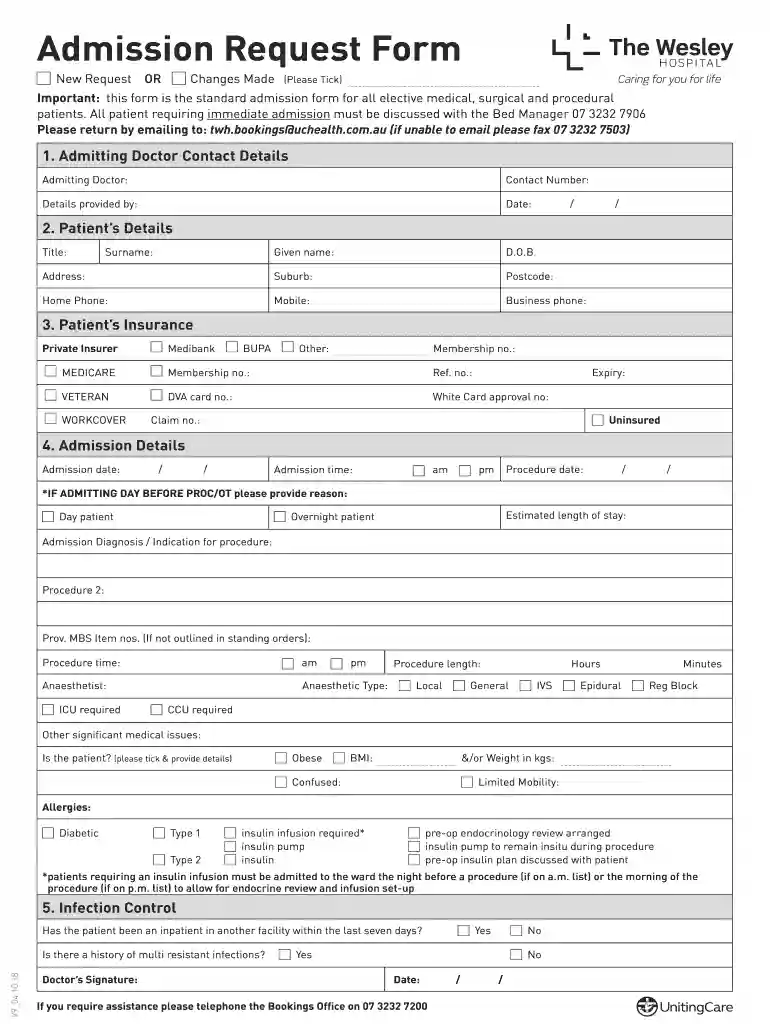
The hospital admission request form is a vital document used in the healthcare system to facilitate the smooth admission of patients into a medical facility. It serves as a formal request for a patient's hospitalization, encompassing essential information about the patient, the requesting physician, and the nature of the medical need for admission. This form is critical when registering patients for elective surgeries, urgent treatments, or any medical procedures requiring institutional care.
Understanding these components ensures that all necessary data is collected, allowing healthcare facilities to prepare adequately for the patient's arrival and provide timely medical intervention.
Utilizing the hospital admission request form effectively requires careful attention to completion and submission protocols. The process generally involves several clear steps to ensure all relevant information is accurately captured.
Initial Consultation: The patient should meet with their physician to discuss the need for hospitalization. At this time, the doctor will assess the patient's medical condition and determine if admission is necessary.
Completing the Form: Both the physician and patient (or their representative) should fill out the form together. Each section should be completed meticulously, ensuring that details such as medical history and insurance coverage are accurate and up-to-date.
Submission Protocol: After the form is completed, it must be submitted to the hospital's admission office. This can typically be done in person, via fax, or electronically, depending on the hospital's policies.
Follow-Up: After submission, it is crucial to confirm that the form has been received and to check for any additional requirements that the hospital might have before the admission.
By following these steps, the patient can experience a smoother admission process with fewer delays.
Completing the hospital admission request form is a straightforward process, but attention to detail is vital for proper submission. Here’s a step-by-step guide to ensure all information is accurately included.
Gather Necessary Information: Collect relevant details such as personal identification, insurance cards, and any prior medical records that may assist in the admission process.
Fill Out Patient Information:
Enter Physician and Insurance Information:
Detail Admission Needs: Clearly specify the nature of the admission, whether it is elective or urgent, and provide the expected date of admission.
Review and Sign: Before submitting the form, review all entries for accuracy. Both the patient and physician should sign the document to confirm the information provided.
Completing each step carefully minimizes potential issues and fosters timely processing.
Familiarizing oneself with key terminology can enhance understanding and facilitate smoother navigation through the hospital admission process. Here are some important terms associated with the hospital admission request form:
Elective Admission: A scheduled admission that is not urgent but is planned by the physician for non-emergency procedures.
Emergency Admission: An unplanned admission occurring due to immediate medical needs, typically after an accident or sudden illness.
Prior Authorization: A process within health insurance where the provider must obtain approval from the insurance company before performing a procedure.
Discharge Planning: The process of preparing for the patient's safe transition out of the hospital after treatment, including follow-up care and home support considerations.
Understanding these terms ensures all parties involved in the admission process are aligned and prepared.
The hospital admission request form contains crucial elements that serve to streamline the admission process, ensuring that all necessary patient information is gathered effectively. Key elements include:
Patient Demographics: Essential for identifying the patient and ensuring accurate medical treatment.
Admitting Physician’s Information: Provides a direct line of communication for healthcare staff to the physician responsible for the patient's care.
Medical History Section: This portion offers insight into the patient’s health background, prior treatments, and any ongoing medical challenges.
Insurance Information: Allows the hospital to verify coverage and ensure that necessary authorizations for treatment are in place.
Additional Comments or Special Instructions: This section may include specific directives from the admitting physician regarding patient care, preferences, or emergencies.
These components collectively ensure that the hospital can prepare adequately for the patient’s needs upon admission.
The hospital admission request form plays a vital role in complying with legal and regulatory standards within the healthcare industry. It serves multiple legal purposes, including:
Documentation: Ensures a formal record of the admission request and collects necessary data in case of future legal inquiries or disputes.
Patient Consent: The signed form signifies that the patient (or their representative) consents to the admission and treatment process, fulfilling legal requirements for transparency in medical practices.
Insurance Compliance: Helps to meet legal obligations regarding insurance claims and pre-authorization requirements. This document can be used as evidence if disputes arise concerning coverage or payment.
Confidentiality: Protects patient information in adherence to HIPAA (Health Insurance Portability and Accountability Act) regulations, ensuring that personal medical data is handled appropriately.
By adhering to the legal frameworks surrounding the hospital admission request form, healthcare providers can minimize risks and ensure compliance with relevant laws.
We've got more versions of the hospital admission request form form. Select the right hospital admission request form version from the list and start editing it straight away!
| Versions | Form popularity | Fillable & printable |
|---|---|---|
| 2018 | 4.8 Satisfied (81 Votes) |
At DocHub, your data security is our priority. We follow HIPAA, SOC2, GDPR, and other standards, so you can work on your documents with confidence.
DATE. HOME PHONE #. CELL PHONE #. OTHER PHONE # . NAME. SOCIAL SECURITY #. MAILING ADDRESS. CITY. STATE ZIP . BIRTH DATERead more
**Call your **health care providers office. Contact your health care providers office to ask for help with the appeals process. Someone in his or her office


