




01. Edit your form online
Type text, add images, blackout confidential details, add comments, highlights and more.

Type text, add images, blackout confidential details, add comments, highlights and more.

Draw your signature, type it, upload its image, or use your mobile device as a signature pad.

Send it via email, link, or fax. You can also download it, export it or print it out.
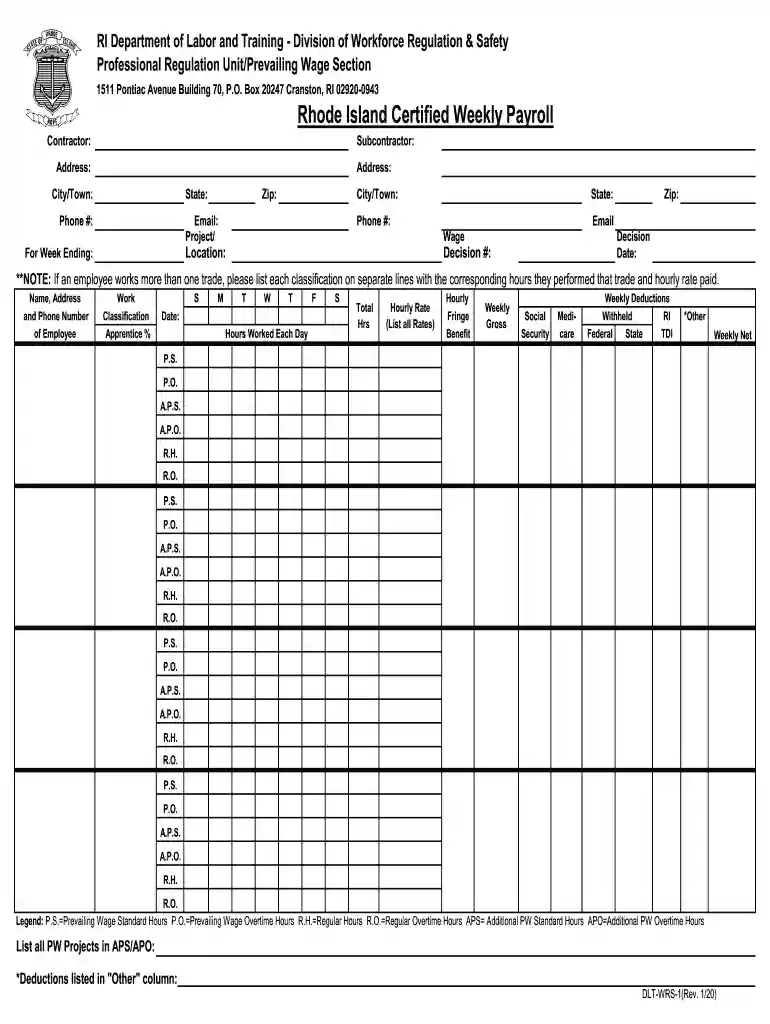
The RI Certified Payroll Fillable Form is a standardized document required by the Rhode Island Department of Labor and Training. It is primarily used by contractors and subcontractors to report employee wages for public works projects. The form includes detailed sections for contractor information, employee details, work classifications, hours worked, wage rates, deductions, and a compliance statement affirming adherence to prevailing wage laws. This form ensures transparency and legal compliance in public infrastructure projects.
The form can be downloaded directly from the Rhode Island Department of Labor and Training’s official website. Contractors can also request physical copies via mail or obtain them at local department offices. The document is typically available in both digital PDF and paper format, enabling flexible access according to the contractor’s preference.


The form is legally mandated under Rhode Island law for contractors involved in public works projects. Failure to complete or submit the form accurately can result in penalties, including fines or contract termination. It assists in maintaining transparency and integrity in the spending of public funds by ensuring fair wage practices.
Non-compliance with the certified payroll requirements can lead to serious consequences for contractors, including:
Adhering to these guidelines is critical for maintaining contractual obligations and fostering a lawful business environment within the state of Rhode Island's infrastructure projects.
We've got more versions of the ri certified payroll fillable form form. Select the right ri certified payroll fillable form version from the list and start editing it straight away!
At DocHub, your data security is our priority. We follow HIPAA, SOC2, GDPR, and other standards, so you can work on your documents with confidence.
Form, 403(b) RC RCP (PF-14) -Authorization Form for Non-Classified to Start and Change 403b Contributions enrolled in Mandatory 5% contribution.Read more
These forms must be signed by the owner or an officer of the corporation, DocHubing that this is a true and exact copy of their payroll records. (2) That anyRead more


