







Understanding Online Cultural Diversity Self Assessments
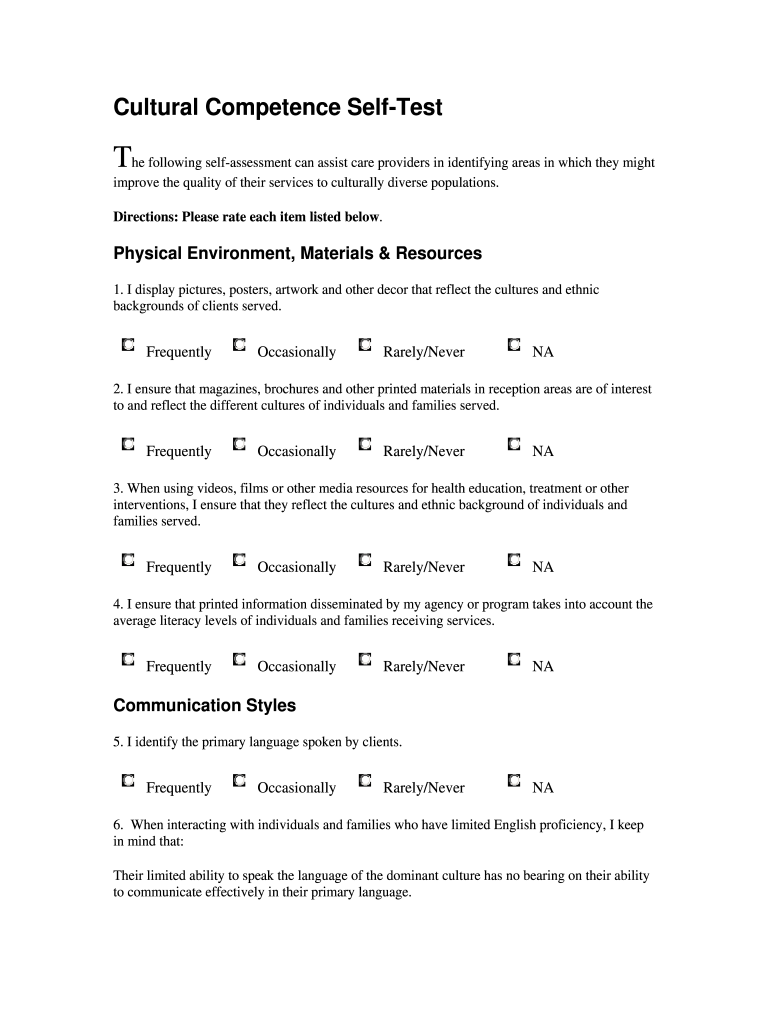
An online cultural diversity self-assessment is a structured tool designed to help individuals and organizations evaluate their understanding and implementation of cultural diversity principles. Often employed by care providers, educational institutions, and workplaces, these assessments gauge cultural competence and identify areas for improvement.
Key Definitions and Components
-
Cultural Competence: This refers to the ability to understand, communicate with, and effectively interact with people across cultures. It includes being aware of one's own cultural worldview, developing positive attitudes towards cultural differences, and gaining knowledge of different cultural practices and worldviews.
-
Self-Assessment Tools: These tools generally comprise questionnaires, checklists, or rating scales that prompt users to reflect on their cultural awareness and practices. Users respond to various scenarios, providing insight into their readiness to engage with diverse populations.
Benefits of Online Assessments
-
Accessibility: Being available online means users can complete assessments at their convenience, regardless of location. This feature fosters wider participation and allows individuals to take their time reflecting on each question.
-
Diversity of Formats: Online assessments can come in various formats—questionnaires, quizzes, or tests—that cater to different learning styles, making the experience more engaging.
How to Complete an Online Cultural Diversity Self Assessment
-
Select an Appropriate Assessment Tool: Choose from free cultural competence assessment tools available online, ensuring the tool aligns with your specific needs.
-
Reflect on Personal Experience: Provide honest answers based on your interactions and experiences concerning cultural diversity. Consider all facets of your involvement with diverse groups, including communication styles, values, and attitudes.
-
Analyze Results: After completing the assessment, review your results carefully. Most tools will provide insights into various aspects of cultural competence, highlighting strengths and areas for potential improvement.
Common Formats of Assessments
-
Cultural Competence Self-Assessment Questionnaire: This tool typically includes Likert scale questions that measure attitudes and perceptions regarding cultural interactions. Respondents often rate their agreement with statements related to cultural understanding.
-
Cultural Diversity Self Assessment Quiz: Quizzes often take a more informal approach while still assessing knowledge and practices surrounding cultural diversity.
-
Cultural Competence Self Test Checklist: These checklists provide specific criteria to evaluate practices against, making it straightforward for users to assess compliance with cultural competence norms.
Applying Insights from Assessments
-
Professional Development: The results from cultural self assessments can guide targeted training and development programs. For organizations, this may involve workshops focused on cultural sensitivity, communication skills, and inclusivity.
-
Policy Adjustment: Awareness from assessments can lead organizations to review and update policies that govern interactions with diverse communities. This ensures practices resonate with the values of inclusivity and respect.
Additional Considerations
-
Potential Limitations: Remember that while these tools provide valuable insights, they are not definitive measures of cultural competence. Users should consider follow-up actions based on the assessment results, including further training or mentorship.
-
Legal and Ethical Standards: Ensuring compliance with specific regulations related to cultural competence can also be addressed through these assessments. This includes adhering to standards set forth by various accreditation bodies and state regulations.
Conclusion
Online cultural diversity self assessments serve as crucial components in fostering more inclusive environments across various settings. They facilitate self-reflection and guide necessary improvements, ultimately enhancing cultural competence.




