




01. Edit your rental inspection consent form online
Type text, add images, blackout confidential details, add comments, highlights and more.

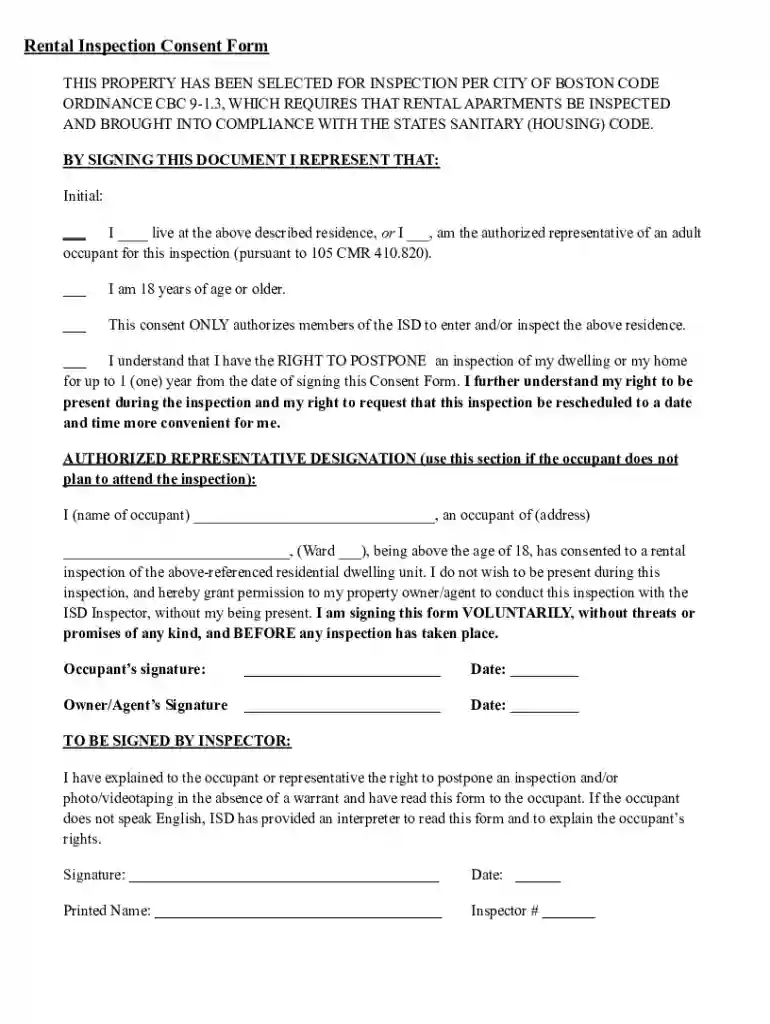
Type text, add images, blackout confidential details, add comments, highlights and more.

Draw your signature, type it, upload its image, or use your mobile device as a signature pad.

Send rental inspection consent via email, link, or fax. You can also download it, export it or print it out.
Residential rental inspection services in the City of Santa Cruz are a key component in ensuring compliance with local housing regulations. These inspections are designed to assess the condition of rental properties to guarantee they meet the required health and safety standards. By conducting these evaluations, the City of Santa Cruz aims to foster safe and livable environments for tenants, addressing potential issues such as structural deficiencies, inadequate sanitation, and fire hazards. Inspections are typically carried out by trained professionals who assess various aspects of the property, from electrical systems to plumbing.
To effectively utilize residential rental inspection services in Santa Cruz, property owners and managers should familiarize themselves with the inspection process. The primary purpose is to ensure that rental units comply with local regulations, protecting both tenants and property owners. Inspections are typically scheduled by the property owner or the management company, who must ensure that tenants are informed in advance.
Completing the residential rental inspection process in Santa Cruz involves several stages. Understanding these steps can help property owners and managers streamline their preparation and submission efforts.
Understanding the terminology associated with rental inspections can demystify the process and facilitate better communication with inspectors and tenants.
Legal compliance is crucial when dealing with rental properties and inspection services. The City of Santa Cruz mandates adherence to specific codes that protect tenants' rights and enhance property safety.
Residential rental inspection services are primarily utilized by property owners and managers who wish to maintain their rental units in compliance with regulatory standards. However, tenants themselves can also request these services if they perceive inadequacies in their living conditions.


Failure to comply with rental inspection requirements in Santa Cruz can lead to financial penalties and enforcement actions. Non-compliance may be identified during routine or complaint-driven inspections.
Understanding real-world scenarios in which residential rental inspection services are used can highlight their practical benefits and applications in maintaining property standards.
Maximizing the utility and safety of rental properties in Santa Cruz hinges upon effective engagement with these inspection services, fostering safe, compliant, and welcoming environments for all residents.
We've got more versions of the rental inspection consent form form. Select the right rental inspection consent form version from the list and start editing it straight away!
At DocHub, your data security is our priority. We follow HIPAA, SOC2, GDPR, and other standards, so you can work on your documents with confidence.
The Residential Rental. Inspection Program (RRIP) helps ensure rental housing in Santa Cruz is safe and meets basic maintenance standards. The program was.Read more
by K Ramsey Cited by 92 The Environmental Protection Agencys (EPA) Smart Location Database (SLD) was developed to address the growing demand for data products andRead more
Mar 30, 2026 If you are offering and charging guests or students for overnight accommodations in Santa Cruz, you may be required to register and file monthlyRead more


