




01. Edit your online client consultation forms online
Type text, add images, blackout confidential details, add comments, highlights and more.

Type text, add images, blackout confidential details, add comments, highlights and more.

Draw your signature, type it, upload its image, or use your mobile device as a signature pad.

Send it via email, link, or fax. You can also download it, export it or print it out.
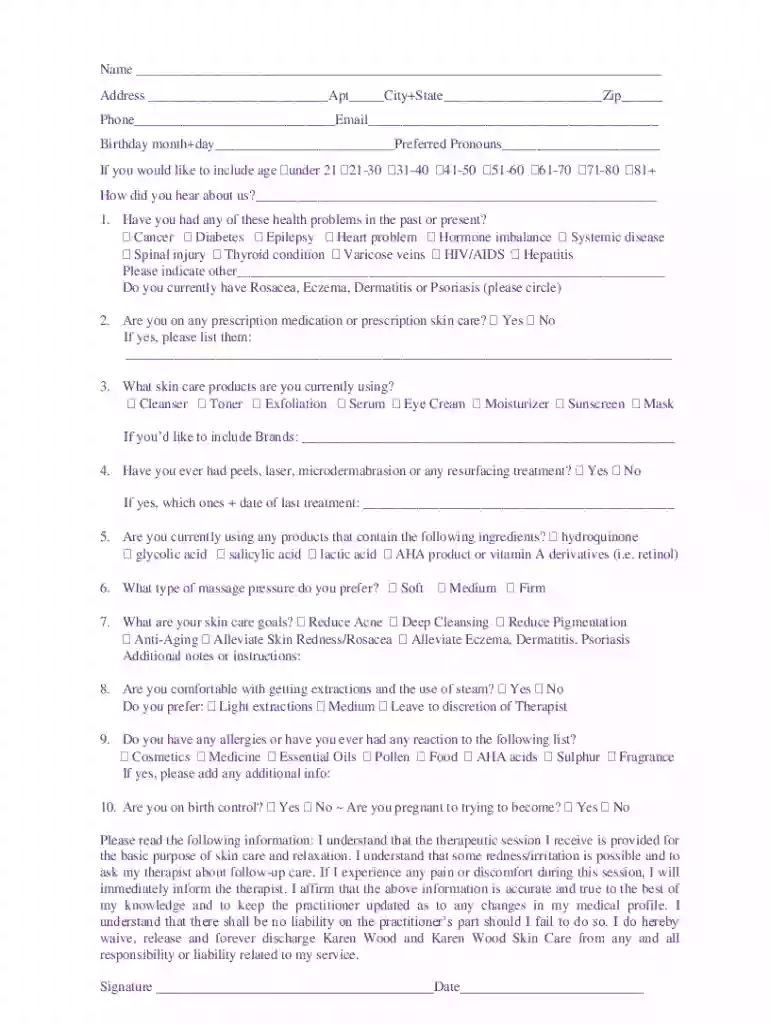
The client consultation form is a vital document for service providers, particularly in the skincare industry, as it collects essential client information before initiating any service. This form primarily serves as a means to gather comprehensive personal data from clients, including medical history, current skincare products, health concerns, and treatment preferences. By collating this information, service providers can tailor their services to meet the unique needs of each client, ensuring both safety and satisfaction.
The form is instrumental in preventing adverse reactions by identifying any contraindications or allergies. Furthermore, it allows for informed consent by clearly outlining the procedures and potential risks involved in the services being offered. This transparency helps build trust and fosters a professional-client relationship.
Personal Information
Medical and Health History
Current Skincare Regimen
Treatment Preferences
Consent for Services
Client consultation forms are predominantly utilized by professionals in the skincare and beauty industry, such as dermatologists, estheticians, and cosmetic providers. These professionals rely on the form to customize their services to individual client needs effectively. Wellness centers, spas, and clinics may also use these forms as part of their intake procedures to ensure comprehensive understanding and documentation of client needs.


Using a client consultation form legally requires adherence to privacy and data protection laws, such as the Health Insurance Portability and Accountability Act (HIPAA) in the United States. Service providers must ensure that the personal and medical information collected is kept confidential and secure. Moreover, obtaining informed consent through the form is a legal safeguard against misunderstandings and legal disputes, ensuring that clients acknowledge and understand the treatments and associated risks.
In a practical setting, an esthetician might use this form during a new client intake session. The form would signal any allergies noted by the client, guiding the esthetician to avoid certain ingredients. Additionally, during a follow-up visit, the form offers a reference of previous treatments, ensuring continuous and safe services catered to the client’s skin type and history.
By employing this comprehensive tool, service providers can not only enhance the client's experience but also protect their practice legally and ethically.
We've got more versions of the online client consultation forms form. Select the right online client consultation forms version from the list and start editing it straight away!
At DocHub, your data security is our priority. We follow HIPAA, SOC2, GDPR, and other standards, so you can work on your documents with confidence.
It is the responsibility of the licensee to ensure that each client completes a consultation document before each initial massage session and if the clientsRead more
In a group of three persons, three consultation rounds of ten minutes each are conducted. Each person is the client once, while the other two counsel. DuringRead more


