




01. Edit your lodgement security bond money online
Type text, add images, blackout confidential details, add comments, highlights and more.

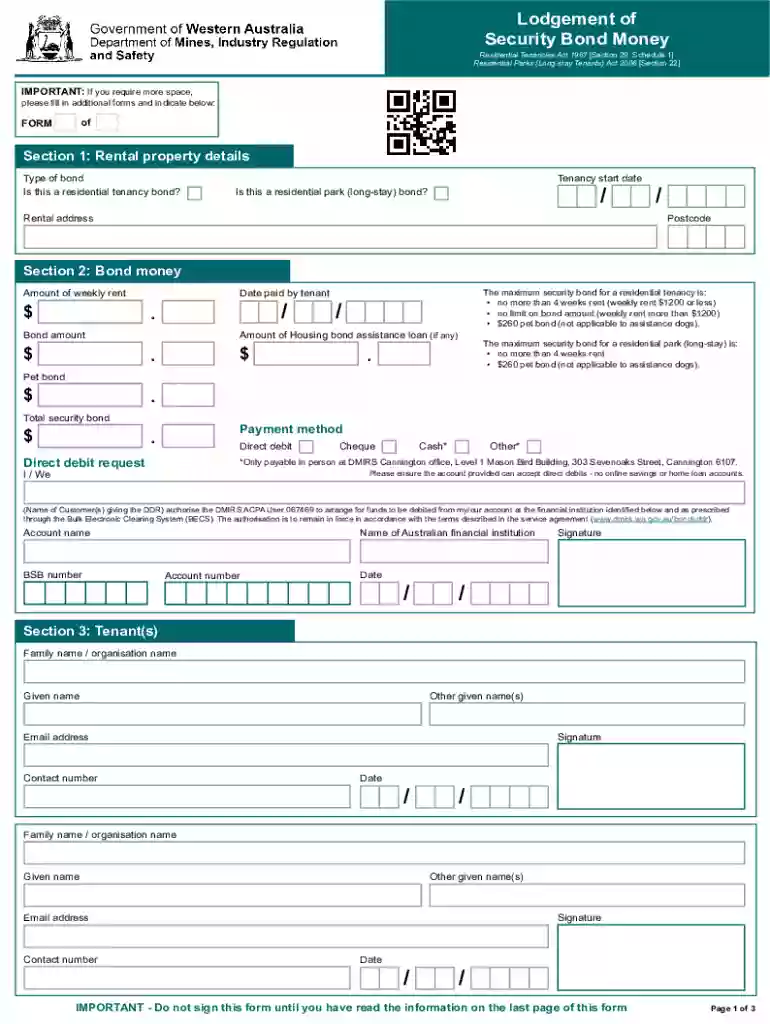
Type text, add images, blackout confidential details, add comments, highlights and more.

Draw your signature, type it, upload its image, or use your mobile device as a signature pad.

Send au lodgement security bond money via email, link, or fax. You can also download it, export it or print it out.
The Residential Tenancies Act 1987 - Sect 29 pertains to the legal framework governing the lodgement of security bonds for rental properties, under the legislation of Western Australia. It sets out the procedures and obligations for both tenants and landlords regarding the collection, lodging, and management of bond monies. Specifically, this section of the act emphasizes the legal requirements for lodging security bond money within a specific timeline to ensure compliance and avoid penalties.
Bond lodgement is crucial as it serves as a financial security for landlords in case of tenant default or property damage. Under the stated act, the bond money must be lodged with an approved bond administrator within fourteen days of receipt, ensuring that tenant funds are securely held and managed according to legal standards.
To obtain the Bond Lodgement Form, stakeholders must access it via the official channels provided by the Department of Mines, Industry, Regulation, and Safety in Western Australia. This form can typically be found on their website or requested at their physical offices. It is essential for both tenants and landlords to use the official forms to ensure compliance with regulatory requirements.
Completing the bond lodgement form requires accurate and detailed information about the rental agreement. Below are the step-by-step instructions:
Rental Property Details:
Bond Details:
Tenant Information:
Landlord/Agent Information:
The Residential Tenancies Act 1987 - Sect 29 enforces legal protocols that protect both tenant and landlord rights regarding security deposits. Compliance involves strict adherence to:
Failing to comply with bond lodgement requirements could result in legal actions or financial penalties as stipulated in the statute. Landlords may face substantial fines, and disputes arising from improper lodgement can lead to costly courtroom proceedings.
Understanding key terminologies within the act is vital:
Failure to lodge the bond within specified periods can result in serious penalties, including:
The form's essential components include:
In practical use, various scenarios may arise:
For shared properties, tenants may pay separate portions of the bond. Proper documentation and agreement on individual responsibilities can prevent later disputes about liability for damages.
While this act applies in Western Australia, similar legislative structures exist across different jurisdictions with variations specific to each state's regulations in the United States. Potential differences may involve:
In the U.S., the process may vary by state, but often involves depositing the bond in a state-designated escrow account within a set timeframe, much like the system established by Western Australia legislation. Tenants and landlords should consult local laws to align with their respective requirements.
We've got more versions of the lodgement security bond money form. Select the right lodgement security bond money version from the list and start editing it straight away!
| Versions | Form popularity | Fillable & printable |
|---|---|---|
| 2021 | 4.6 Satisfied (44 Votes) |
At DocHub, your data security is our priority. We follow HIPAA, SOC2, GDPR, and other standards, so you can work on your documents with confidence.


