
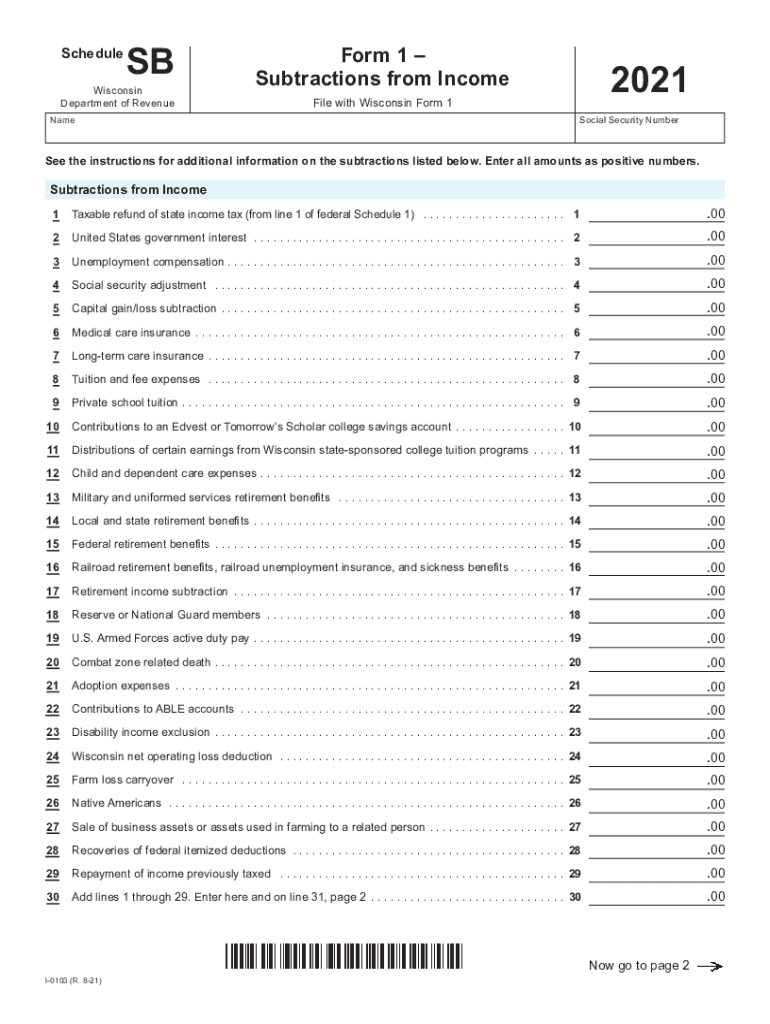







Definition and Importance of Schedule SB Form 1
Schedule SB Form 1 is an essential document used in conjunction with the Wisconsin Department of Revenue's Form 1 to itemize specific subtractions from income. These subtractions can significantly impact the calculation of your taxable income, ensuring you only pay taxes on adjusted sums. The primary objective of this form is to provide transparency and simplify the reporting process for taxpayers who qualify for various income deductions, such as government interest, unemployment compensation, and education-related expenses.
Key Components of the Form
- Subtractions for Taxable Refunds: Taxpayers can report amounts from state tax refunds that may impact federal income calculations.
- Government Interest: Deductible interest income from federal obligations.
- Educational Deductions: Potential reductions in taxable income relating to expenses such as tuition.
- Health and Retirement Deductions: Specific subtractions allowed in relation to healthcare benefits or retirement contributions.
Steps to Complete Schedule SB Form 1
Completing Schedule SB Form 1 involves several detailed steps to ensure all applicable subtractions are accurately recorded. Below is a guideline to assist in filling out this form effectively:
- Gather Necessary Documents: Collect all relevant documentation related to your income and potential subtractions, including W-2s, interest statements, and proof of eligible expenses.
- Review Income Sources: Clearly identify each source of income which may have associated subtractions, such as interest or unemployment benefits.
- Determine Eligible Subtractions: Refer to specific criteria outlined in the form instructions to identify applicable subtractions for your situation.
- Calculate each Subtracted Amount: Enter each subtraction as a positive value, ensuring accuracy to avoid errors.
- Complete other Required Sections: Ensure any inconsistencies are resolved and the information aligns with other forms, particularly the original Form 1.
Who Typically Uses Schedule SB Form 1
Schedule SB Form 1 is primarily utilized by Wisconsin residents who have complex income situations involving multiple potential deductions. This includes:
- Self-Employed Individuals: Often have diverse streams of income subject to specific subtractions.
- Retirees: May have government bond interests or healthcare expenses applicable for deduction.
- Students: Can benefit from tuition-related subtractions.
- Certain Business Owners: Particularly those operating in compliance-heavy industries with varied income structures.
Legal and Compliance Considerations
Adherence to legal requirements when filling out Schedule SB Form 1 is critical to avoid penalties or legal ramifications. Understanding the legal landscape is crucial, especially with:
- ESIGN Act Compliance: For individuals opting to submit the form electronically through platforms like DocHub, ensuring signatures and documents are legally recognized.
- State-specific Regulations: Wisconsin-specific regulations that govern the use of Schedule SB Form 1 must be observed meticulously.
- Record-keeping Protocols: Maintain a comprehensive record of all documents supporting your income subtractions, ensuring they're accessible if needed for verification by tax authorities.
State-specific Rules and Regulations
Given the nature of state taxation laws, certain modifications and specifics apply unique to Wisconsin's Schedule SB Form 1:
- Criteria for Subtractions: Wisconsin may have specific eligibility criteria that affect allowable subtractions, especially in terms of educational and healthcare expenses.
- Deadlines and Extensions: Be aware of specific state-set deadlines for submission to avoid late filing penalties.
- Frequently Updated Forms: Regularly check for amendments and updates to the form to ensure compliance with the latest tax laws.
Filing Deadlines and Key Dates
Knowing key deadlines and dates associated with Schedule SB Form 1 can facilitate timely submission and minimize the risk of penalties:
- Annual Filing Deadline: Generally aligns with the federal tax submission deadline, April 15, unless an extension is granted.
- Extension Requests: Wisconsin offers the option to request extensions, which must be submitted timely and justified adequately.
- Important Pre-deadline Dates: Ensure all preparatory documentation and records are complete at least a month before the actual deadline to allow ample correction time.
Means of Submission: Online, Mail, or In-Person
Schedule SB Form 1 can be submitted through various channels, allowing flexibility based on personal preference and accessibility:
- Online Submission: Quick and efficient, forms can be completed and submitted via platforms like DocHub.
- Mail Submission: Traditional method involving hard copies sent to the Wisconsin Department of Revenue.
- In-Person Submission: Ideal for those seeking immediate verification or requiring assistance, often done at local tax offices or during specific filing events.
Practical Examples and Use Cases
Understanding practical scenarios where Schedule SB Form 1 is applied helps to visualize its use:
- Retired Couple with Multiple Income Streams: May subtract government bonds interest and retirement contributions.
- Self-employed Consultant: Can benefit from educational deductions if attending relevant courses.
- Unemployed recent College Graduate: Engaging in tax deductions from unemployment compensation received during the job search.
Each section and example is tailored to offer comprehensive insight into how Schedule SB Form 1 functions within the context of Wisconsin's state income tax regulations. By adhering to these guidelines, filers can ensure a smooth, compliant, and potentially tax-saving submission process.




