




01. Edit your shift to shift narcotic count sheet template online
Type text, add images, blackout confidential details, add comments, highlights and more.

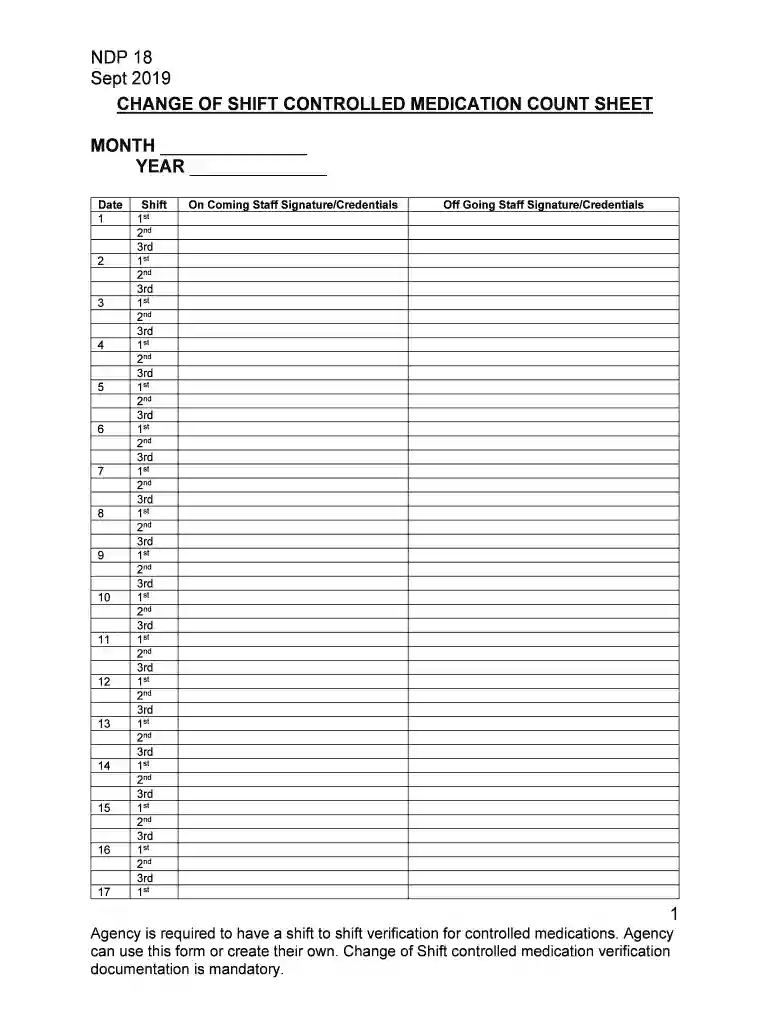
Type text, add images, blackout confidential details, add comments, highlights and more.

Draw your signature, type it, upload its image, or use your mobile device as a signature pad.

Send narcotic count sheet shift change via email, link, or fax. You can also download it, export it or print it out.
The change of shift narcotic count sheet is a critical document used in healthcare and similar environments to track and verify the distribution and disposal of controlled substances, particularly narcotics, during shift changes. Its primary function is to ensure accountability and compliance with legal and regulatory requirements surrounding the handling of these medications. The sheet serves as a formal record that facilitates a clear transition between outgoing and incoming staff, documenting the current inventory of narcotics at the beginning and end of each shift.
The document typically includes fields for essential information such as:
By systematically documenting these details, the change of shift narcotic count sheet helps mitigate the risk of errors or theft and enhances transparency in narcotic management.
Understanding the key elements of the change of shift narcotic count sheet is essential for effective use. Each component of the sheet serves a specific purpose in the verification process.
Incorporating these elements into practice not only aids in maintaining accurate records but also supports staff accountability and ensures compliance with pharmacy regulations.
Properly completing a change of shift narcotic count sheet is vital for accuracy and accountability. Here’s a step-by-step guide on how to do this effectively:
These steps not only facilitate the shift change process but also promote a standard operating procedure for accountability regarding controlled substances.
The change of shift narcotic count sheet plays a pivotal role in several aspects of healthcare practice, from ensuring patient safety to maintaining regulatory compliance.
The importance of this document cannot be overstated, as it underlies both operational practices and compliance with laws governing the management of narcotics.
Utilizing the change of shift narcotic count sheet in a legally compliant manner is crucial for healthcare providers handling controlled substances. Failure to adhere to legal standards can result in severe penalties and implications for both staff and institutions.
Maintaining legal compliance through the accurate use of the change of shift narcotic count sheet safeguards organizations and employees alike from potential legal issues.
In today’s technological landscape, options for maintaining the change of shift narcotic count sheet have expanded, leading to considerations of digital versus paper formats.
Choosing the right format largely depends on the specific requirements and capabilities of the healthcare institution, as both formats offer distinct advantages and disadvantages.
Practical applications of the change of shift narcotic count sheet illustrate its importance and functionality in real-world settings.
A hospital pharmacy utilizes the change of shift narcotic count sheet during daily transitions between pharmacy technicians. Each technician verifies the counts at the beginning and end of their shifts, documenting any discrepancies and resolving them before shifts conclude, thereby preventing potential issues.
In a long-term care facility, caregivers utilize the count sheet during shift changes to ensure narcotics administered to residents are accurately counted and recorded. This practice safeguards against medication errors and promotes regulatory compliance, essential for patient safety.
These examples showcase the versatility and necessity of the change of shift narcotic count sheet in various healthcare environments, emphasizing its role in ensuring safe narcotic management.
We've got more versions of the shift to shift narcotic count sheet template form. Select the right shift to shift narcotic count sheet template version from the list and start editing it straight away!
At DocHub, your data security is our priority. We follow HIPAA, SOC2, GDPR, and other standards, so you can work on your documents with confidence.
Oct 4, 2018 Shift to Shift Count Sheet ADMH logo which stands for Alabama Department of Mental Health. 100 North Union Street Montgomery, AL 36130; MediaRead more
All shift personnel shall log into Target Solutions at least once per shift. Personnel shall check the Schedule portion of their home page for any new orRead more
(2) The administration sheet shall list the type of controlled substance, doses and number of doses furnished to the substock and shall indicate: (i) date andRead more


