




Here's how it works
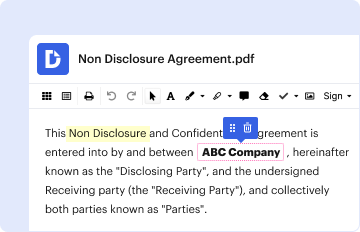
01. Edit your income worksheet online
Type text, add images, blackout confidential details, add comments, highlights and more.
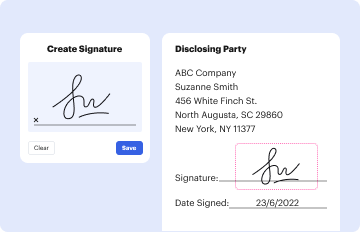
02. Sign it in a few clicks
Draw your signature, type it, upload its image, or use your mobile device as a signature pad.
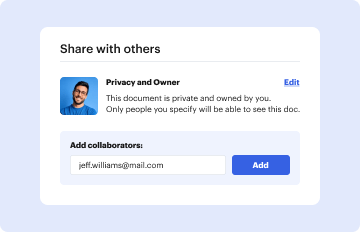
03. Share your form with others
Send excel income calculation worksheet via email, link, or fax. You can also download it, export it or print it out.
How to use or fill out fannie mae income calculation worksheet with DocHub

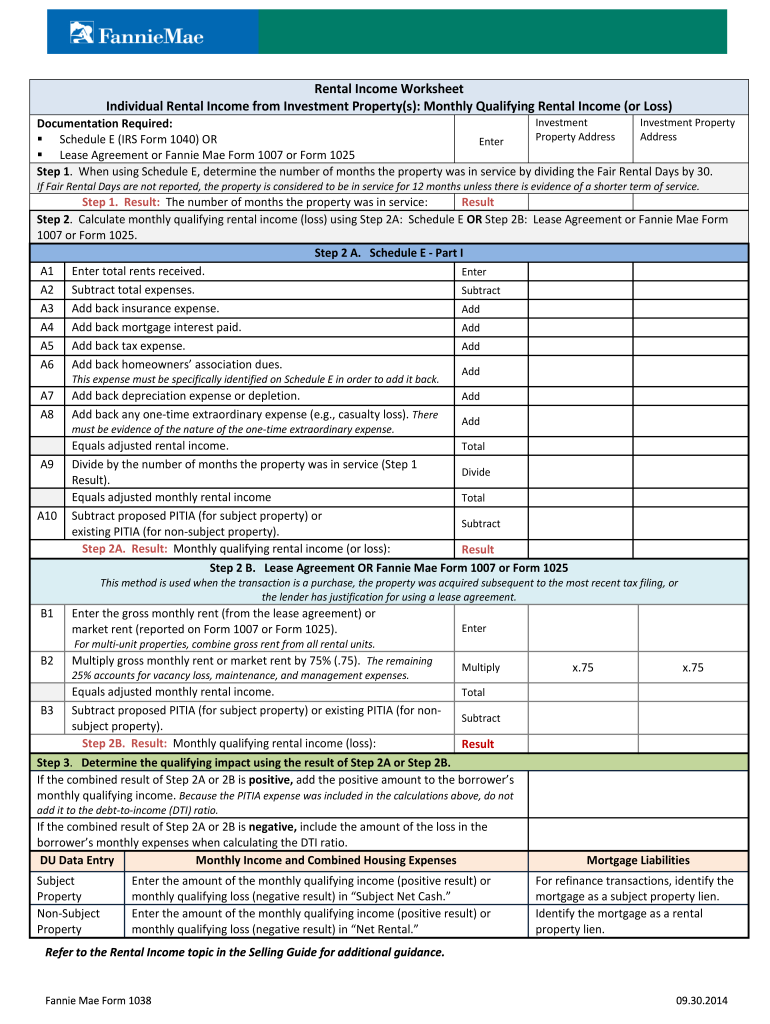
- Click ‘Get Form’ to open the fannie mae income calculation worksheet in our platform's editor.
- Begin by entering the property address and selecting the documentation required, such as Schedule E or a Lease Agreement.
- For Step 1, calculate the number of months the property was in service by dividing Fair Rental Days by 30. If not reported, assume 12 months unless evidence suggests otherwise.
- In Step 2A, if using Schedule E, enter total rents received and subtract total expenses. Add back specific expenses like insurance and mortgage interest as instructed.
- For Step 2B, if using a Lease Agreement or Fannie Mae Form 1007/1025, enter gross monthly rent and multiply by 75% to account for vacancy loss.
- Finally, determine the qualifying impact based on your results from Step 2A or Step 2B and input these figures into the appropriate fields for monthly qualifying income or loss.
Start editing your fannie mae income calculation worksheet online for free with our platform today!
Fill out fannie mae income calculation worksheet online
It's free
It's free
See more fannie mae income calculation worksheet versions
We've got more versions of the fannie mae income calculation worksheet form. Select the right fannie mae income calculation worksheet version from the list and start editing it straight away!
| Versions | Form popularity | Fillable & printable |
|---|---|---|
| 2014 | 4.9 Satisfied (291 Votes) |
Got questions?
We have answers to the most popular questions from our customers. If you can't find an answer to your question, please contact us.
Contact us
How do you calculate assets as income for Fannie Mae?
Calculating Qualifying Income Start with Total Qualifying Assets. Add up all eligible assets after accounting for inaccessible and ineligible funds, penalties, and reserves. Apply the FNMA-Approved Divisor. Divide the total qualifying assets by 360 months (the standard for a 30-year loan).
How to calculate income?
To calculate an annual salary, multiply the gross pay (before tax deductions) by the number of pay periods per year. For example, if an employee earns $1,500 per week, the individuals annual income would be 1,500 x 52 = $78,000.
Is schedule C loss a red flag?
Some self-employed taxpayers and this includes both low- and high-grossing business owners tend to claim an excessive amount of deductions and/or dont report all of their income. Taxpayers who run a cash-intensive business, and those whose Schedule C reports a considerable net loss, raise the red flag even higher.
What is the Schedule C income worksheet?
Use Schedule C (Form 1040) to report income or loss from a business you operated or a profession you practiced as a sole proprietor. An activity qualifies as a business if: Your primary purpose for engaging in the activity is for income or profit. You are involved in the activity with continuity and regularity.
How much income do you need for a Fannie Mae loan?
To qualify for HomeReady income limits, you must not make more than 80% of your areas median income (AMI). You can determine whether or not you meet HomeReady income limits for 2025 by using Fannie Maes AMI Lookup Tool. Simply input your address, and the tool will detail your countys area median income.
Security and compliance
At DocHub, your data security is our priority. We follow HIPAA, SOC2, GDPR, and other standards, so you can work on your documents with confidence.
Learn more


Related forms
Joel Baker - Principal Attorney - Florida Power and Light Company - LinkedIn
The document is a formal petition from Florida Power & Light Company (FPL) to the Florida Public Service Commission, see ...

Volunteer Policy and Agreement
The Saskatoon Opera Volunteer Policy and Agreement outlines the roles, responsibilities, and expectations for volunteers ...
Binding Early Decision Agreement Suffolk University Law School
The document outlines the Binding Early Decision Agreement for Suffolk University Law School, where applicants commit to ...

If you have 10 or more information returns to file, you may be required to file e-file
The document provides instructions regarding the IRS Form 1099-B, which reports proceeds from broker and barter exchange ...
Form 4835, farm rental income and expenses (crop and
Form 4835 is used by landowners or sub-lessors who did not materially participate in farm operations to report rental in ...
Publication 505
Publication 505 for 2025 provides comprehensive guidance on federal income tax withholding and estimated tax payments. I ...

72-hour notice of termination for nonpayment of rent - Multifamily NW
The document is a 72-hour notice of termination for nonpayment of rent in Oregon, informing the resident that their rent ...
Group Counseling Sign-In Sheet
The document is a Group Sign-In Sheet used for recording attendance at a session led by a counselor and co-facilitator. ...
People also ask
How to fill out business income schedule C?
Schedule C requires detailed information about your income and expenses to complete. Youll need your balance sheet and income statement if you have those, as well as your check register or any other record of your business transactions and documentation (receipts, invoices, etc.) to back those expenses up.
What is a schedule C worksheet?
Schedule C is used to report income and expenses from a business you own as a sole proprietor or single-member LLC. If you are self-employed or receive 1099-NEC Forms, youll likely need to use Schedule C to report income and expenses for your trade or business.