





Definition and Meaning
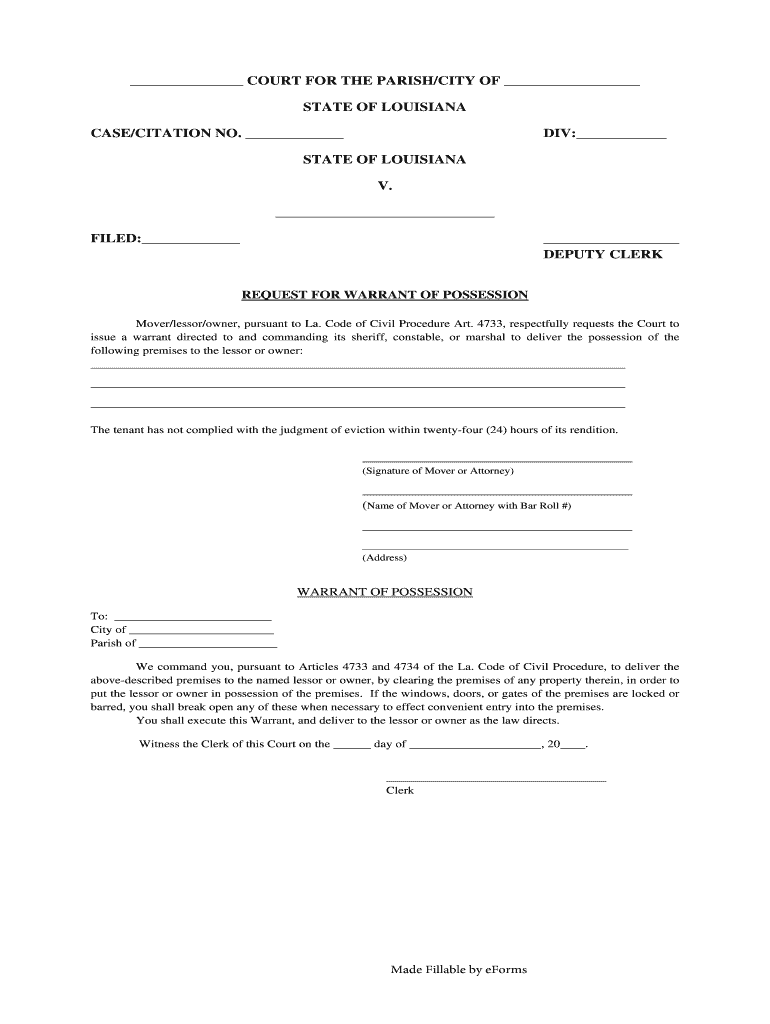
The Louisiana Warrant for Possession Form is a legal document utilized by lessors or property owners to regain possession of a property from a tenant who has failed to comply with an eviction judgment. This form serves as a court order that mandates law enforcement to assist in delivering the property back to the owner or lessor. It is a crucial tool in the eviction process, ensuring that property owners can restore their rights to their own premises legally and effectively.
How to Use the Louisiana Warrant for Possession Form
To utilize the Louisiana Warrant for Possession Form, it is essential for property owners to understand the correct legal procedures. The process typically involves filing the eviction judgment with the court first. Once the tenant has failed to vacate the premises voluntarily, the landlord can then request the warrant for possession. The form must be accurately filled out, detailing the property address, tenant information, and the specifics of the eviction judgment. Once completed and submitted, the court will review the request and may issue the warrant, authorizing law enforcement to intervene if necessary.
How to Obtain the Louisiana Warrant for Possession Form
The Louisiana Warrant for Possession Form is available through local court offices where the eviction case is filed. Alternatively, it may be downloadable from the website of the judicial district handling the case. To obtain a copy, property owners should contact their local courthouse to verify the specific availability and format requirements. It's imperative to ensure that the form is the most current version to avoid any procedural delays.
Steps to Complete the Louisiana Warrant for Possession Form
- Gather Necessary Information: Collect all pertinent information such as the eviction judgment details, tenant's name, and property address.
- Fill Out Form Details: Enter the property and tenant details accurately, ensuring all sections related to the judgment are completed.
- Include Supporting Documents: Attach any necessary documents, such as a copy of the eviction judgment, to substantiate your request.
- Review for Accuracy: Double-check all entries for completeness and accuracy to prevent processing delays.
- Submit to Court: File the completed form with the local court that issued the initial eviction judgment.
Key Elements of the Louisiana Warrant for Possession Form
- Petitioner and Respondent Information: This includes details of the landlord (petitioner) and the tenant (respondent) involved in the eviction.
- Property Description: Specifics about the property in question, such as address and other identifying details.
- Eviction Judgment Details: A brief description of the eviction judgment, including the date it was granted and the grounds for eviction.
- Authorization for Law Enforcement: The section where the court authorizes law enforcement officers to enforce the warrant and regain possession of the property.
State-Specific Rules for the Louisiana Warrant for Possession Form
Louisiana has specific regulations governing the issuance and execution of a Warrant for Possession. For example, the form must be filed within a certain period following the eviction judgment. Additionally, certain state-specific tenant protections and notice requirements may impact when and how the warrant can be executed. Property owners should be mindful of these rules and may benefit from consulting with a legal professional to ensure compliance.
Legal Use of the Louisiana Warrant for Possession Form
The legal use of the Louisiana Warrant for Possession Form is strictly to enforce court-ordered possession of a property. It is imperative that landlords do not misuse this document as a means to circumvent appropriate legal procedures. Execution of the warrant must be carried out peacefully and under the supervision of law enforcement, as the document is a judicial command for legal intervention in an eviction case.
Examples of Using the Louisiana Warrant for Possession Form
An example scenario involves a landlord who has obtained an eviction judgment against a tenant due to non-payment of rent. Despite notices, the tenant remains on the premises beyond the judgment date. The landlord files the Louisiana Warrant for Possession Form with the court to legally compel the tenant to vacate, allowing law enforcement to assist with the removal process. Another example could be when a tenant engages in illegal activity, leading the property owner to legally regain possession and ensure the property is free from unauthorized occupants.