







Definition and Meaning
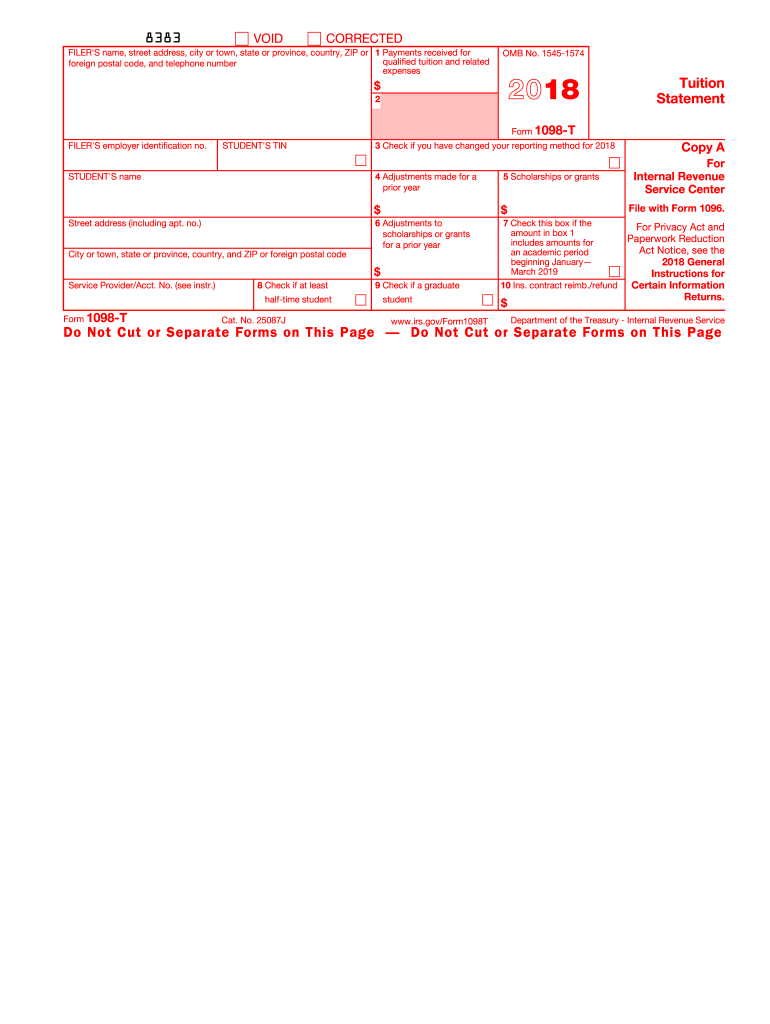
Form 1098-T, officially known as the Tuition Statement, is a tax form used in the United States to report payments received for qualified tuition and related educational expenses. It is issued by eligible educational institutions to both the IRS and enrolled students. Typically, this form assists students and their families in determining whether they are eligible for educational tax credits, such as the American Opportunity Credit or the Lifetime Learning Credit.
What Constitutes Qualified Expenses
- Tuition Costs: Fees required for enrollment or attendance.
- Mandatory Fees: Institutional fees that are a requirement for courses and do not include fees for optional or non-course-related activities.
- Exemptions & Exclusions: Any payments made for personal expenses, room and board, or medical expenses are not considered qualifying educational expenses.
How to Obtain the 1098-T
Eligible educational institutions are responsible for issuing Form 1098-T to students by January 31 each year. The form can be obtained through:
- Electronic Access: Many institutions provide a secure online portal where students can download their 1098-T.
- Mail Delivery: The form may also be sent to the student's permanent address.
- Institutional Request: If unavailable by the above methods, students can contact their institution's bursar or registrar office to request a copy.
Requirements for Receiving the Form
- Enrollment Status: Must be at least half-time in a course that leads to a degree or recognized educational credential.
- Payment Records: Must have paid for qualified tuition and related expenses within the calendar year.
Steps to Complete the 1098-T
Completing the 1098-T involves understanding each section of the form and ensuring accurate information is provided.
- Verify Personal Information: Check that your name, social security number, and address are correct.
- Review Payment Amounts: Box 1 indicates payments received for qualified tuition and expenses. Ensure the amount matches your records.
- Scholarship and Grant Details: Box 5 shows scholarships or grants. Compare this with what was awarded or applied to your tuition.
- Account for Adjustments: Box 4 contains adjustments from previous years, which can affect your credits and must be verified for accuracy.
Who Typically Uses the 1098-T
Students enrolled at eligible educational institutions in the United States, as well as their parents or guardians, typically use Form 1098-T for tax filing purposes. Educational institutions are required to issue this form, aiding in the calculation of tax benefits linked to educational expenses.


Special Considerations
- Undergraduate and Graduate Students: Both need this form to claim educational credits.
- Non-Degree Students: Only those enrolled in courses leading towards a degree, certificate, or other recognized credential are eligible.
- Parents or Guardians: Can use the form if they claim the student as a dependent on their tax return.
IRS Guidelines for the 1098-T
The IRS stipulates clear guidelines regarding the issuance and use of the 1098-T form to ensure accurate tax reporting and credit claims.
- Reporting Timeline: Educational institutions are required to provide students with the form by January 31.
- Corrective Measures: If errors are found, the IRS mandates submission of corrected forms, with the correct amounts reflected.
- Audit Readiness: Maintain records of payments and Form 1098-T copies in case of IRS audits.
Filing Deadlines and Important Dates
Staying aware of key dates related to Form 1098-T is crucial to maximize tax benefits:
- January 31: Deadline for institutions to issue Form 1098-T to students.
- April 15: Typical tax date by which all tax returns, utilizing the 1098-T form for credit claims, must be filed.
- October 15: Final extension date for those with approved filing extensions.
Penalties for Non-Compliance
Failure to comply with guidelines for both institutions and students surrounding Form 1098-T can lead to penalties:
- For Institutions: Failing to provide timely forms can lead to fines by the IRS.
- For Students: Incorrectly claiming credits without a valid 1098-T form can result in penalties and interest charges on unpaid taxes.
Examples of Using the 1098-T
Utilizing Form 1098-T effectively can yield financial advantages through tax credits:
- American Opportunity Credit: Allows for a maximum benefit of $2,500, with 40% refundable for students or their parents.
- Lifetime Learning Credit: Provides up to $2,000 credit per tax return for students in postsecondary courses or job-related skills, without a dependency on full-time enrollment.
Each scenario underlines how the Form 1098-T serves as a critical resource for managing education-related tax affairs efficiently and in compliance with IRS regulations.




