
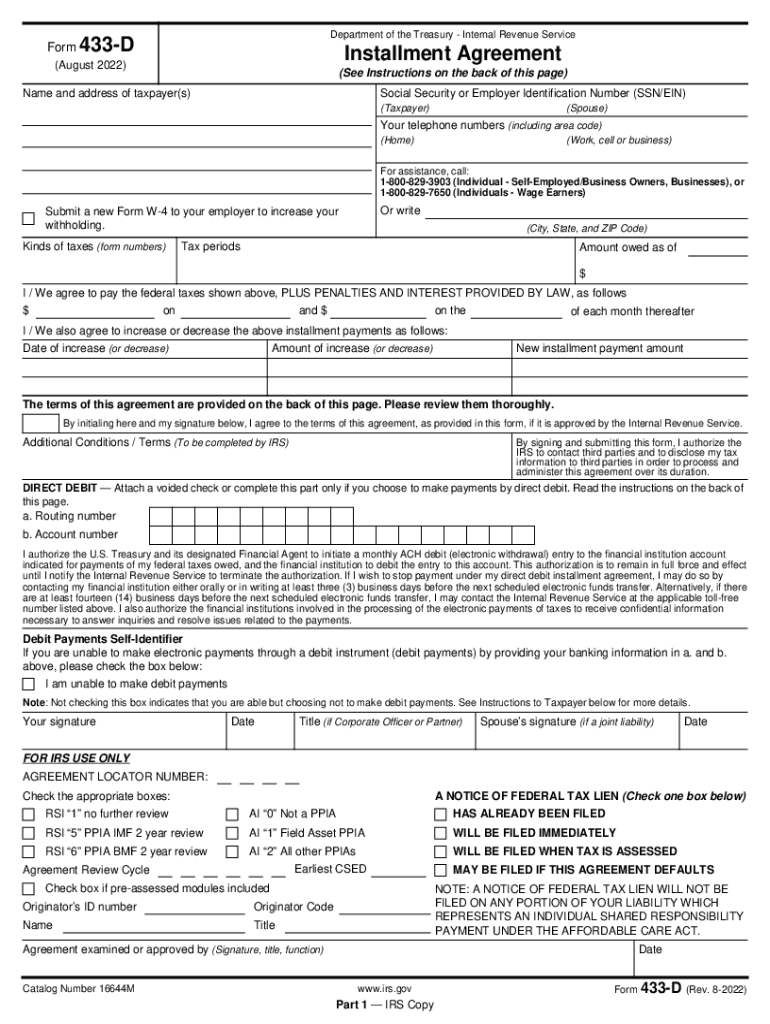







Definition & Purpose of Form 433-D
Federal Form 433-D, known as the Installment Agreement, is a tax document used by taxpayers in the United States to arrange a payment plan for federal taxes owed to the IRS. This form is essential for individuals who cannot pay their tax obligations immediately and require an installment payment plan to settle their debts over time. It outlines the taxpayer's information, proposed payment amounts, and the terms and conditions of the agreement. The primary purpose of the form is to facilitate timely and manageable payments for taxpayers, thus avoiding the immediate financial strain of lump-sum payments.
Key Benefits
- Flexible Payment Options: Taxpayers can arrange a payment schedule that fits their financial situation, reducing the immediate burden of unpaid taxes.
- Avoidance of Liens and Levies: Entering into an installment agreement can help prevent the IRS from taking enforcement actions such as placing liens or levies on your assets.
- Direct Debit Option: Allows for automatic withdrawal from a bank account, ensuring timely payments without manual intervention.
How to Obtain Form 433-D
To acquire Federal Form 433-D, taxpayers have several methods at their disposal. The IRS website is the most direct resource, where the form is available for download in a PDF format. Additionally, taxpayers can request a physical copy from the IRS by calling their support line. For those utilizing tax software, platforms like TurboTax may provide direct access to the form during the tax filing process.
Step-by-Step Download Process
- Visit the IRS Website: Navigate to the official IRS website and use the search function to find Form 433-D.
- Download the Form: Click the download link to obtain the PDF file.
- Print or Save: Print out the form if you prefer filling it manually, or save it to your computer for digital completion.
Steps to Complete Form 433-D
Filling out Form 433-D involves several key steps, which must be followed accurately to ensure the installment agreement is processed without issues.
- Provide Personal Information: Include your name, address, Social Security Number, and tax identification number.
- Specify Payment Details: Indicate the monthly payment amount you propose and the date you recommend for the payments to be made.
- Select Payment Method: Choose between direct debit and other payment methods to remit the monthly installments.
Tips for Accurate Completion
- Double-Check Information: Ensure all personal and financial information is accurate to avoid delays.
- Consult a Tax Advisor: Consider professional advice if you are unsure about any section of the form.
Who Typically Uses Form 433-D
The primary users of Form 433-D are individual taxpayers who owe federal taxes and cannot pay the full amount immediately. Small business owners and self-employed individuals also frequently use this form to spread out tax payments over a manageable period. It is particularly beneficial for those with variable income streams, such as gig workers or those in seasonal employment, where a consistent income may not be guaranteed.
Common User Scenarios
- Self-Employed Individuals: Often face fluctuating incomes that make lump-sum tax payments challenging.
- Retirees: May use installment agreements to manage their tax liabilities on fixed incomes.
- Students with Part-Time Income: Can leverage this form to balance commitments without financial strain.
Key Elements of Form 433-D
Several crucial components define the structure and execution of Form 433-D, ensuring both the taxpayer's and the IRS's interests are comprehensively addressed.
Essential Sections
- Taxpayer Information: Captures essential identification details.
- Payment Plan Proposal: Documents the financial terms of the installment plan.
- Terms and Conditions: Governs the agreement's binding conditions, including penalties for missed payments.
Important Clauses
- Change of Terms: Procedures for modifying the installment agreement.
- Default Consequences: Outlines IRS actions if the agreement defaults.
IRS Guidelines for Form 433-D
The Internal Revenue Service provides specific guidelines for completing and submitting Form 433-D. These guidelines ensure that the installment agreement is processed in compliance with tax laws and internal IRS policies.
Submission Guidelines
- Electronic and Paper Filing: Taxpayers have the option to submit the form either electronically through IRS Online Services or by mailing a paper copy.
- Deadline Compliance: Adherence to submission deadlines is crucial for timely processing.
Penalties and Compliance
- Non-Compliance Penalties: Defaults on payments can result in penalties, enforcement actions, and the revocation of the installment agreement.
Legal Use of Form 433-D
The legal foundation for using Form 433-D is established under the Internal Revenue Code, which permits taxpayers to negotiate installment agreements under certain conditions. The form is a legally binding document once accepted by the IRS, with both parties required to adhere to the agreed terms.
Legal Considerations
- ESIGN Act Compliance: When submitted electronically, the form must comply with electronic signature laws to be binding.
- Amendment Process: Taxpayers can negotiate changes to the agreement under specific circumstances, subject to IRS approval.
Penalties for Non-Compliance
Failure to comply with the terms of Form 433-D can lead to significant repercussions. Penalties may include the imposition of additional fees, interest on unpaid taxes, and potential enforcement actions by the IRS, such as garnishment of wages or levy of bank accounts.
Avoiding Penalties
- Consistent Payments: Ensure that all payments are timely and consistent with the agreed schedule.
- Immediate Communication: Contact the IRS immediately if you anticipate difficulties in meeting payment terms to renegotiate the agreement before defaults occur.
Each section above is designed to provide comprehensive guidance on Federal Form 433-D, equipping taxpayers with the knowledge needed to effectively manage their installment agreements.




