







Definition and Purpose of Form 8962
Form 8962, known as Premium Tax Credit (PTC), plays a crucial role in facilitating taxpayers who have obtained health insurance through the Health Insurance Marketplace to receive tax credits. These credits aim to make healthcare premiums more affordable. The form helps in reconciling Advance Payments of the Premium Tax Credit (APTC), received during the year, with the actual credit amount claimed based on the final yearly income.
Key Elements of Form 8962
Completing Form 8962 involves several critical elements. One must calculate the correct PTC based on household size and income. It is essential to reconcile these calculations with any APTC received. Specific parts of the form detail important considerations, such as eligibility for the credit and instructions for households with varied income levels or marital changes throughout the year.
Eligibility Criteria for Premium Tax Credit
Eligibility for the PTC hinges on various factors:
- Household Income: Must be between 100% and 400% of the federal poverty line.
- Filing Status: Typically must file jointly if married, though exceptions exist.
- Marketplace Insurance: Enrollment in a qualified health plan through the Marketplace is required.


How to Use the 2022 Instructions for Form 8962
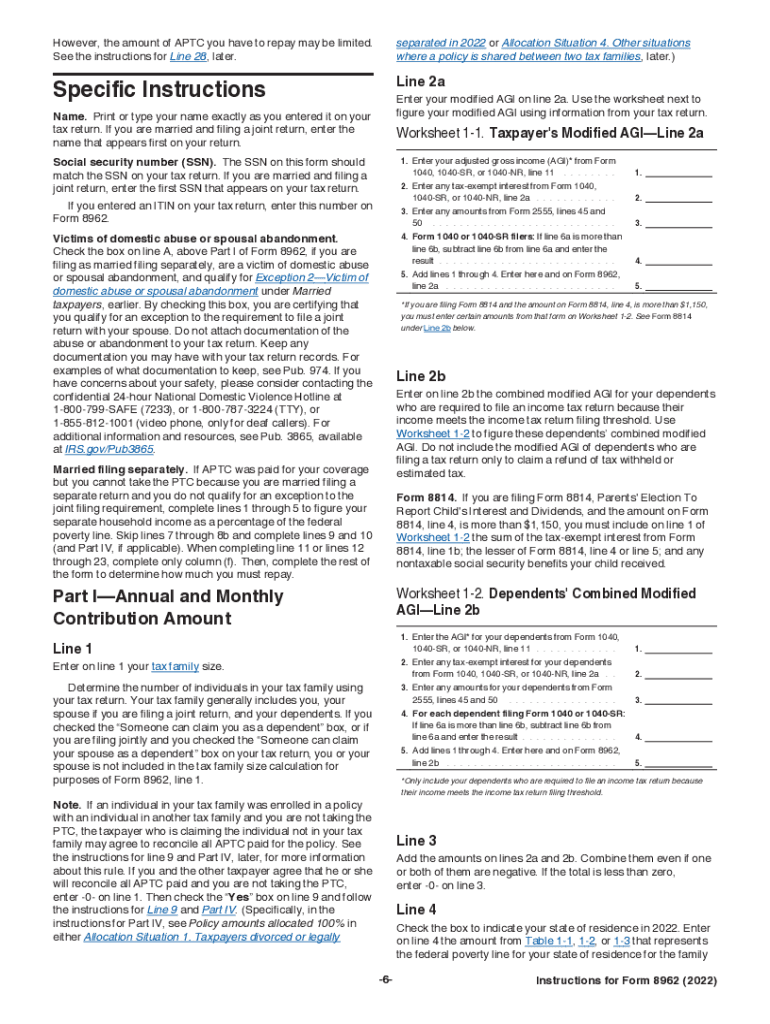
When using the 2022 instructions, carefully follow the steps to calculate your PTC. These instructions guide taxpayers through each section, clarifying eligibility requirements and providing examples for complex situations. Understanding the role of household income, family size, and APTC is crucial.
Steps to Complete Form 8962
- Gather Required Documents: Income statements, proof of insurance, and Form 1095-A are vital.
- Calculate Annual Income: Determine your modified adjusted gross income (MAGI).
- Determine Eligibility: Verify if you're within the income bracket for PTC eligibility.
- Complete Form Sections: Fill in required information in each section, following the guide.
- Reconcile APTC: Compare calculated PTC with APTC received to determine any additional payment or refund needed.
Examples of Using Form 8962
Consider a family of four with fluctuations in income throughout the year. During the income verification process, ensure that each change is documented and affects the PTC calculation. Another example involves a newly married couple needing to reconcile each spouse's individually received APTC.
Important Terms Related to Form 8962
Understanding specific terms is vital for correctly completing Form 8962:
- Advance Payment of the PTC (APTC): Financial help received in advance to lower monthly premiums.
- Premium Tax Credit (PTC): The final credit determination that reconciles against APTC.
- Form 1095-A: A form provided by the Marketplace that reports information necessary for Form 8962.
Filing Deadlines and Important Dates
Taxpayers must be aware of specific deadlines when dealing with Form 8962:
- Annual Tax Filing Deadline: Generally April 15, subject to extensions.
- Correction Periods: Specific windows for correcting submitted forms to avoid penalties or disallowances.
Penalties for Non-Compliance
Failure to submit an accurate Form 8962 or to report income changes to the Marketplace can incur penalties. These include having to repay part or the entirety of the APTC received. Ensuring all information is accurate and filed timely helps avoid such issues.
Avoiding Common Mistakes
Common errors often involve misreporting income or forgetting to include necessary documentation such as Form 1095-A. Additionally, overlooking the impact of life changes, such as marriage or job loss, can lead to significant discrepancies.
Software Compatibility for Form 8962
Several software programs offer compatibility for completing Form 8962, including TurboTax and QuickBooks. These platforms provide automated assistance, ensuring accurate input and helping users avoid common pitfalls by guiding them through each section in detail.
Benefits of Digital Filing
Digital submissions are generally faster, reduce the risk of errors through immediate validations, and provide confirmations of receipt, making the process more streamlined and efficient.
By thoroughly understanding these aspects and following detailed instructions, taxpayers can ensure proper handling of their health insurance credits, staying compliant, and optimizing their tax outcomes.




