



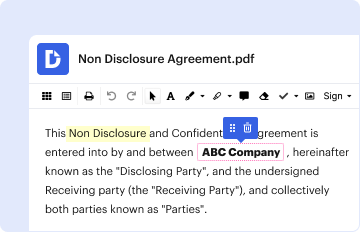
01. Edit your form online
Type text, add images, blackout confidential details, add comments, highlights and more.

Type text, add images, blackout confidential details, add comments, highlights and more.
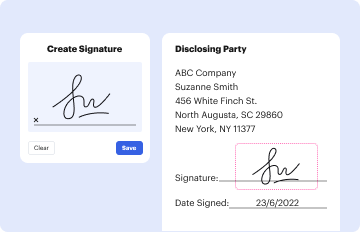
Draw your signature, type it, upload its image, or use your mobile device as a signature pad.

Send it via email, link, or fax. You can also download it, export it or print it out.
Form 1 - TaxHow is a tax form used specifically in the state of Massachusetts for individuals to report income and claim deductions. This form is applicable to both residents and partial-year residents, along with Form 1-NR/PY for non-residents. It includes sections for detailing various income types, the computation of taxable income, and the calculation of tax owed. The provision of clear instructions on completing the accompanying schedules, like Schedule X for additional income and Schedule Y for deductions, makes it suitable for accurate statewide tax filing.
Gather Necessary Documentation: Collect all W-2s, 1099 forms, and records of other sources of income. This ensures that you begin the process with comprehensive data, crucial for preparing an accurate return.
Complete Personal Information: Enter your personal details, such as your name, Social Security number, and address. This identifies you to the Massachusetts Department of Revenue and aligns your data accurately.
Report Income: Use Schedule X to list other types of income like gambling winnings or IRA distributions. Ensuring all income sources are reported prevents issues with underreporting.
Claim Deductions: Utilize Schedule Y to claim deductions such as alimony or business expenses. This helps reduce taxable income, thereby minimizing tax liability.
Calculate Tax Owed: Follow the form instructions to determine your tax owed after considering applicable exemptions and credits. Use the tables provided for accuracy.
Review and Submit: Cross-check the completed form for errors or omissions before submitting it. You can submit the form online for faster processing or mail in a paper version.
W-2 Forms: From all employers to report wage and salary income.
1099 Forms: For income from interests, dividends, or self-employment.
Receipts for Deductions: Such as charitable contributions or business expenses.
Identification Documents: To verify your identity and establish rightful filing.
These documents are essential for substantiating the information reported on Form 1, ensuring accuracy and compliance with state tax laws.
Massachusetts tax law differentiates itself with several state-specific provisions:
Different Tax Rates: There may be unique rates applicable to certain income types compared to federal rates.
State Credits: Massachusetts offers specific tax credits like the Circuit Breaker credit for seniors. Understanding these can reduce the tax burden significantly.
Exemptions: The state may offer different personal exemptions, impacting taxable income calculations.
Knowing Massachusetts-specific rules aids in preparing an accurate tax form, avoiding unnecessary penalties, and maximizing potential deductions.
Form 1 is primarily utilized by:
Massachusetts Residents: Full-year residents for state income tax reporting.
Partial-Year Residents and Non-Residents: Those who have moved in or out of Massachusetts during the tax year or who earn income from sources within the state.
Self-Employed Individuals or Sole Proprietors: Ensuring comprehensive income reporting.
Understanding eligibility is crucial for ensuring correct form usage and compliance with state tax requirements.


Income Section: Where all income types are reported, ensuring a complete financial profile.
Deductions and Exemptions: Areas that allow for subtraction from gross income to lower tax liability.
Tax Computation: Final section for determining the total tax due or refund based on the completed information.
Recognizing these key elements ensures a well-prepared tax form, accurately reflecting one's financial situation.
April 15: Standard deadline for filing Form 1, unless extended due to holidays or weekends.
October 15: Deadline with an approved extension request. Extensions can be applied for if taxpayers anticipate delays.
Meeting these dates is critical to avoid late filing penalties and interest charges on unpaid taxes.
Form 1 can be filed:
Online: Offers fast processing and immediate confirmation of receipt, with built-in error checking reducing the likelihood of mistakes.
Paper Version: Traditional method requiring mailing, suitable for those preferring physical documentation, though slower in processing.
Choosing the right method based on preference and capability can make the filing process smoother and more efficient.
At DocHub, your data security is our priority. We follow HIPAA, SOC2, GDPR, and other standards, so you can work on your documents with confidence.
Our car tax calculator supports you in this and calculates immediately how much tax is due for your car.Read more
Jan 20, 2026 Hawaii state tax forms and reproduction specifications are available on the Federation of Tax Administrators (FTA) Secure Exchange System (SES) website.Read more


