
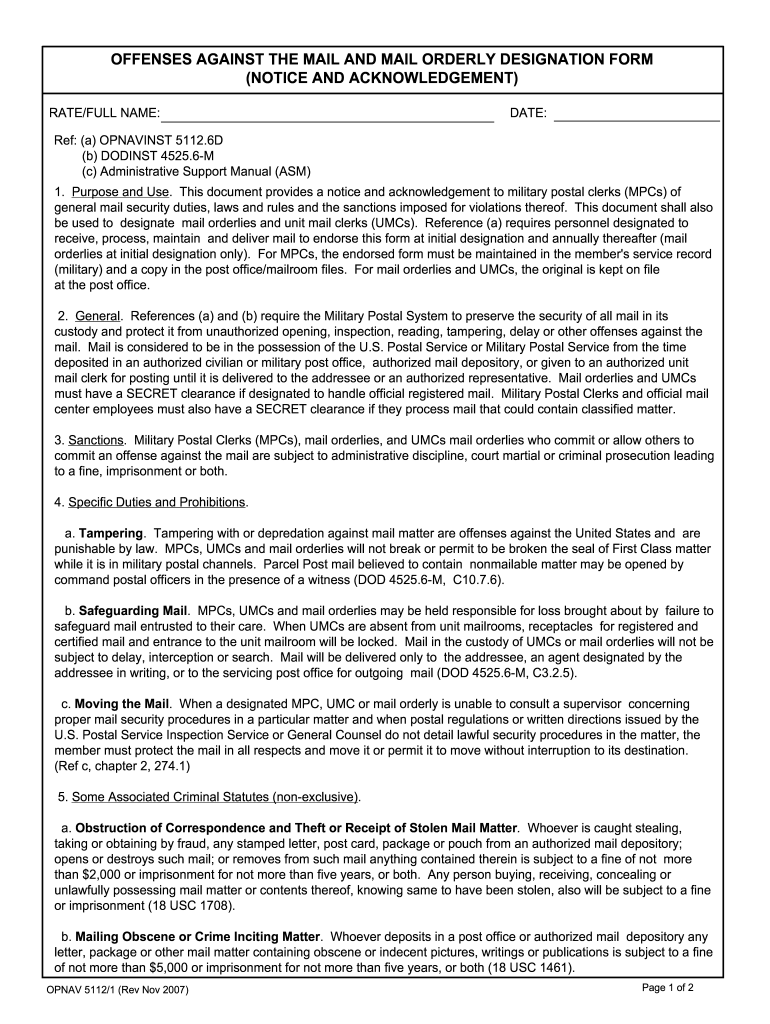







Understanding the OPNAV 5112/1 Rev Jul 2019 PDF
Purpose and Significance of OPNAV 5112/1
The OPNAV 5112/1 form, specifically the Rev Jul 2019 version, serves critical functions within the United States Navy regarding mail security and handling. It establishes official regulations for military postal clerks (MPCs), mail orderlies, and unit mail clerks (UMCs). The document plays a vital role in ensuring that mail services are performed efficiently and securely, mitigating potential risks associated with mail processing in military environments.
The form outlines specific responsibilities, including:
- Safeguarding all incoming and outgoing mail.
- Processing confidential and classified documents.
- Following established protocols for mail delivery to maintain security and accountability.
Such regulations protect sensitive information and ensure that personnel can deliver and receive mail without fear of tampering or misconduct.
Main Responsibilities of Personnel
The responsibilities detailed in OPNAV 5112/1 highlight the comprehensive duties required of postal clerks and mail handlers. Notably, the form delineates the following primary responsibilities:
- Security of Mail: Implementing procedures to ensure the security of both incoming and outgoing mail, recognizing the importance of safeguarding sensitive communications.
- Tampering Prohibitions: The document explicitly prohibits tampering with mail, detailing consequences for any violations. This is critical for maintaining the integrity of mail processing.
- Regulatory Compliance: Adhering to regulations set forth in the form and related directives, which facilitate accountability across the entire mail system.
Personnel are advised to familiarize themselves with these responsibilities to ensure compliance and efficient mail operations.
Legal Implications and Consequences
Understanding the legal framework surrounding the OPNAV 5112/1 form is essential for all personnel involved in mail handling. The form emphasizes serious legal implications for violations, which may include:
- Criminal Statutes: It references specific criminal statutes that apply to offenses against mail, reinforcing the accountability of personnel in the event of mishandling.
- Disciplinary Actions: Employees face possible administrative or disciplinary actions for non-compliance, ensuring that all personnel remain vigilant and compliant with established regulations.
Awareness of these legal implications fosters a culture of security and respect for the mail system.
Procedures for Mail Processing
OPNAV 5112/1 outlines standardized procedures for processing military mail to ensure efficiency and security. Key steps include:
- Receiving Mail: Upon receiving mail, personnel must verify the contents and ensure proper documentation for accountability.
- Sorting Mail: Mail should be sorted according to established protocols that prioritize security clearances and intended recipients.
- Delivery Protocols: Strict delivery protocols must be adhered to when distributing mail to ensure it reaches the appropriate recipient securely.
These procedures are designed to streamline the mail processing workflow while safeguarding sensitive materials.
Mail Security Training Requirements
The form underscores the importance of training personnel in mail security and handling. Regular training sessions should cover:
- Security Awareness: Educating staff on recognizing potential security threats, including tampering and unauthorized access to mail.
- Operational Procedures: Training on the specific operational procedures detailed within OPNAV 5112/1.
- Best Practices: Discussing best practices in mail handling to minimize errors and enhance overall security.
Continued education ensures that all personnel involved in mail operations stay informed about changes to procedures and security requirements.
Reporting and Documentation Standards
Proper documentation is crucial for maintaining transparency and accountability within the mail handling system. OPNAV 5112/1 specifies the need for rigorous reporting standards, including:
- Mail Logs: Accurate logs must be maintained for all incoming and outgoing mail, detailing sender, recipient, and contents.
- Incident Reports: Any incidents involving mail security breaches require immediate reporting, adhering to established notification procedures.
- Compliance Audits: Regular audits should be conducted to ensure compliance with the outlined policies, strengthening overall operational integrity.
Such standards establish a systematic approach to documentation and reporting, reinforcing the security framework.
Access to Resources and Support
Beyond the regulations outlined in OPNAV 5112/1, resources and additional support are available to personnel for effective mail management. These include:
- Online Training Modules: Access to dedicated e-learning platforms that offer comprehensive training related to mail security and handling.
- Technical Assistance: Support from information technology specialists who can assist with electronic documentation and mailing systems.
- Regulatory Updates: Personnel are encouraged to stay updated on revisions to OPNAV instructions and other relevant directives influencing mail policies.
Utilizing these resources reinforces compliance and enhances the effectiveness of mail operations overall.




