
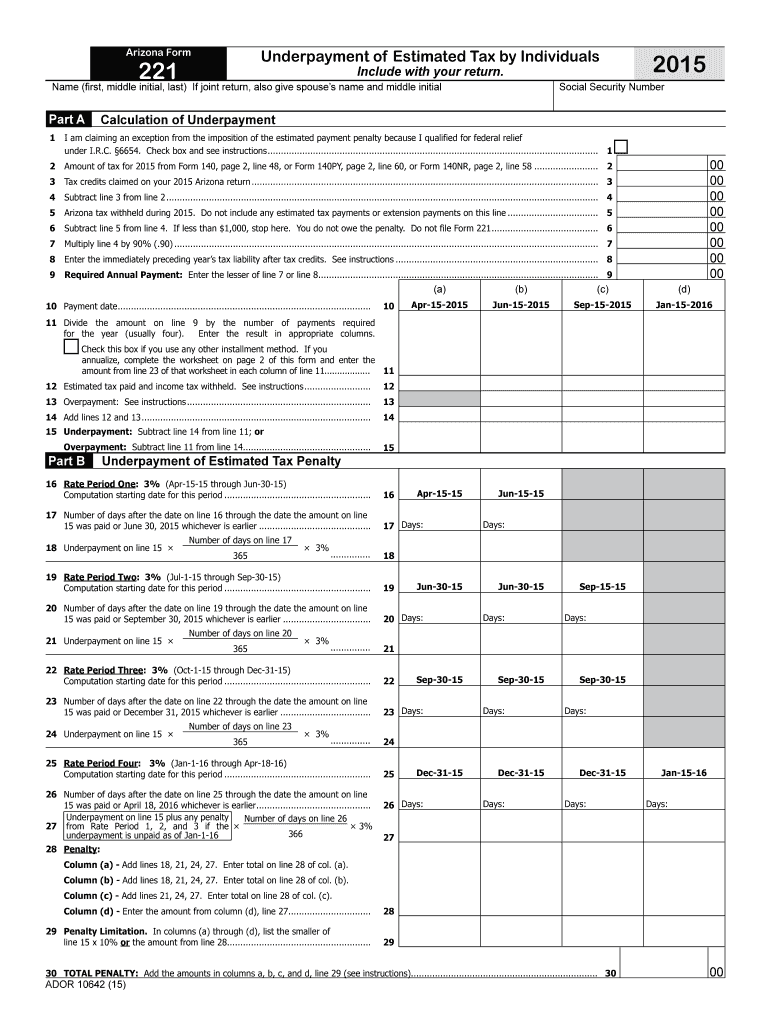







Definition & Meaning
The Arizona Form 221, also known as "Arizona Form Underpayment of Estimated Tax by Individuals Include with your return," is used by taxpayers in Arizona to calculate any penalties related to underpayment of estimated state income taxes. This form assists individuals in determining if they owe a penalty for not paying enough taxes throughout the year and outlines exemptions they can claim to potentially reduce or eliminate such penalties.
Key Points:
- Purpose: Calculates underpayment penalties of state income taxes in Arizona.
- Usage: Determines if the taxpayer owes penalties and includes instructions for exemptions.
- Significance: Helps taxpayers comply with Arizona tax laws and avoid unexpected charges.
How to Use the Arizona Form
Using the Arizona Form 221 involves detailed calculations and understanding your tax obligations for the year. Below are the primary steps to follow when using this form:
- Determine Income: Report all sources of taxable income to estimate total tax liability.
- Calculate Estimated Payments: Include any estimated tax payments already made throughout the year.
- Assess Underpayment: Compare estimated payments with actual tax liability to find any discrepancies.
- Apply for Exceptions: Use the form to claim exceptions if eligible, which could reduce penalty charges.
Practical Examples:
- Example 1: If you underestimated your state tax liability due to unanticipated income, use Form 221 to report and calculate the underpayment.
- Example 2: Freelancers often juggle multiple income streams and can use this form to ensure accurate quarterly tax payments.
Steps to Complete the Arizona Form
Completing the Arizona Form 221 requires careful attention to each section to ensure accuracy. Here is a detailed step-by-step guide:
- Gather Relevant Documents:
- Previous year's tax return
- Current payroll records
- Documentation of any additional income
- Fill Out Personal Information: Ensure your name, address, and taxpayer identification number are correct.
- Report Income and Credits: Include all earned income and any applicable tax credits.
- Input Payment Details: Enter any quarterly estimated tax payments made during the year.
- Calculate Penalties: Use the form's worksheet to calculate potential underpayment penalties.
- Claim Exceptions: Report any eligible exceptions to minimize penalties, if applicable.
Edge Cases:
- Scenario A: Individuals with variable incomes should take extra care in documenting payments and potentially adjusting quarterly estimates.
- Scenario B: Retirees should re-evaluate their estimated payments if they experience changes in their taxable income levels.
Required Documents
To efficiently complete the Arizona Form 221, ensure that you have the following documents:
- W-2s and 1099s for the current tax year
- Payment records for any estimated tax payments you have already made
- Records of any eligible tax credits or exemptions
- Last year's Arizona income tax return for reference
Importance of Accurate Documentation:
- Minimizes errors that could lead to penalties.
- Provides a clear financial record for auditing purposes.
- Ensures that all potential credits and deductions are captured.
Filing Deadlines / Important Dates
Adhering to deadlines is crucial when managing tax documents. Below are important dates related to the Arizona Form 221:
- Quarterly Estimated Tax Payments: Due on April 15, June 15, September 15, and January 15 of the following year.
- Annual Tax Return Deadline: Generally due on April 15, matching the federal tax filing deadline.
Penalties for Late Submission:
- Failing to submit by these dates could lead to additional penalties or interest charges.
- Extensions are possible, but must be filed before the standard deadlines.
Penalties for Non-Compliance
Understanding penalties related to the Arizona Form 221 is important, as non-compliance can result in additional financial obligations:
- Monetary Penalty: Assessed based on the amount of underpayment and the duration of the underpayment period.
- Interest Charges: May accrue daily until the underpaid amount is settled.
- Exemptions: Qualifying for specific exemptions can mitigate penalty costs.
Example:
- Case: Failing to pay estimated taxes by quarterly deadlines without valid exceptions can result in accruing penalties, impacting your final tax balance.
Examples of Using the Arizona Form
Real-world scenarios can help illustrate how individuals might use the Arizona Form 221:
- Freelancers and Self-Employed: Often manage fluctuating incomes that require careful tax planning.
- Retirees: Must ensure withdrawals from retirement accounts align with estimated tax payments.
- New Residents: Must adhere to state-specific tax laws and deadlines after relocating to Arizona.
Contextual Understanding:
- Adjusting estimated payments throughout the year is important for avoiding penalties.
- Reviewing and adjusting quarterly can prevent significant financial impact.
Software Compatibility (TurboTax, QuickBooks, etc.)
Using digital tools can simplify the completion of Arizona Form 221. Here are compatible software options:
- TurboTax: Guides users through the form with easy-to-follow instructions and ensures compliance.
- QuickBooks: Tracks income and expenses to provide accurate figures for use in calculations.
Benefits:
- Automation reduces manual errors in calculations.
- User-friendly interfaces guide taxpayers through complex forms.
- Syncs documents across platforms for seamless tax management.




