






Definition and Purpose of Form AOC E 506
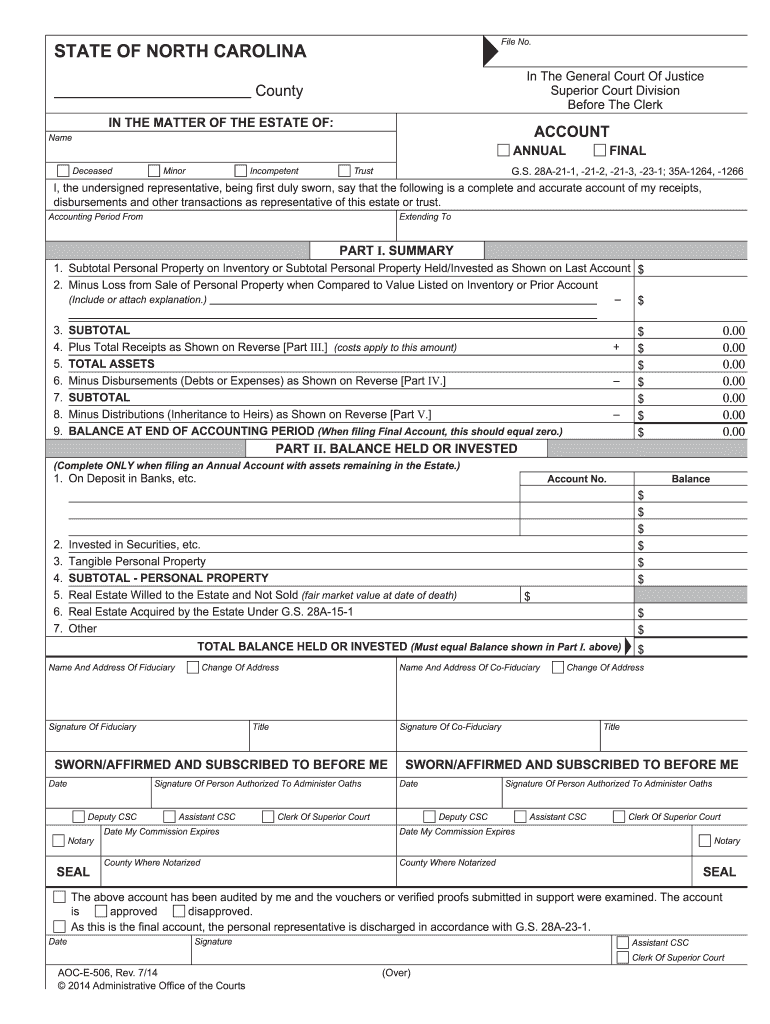
The AOC E 506 is a specialized form utilized in the state of North Carolina for final accounting in the estate administration process. It ensures that fiduciaries accurately report the financial activities involved in managing the estate. The form details receipts, disbursements, and distributions to beneficiaries, providing a comprehensive overview of the estate’s financial status. Its primary purpose is to offer transparency in the settlement of an estate, adhering to the legal requirements set forth by the North Carolina court system.
Key elements of the AOC E 506 include:
- Final Accounting: Summarizes all financial transactions during the estate administration.
- Beneficiary Information: Lists individuals who are entitled to receive assets from the estate.
- Fiduciary Details: Requires signatures from the executor or administrator to validate the report.
- Legal Compliance: Ensures adherence to the legal standards established for estate documentation in North Carolina.
How to Obtain the AOC E 506
Obtaining the AOC E 506 form is a straightforward process. Individuals can access the form through various means tailored to meet their needs. The form can be downloaded from the official North Carolina court website, ensuring that users have the most current version. Additionally, physical copies are available at local courthouses or district court offices.
Steps to obtain the form include:
- Visit the North Carolina Court System Website: Navigate to the downloads section for forms related to estate administration.
- Select AOC E 506: Look for the specific nomenclature or code of the form to ensure you have the correct document.
- Download or Request a Copy: Depending on preference, choose to download the form for immediate use or request a physical copy from the nearest courthouse.
Steps to Complete the AOC E 506
Completing the AOC E 506 requires careful attention to detail to ensure all information is accurate and compliant with legal standards. The form is divided into sections that guide the user through the necessary information.
Key Steps Involved:
- Gather Financial Records: Collect all receipts, disbursements, and financial statements related to the estate. These documents will serve as the basis for the information included in the form.
- Fill Out the Beneficiary Section: Clearly list all beneficiaries along with their respective shares of the estate. This section may require detailed information about each individual.
- Detail Income and Expenses: Accurately report all income generated by the estate as well as any expenses incurred. This includes sales of assets, attorney fees, and other administrative costs.
- Complete the Signature Section: After the form is completed, it must be signed by the fiduciary overseeing the estate. This signature certifies the accuracy of the information provided.
Important Terms Related to AOC E 506
Understanding the relevant terminology associated with the AOC E 506 is crucial for proper compliance and reporting. Some of the key terms include:
- Fiduciary: An individual responsible for managing another person's assets, typically acting in the best interest of the beneficiaries.
- Beneficiary: A person or entity entitled to receive a portion of the estate's assets upon final accounting.
- Receipts and Disbursements: Financial terms referring to the money received and paid out during the estate administration process.
- Court Filing: The act of submitting the completed form to the court for legal validation and record-keeping.
Legal Use of the AOC E 506
The AOC E 506 serves as a legally binding document that provides a transparent summary of the estate’s financial activities. Its completion and submission are mandated for fiduciaries under North Carolina law to finalize the estate administration process. Failure to use this form appropriately can lead to legal repercussions for the fiduciary.
Key Legal Considerations:
- Compliance with State Laws: The form must adhere to the statutory requirements of North Carolina estate law.
- Judicial Review: Submitted AOC E 506 forms are subject to review by the court, which may request additional information or clarification.
- Record Keeping: Proper use of the AOC E 506 ensures accurate documentation of the fiduciary's actions and decisions, maintaining a formal record for future reference.
Examples of Using the AOC E 506
Practical examples of when and how to utilize the AOC E 506 can provide insight into its application. For instance:
-
Estate of a Deceased Individual: When an individual passes away, the executor of their estate uses the AOC E 506 to account for all financial transactions resulting from the administration of the estate. This includes reporting income from the sale of property and expenses incurred during the process.
-
Trust Administration: In cases where a trust is established, the trustee may use the AOC E 506 to provide a final accounting to the beneficiaries at the conclusion of trust activities, ensuring they are informed about the financial management of their inherited assets.
In summary, the AOC E 506 is a vital document for managing the complexities of estate administration in North Carolina, providing necessary transparency and legal compliance for fiduciaries.