




01. Edit your 940 schedule r online
Type text, add images, blackout confidential details, add comments, highlights and more.

Type text, add images, blackout confidential details, add comments, highlights and more.

Draw your signature, type it, upload its image, or use your mobile device as a signature pad.

Send it via email, link, or fax. You can also download it, export it or print it out.
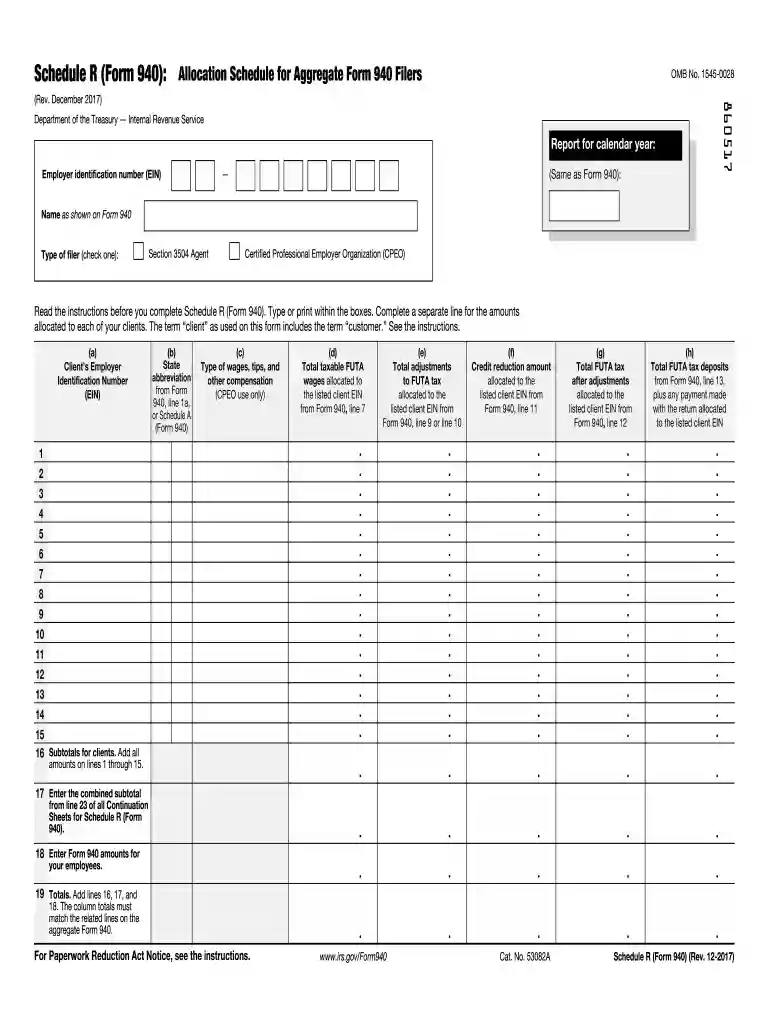
Schedule R (Form 940) is an essential tool for aggregating Form 940 filers. This form is typically used by agents representing multiple entities, such as home care service providers, to allocate the necessary financial information reported on the aggregate Form 940, known as the Employer's Annual Federal Unemployment Tax Return. This allocation includes crucial detail requirements like employer identification numbers (EINs) of clients, taxable wages subject to the Federal Unemployment Tax Act (FUTA), adjustments to the FUTA tax, and total tax deposits. Each layer of financial data is pivotal in ensuring that the tax burden is distributed accurately across clients for whom the agent files Form 940. The Schedule R must be submitted annually in conjunction with the aggregate Form 940. Keeping these details correct aids in maintaining compliance and facilitates accurate record-keeping for associated entities.
Utilizing Schedule R involves several key steps. The process starts with gathering the necessary employee and wage data from each client under the agent’s authority using their respective EIN. Follow these steps:
Thorough completion ensures each entity is appropriately represented, mitigating potential liabilities.
Accessing Schedule R is straightforward and can be done through several methods:
Having quick access to the necessary forms ensures that agents can prepare the required documentation without delays, maintaining compliance with federal deadlines.
Filling out Schedule R requires diligence and attention to detail:
Adhering to these steps limits errors and ensures a smooth filing process.
Schedule R is intended for agents, particularly those in payroll or employment services, who report on behalf of multiple clients. Primary users include:
These users leverage Schedule R to allocate tax burdens in a manner consistent with IRS requirements.
The form includes several essential components:
Accurate entry of these elements is critical to fulfill federal obligations and ensure compliance.
The Schedule R must align with Form 940’s deadlines:
Agents should remain vigilant regarding these deadlines to avoid penalties for late submissions.
Failing to file Schedule R correctly can result in notable repercussions:
Maintaining timely and accurate submissions helps avoid these penalties and supports compliant financial management.
We've got more versions of the 940 schedule r form. Select the right 940 schedule r version from the list and start editing it straight away!
At DocHub, your data security is our priority. We follow HIPAA, SOC2, GDPR, and other standards, so you can work on your documents with confidence.


