
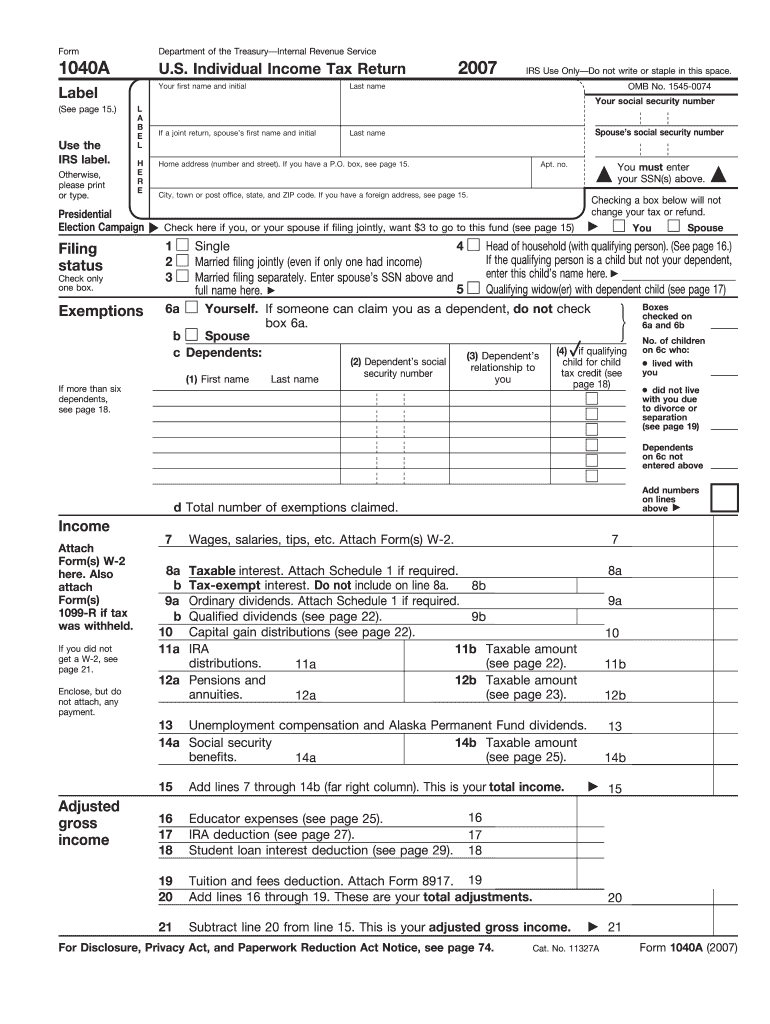







Definition & Meaning
Form 1040A for 2007, often referred to simply as Form 1040A, was a simplified U.S. Individual Income Tax Return form used for filing federal taxes. Designed for individuals with uncomplicated financial situations, it allowed taxpayers to report their income, claim certain deductions and credits, and calculate their overall tax liability. This form struck a balance between the shorter Form 1040EZ and the longer, more complex Form 1040, providing a middle ground for taxpayers who needed more options than the 1040EZ offered but did not require the extensive detail involved in Form 1040.
Key Characteristics
- Income Reporting: Used by individuals with wages, salaries, tips, and certain types of interest and dividend income.
- Deductions & Credits: Allowed for standard deductions and particular tax credits but did not support itemized deductions.
- Eligibility Requirements: Suitable for those not dealing with self-employment income, rental property income, or complex investment income.
How to Use the Form 1040A for 2007
When using Form 1040A for 2007, it's essential to understand each section's purpose to ensure accurate tax reporting. This form was structured to guide individuals through a simplified tax filing process.
Step-by-Step Usage
- Gather Necessary Information: Start with collecting personal information, Social Security numbers for yourself and dependents, W-2 forms, and any relevant 1099 forms.
- Filling Personal Information: Enter your name, address, and filing status in the designated section at the top of the form.
- Income Reporting: Include all applicable income sources, such as wages, salaries, and dividends, in the respective income sections.
- Deductions & Credits: Calculate allowable deductions and credits to determine any adjustments to taxable income.
- Calculate Tax Liability: Use the IRS-provided tax tables to figure out the tax owed based on your taxable income.
- Refund or Payment Details: Determine whether you owe additional taxes or qualify for a refund and enter these details accordingly.
How to Obtain the Form 1040A for 2007
Accessing Form 1040A for 2007 can be done through various channels, depending on how you prefer to manage your tax documentation.
Options for Obtaining the Form
- IRS Website: The IRS website historically provided downloadable PDF versions of the form. This remains a primary source for old tax forms.
- Tax Preparation Software: Several tax software programs may still reference archived forms like the 2A for historical filing purposes.
- Local Libraries or Post Offices: During the tax year, these venues often stocked physical copies of tax forms.
- Tax Professionals: Consult a CPA or tax advisor to acquire old tax forms or guidance for retrospective filing purposes.
Steps to Complete the Form 1040A for 2007
Completing Form 1040A accurately involves multiple steps, ensuring that all personal and financial data is correctly reported.
Detailed Completion Guide
- Filing Status and Exemptions: Based on your personal circumstances, select the appropriate filing status and list any exemptions for which you're eligible.
- Income Details: Transfer totals from your W-2 and 1099 forms into the income section of Form 1040A.
- Credits/Deductions: Review eligibility criteria for credits like the Earned Income Credit or the Child Tax Credit and apply them to decrease your tax liability.
- Tax Calculation: Use the applicable tax tables to determine your federal tax obligation.
- Review and Sign: Double-check all filled sections for accuracy, then sign and date the form to certify its completeness.
- Submit: Decide on electronic or mail submission and ensure the form is postmarked by the IRS due date to avoid penalties.
Filing Deadlines / Important Dates
Meeting filing deadlines is crucial to avoid penalties and ensure compliance with federal tax regulations.
Key Dates for 2007 Tax Filing
- Standard Filing Deadline: Taxpayers were obligated to submit Form 1040A by the IRS standard deadline of April 15, 2008.
- Extension Request: If unable to meet the original deadline, a Form 4868 could be filed to request a six-month extension, pushing the due date to October 15, 2008.
- Refund Claim Deadlines: Taxpayers seeking refunds typically faced deadlines three years from the original filing deadline.
Required Documents
To successfully complete Form 1040A for 2007, having all necessary documentation is imperative.
Essential Documentation List
- W-2 Forms: Details wages and withheld taxes from employers.
- 1099 Forms: Captures other sources of income like interest or dividends.
- Social Security Numbers: Needed for yourself and any listed dependents.
- Previous Year Tax Returns: Helps reference past deductions and credits.
- Receipts for Deductible Expenses: Though Form 1040A has limited deductions, applicable receipts can substantiate claims.
Form Submission Methods (Online / Mail / In-Person)
Once completed, Form 1040A offers multiple submission avenues.
Submission Procedures
- Electronic Filing (e-File): Utilizing tax software or a tax professional allowed for direct electronic submission, often ensuring quicker processing and refund times.
- Mail Submission: Although less common today, taxpayers could mail a completed physical form to the IRS office, ensuring it was postmarked by the filing deadline.
- In-Person Support: Some IRS offices provided assistance and direct acceptance of completed forms, an option for individuals requiring additional help or confirmation.
IRS Guidelines
Compliance with IRS guidelines was crucial for taxpayers using Form 1040A in 2007.
Fundamental IRS Directives
- Accuracy Requirements: All figures and calculations must be precise to ensure correct tax liability is reported.
- Record Keeping: Taxpayers should keep records of all submitted tax forms and supporting documents for at least three years.
- Amendments and Corrections: If mistakes are identified post-filing, taxpayers can file Form 1040X to amend their return.




