
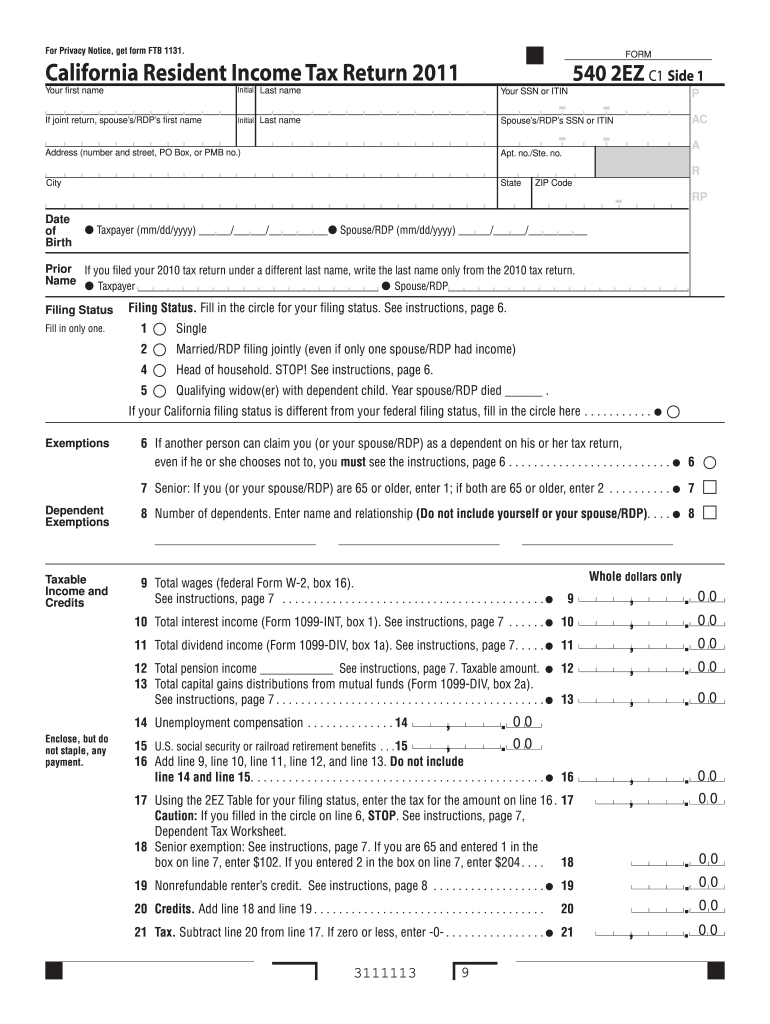







Definition and Meaning of the 2011 California 540 Form
The 2011 California 540 form is a state income tax return specifically designed for California residents. This form is crucial for residents to report their annual income to the California Franchise Tax Board, calculate their taxes, and determine any owed taxes or refunds. The form includes various sections that cover personal information, filing status, exemptions, income, deductions, and credits. Its comprehensive nature is built to address the unique tax filing requirements of California, reflecting both state-specific regulations and overall U.S. tax laws.
Purpose and Functionality
- Income Reporting: The primary function of the 540 form is to report all taxable income earned within the specified year to California's tax authorities.
- Tax Calculation: It aids in calculating the correct amount of state income tax owed based on the completed entries, including any credits and deductions available to taxpayers.
- Refund and Payment: This form will help determine whether the taxpayer is eligible for a refund or if they owe additional taxes after computation.
How to Obtain the 2011 California 540 Form
Acquiring the 2011 California 540 form is a straightforward process, designed to facilitate easy access for all residents:
- California Franchise Tax Board (FTB) Website: The official website provides downloadable versions of the form.
- Physical Mail: You can request the form through mail by contacting the FTB directly.
- Tax Software Packages: Many tax preparation software platforms include the 540 form as part of their standard offerings for California residents, allowing for direct digital completion and submission.
Considerations for Access
- Digital Form: Available for download in PDF format for printing and manual completion.
- Software Integration: Commonly integrated into tax preparation software like TurboTax, providing guidance and automatic updates on tax rules.
Steps to Complete the 2011 California 540 Form
Completing the 540 form requires attention to detail and a systematic approach to ensure accuracy:
- Gather Personal Information: Include your full name, Social Security number, and address.
- Determine Filing Status: Choose the appropriate status such as single, married filing jointly, etc.
- Income Reporting: Report all income sources, including wages, interest, and dividends.
- Calculate Deductions and Credits: Input eligible deductions and tax credits to adjust taxable income.
- Compute Tax Liability: Based on your inputs, calculate the total tax liability.
- Submit Payment or Request Refund: Indicate if additional payment is required or if a refund is expected.
Detailed Steps for Specific Sections
- Exemptions and Deductions: Document all applicable exemptions.
- Direct Deposit Setup: For refunds, provide bank information for direct deposit opportunities.
Who Typically Uses the 2011 California 540 Form
This form is generally used by:
- California Residents: All permanent residents who meet income threshold requirements must use this form.
- Part-Time Residents: Those who were California residents for part of the year might also need to complete this form, alongside a non-resident form for the other part of the year.
- New Residents: New California residents in 2011 would file this form for the portion of the year they resided in the state.


Specific User Scenarios
- Self-Employed Individuals: Particularly applicable to freelancers and contractors who have unique income reporting needs.
- Students & Retirees: Those with mixed income sources, such as scholarships or retirement benefits.
Important Terms Related to the 2011 California 540 Form
Understanding specific terminology is vital for accurately completing this form:
- Adjusted Gross Income (AGI): The total gross income minus specific deductions, crucial for tax calculation.
- Withholding: The amount deducted from earnings throughout the year, which should be reported on the form.
- Tax Credits: Direct reductions to tax liability available for various qualifying conditions and expenses.
Glossary of Key Terms
- Standard Deduction: A fixed dollar amount that reduces the income you're taxed on.
- Itemized Deductions: Specific expenses allowed by the IRS to decrease taxable income.
Legal Use of the 2011 California 540 Form
This form adheres to the California Revenue and Taxation Code and must be completed accurately to comply with state tax laws:
- Accuracy Requirement: Submitting false information can lead to audits and penalties.
- Documentation: Supporting documentation may be required for certain deductions and credits claimed.
Legal Implications
- Non-Compliance Penalties: Failure to file or incorrect filing can lead to fines and interest charges.
- Audit Risk: Maintaining accurate records minimizes audit risks and penalties.
Key Elements of the 2011 California 540 Form
Several critical components ensure the comprehensive nature of this tax form:
- Part I: Personal Information: Captures personal data used for identification and status verification.
- Part II: Wage and Withholding Information: Details annually earned wages and any withholdings.
- Part III: Income Adjustments: Provides for adjustments to the gross income, a critical element for tax liability calculation.
Comprehensive Elements Breakdown
- Tax Payment Options: Offers various options for paying taxes owed, including online payments and installment plans.
- Refund Options: Provides choices for receiving tax refunds, including direct deposits.
State-Specific Rules for the 2011 California 540 Form
California has unique regulations and guidelines impacting the completion of this form:
- State-Specific Deductions: Includes deductions unique to California residents only.
- Property Tax Deductions: Rules for deducting local property taxes in California are included.
Comparative Aspect to Federal Filing
- Differences in State and Federal Taxation: Recognizing differences ensures compliance with both federal and state obligations.
- Composite Filing Rules: For those filing multiple types of state tax returns, understanding these nuances is crucial.




