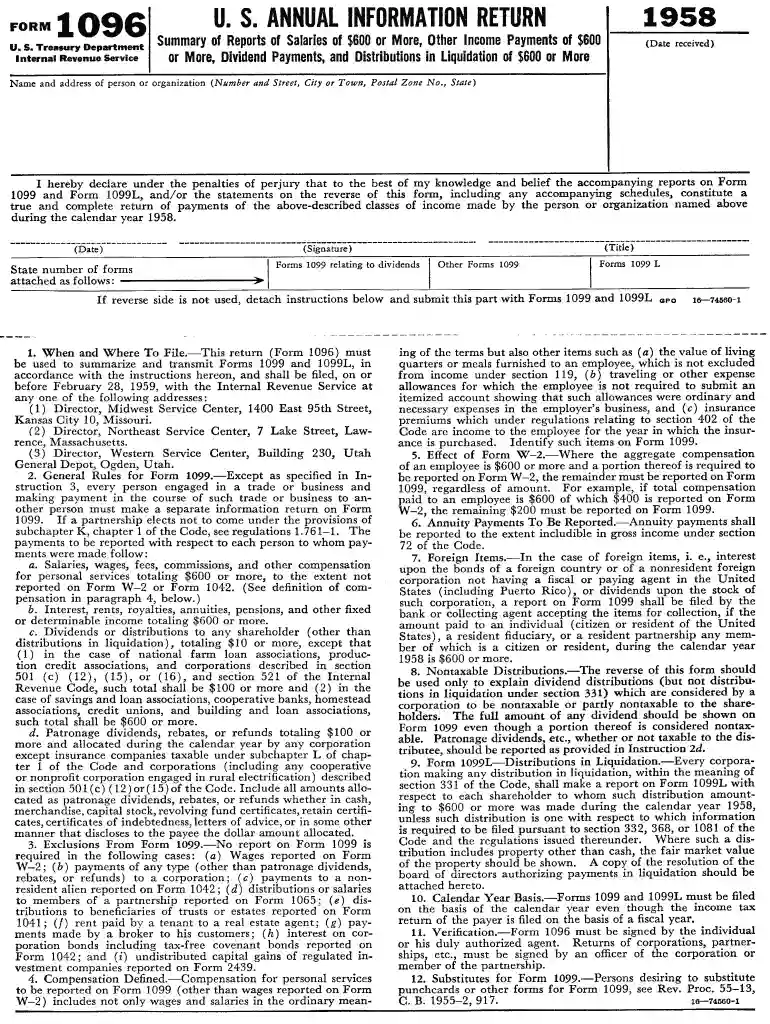
Definition and Purpose of Form 1096 (1958)
Form 1096 is primarily used as a summary and transmittal form for information returns that are filed with the IRS. This includes various types of 1099 forms, among others, used by businesses to report different kinds of income other than wages, salaries, and tips. Introduced in 1958, this form plays a crucial role in ensuring that the IRS receives a consolidated account of multiple information returns submitted by a taxpayer.
Key Functions of Form 1096:
- Aggregation of 1099 Forms: It compiles data from copies of Forms 1099, 1098, and others submitted by an entity.
- Submission Requirement: Businesses must submit one Form 1096 for each type of information return they file.
- Record Keeping: Helps in maintaining accurate financial records by summarizing the total amount of each type of income reported to the IRS.
How to Use Form 1096 (1958)
Step-by-Step Instructions:
- Complete All Related Forms First: Before filling out Form 1096, ensure that all necessary 1099 forms or other required information returns are completed.
- Enter the Filer’s Information: Fill in the name, address, and taxpayer identification number (TIN) of the filer. This information ensures the form is assigned to the correct entity.
- Indicate the Total Number of Forms: Specify the number of each type of form that the transmittal covers.
- Provide Total Amounts: Enter the total federal income tax withheld amount and the total amount of reported payments, if applicable.
- Signature and Date: The form must be signed and dated by an authorized person to validate the submission.
Tips for Accuracy:
- Verify that TINs are correctly entered to avoid processing delays.
- Ensure amounts listed in Form 1096 match the total amounts of all accompanying forms.
- Double-check deadlines to ensure timely filing.
Methods:
- Through the IRS: Forms can be obtained directly from the IRS website or by contacting their forms distribution center.
- Office Supply Stores: Many office supply outlets carry paper versions of the form.
- Authorized Software Programs: Some accounting software packages include digital versions of the form which meet IRS specifications.
Considerations:
- Use only official forms. Photocopies or unofficial versions may not be accepted by the IRS.
- When ordering from the IRS, consider any potential delays in shipping to ensure the forms are received well in advance of filing deadlines.
Steps to Complete Form 1096
Detailed Guide:
- Download or Acquire the Form: Obtain Form 1096 from an approved source.
- Enter Basic Information: Include the business name, address, and TIN to ensure correct identification.
- Calculate and Enter Totals: Add the amounts from each 1099 or other information forms and enter the totals in the appropriate boxes.
- Label Correctly: Ensure that all attached forms are aligned with the entries on Form 1096.
- Submit Safely: Mail the completed form and accompanying documents to the specified IRS processing center, choosing certified mail for added security if desired.
Importance of Form 1096 (1958)
Form 1096 serves a critical function in ensuring compliance with federal tax laws. It enables accurate reporting of miscellaneous income and helps in reconciling income data for businesses and individuals alike.
Key Reasons for Usage:
- Regulatory Compliance: Ensures that entities meet federal reporting requirements.
- Avoids Penalties: Proper submission helps avoid fines associated with non-compliance or inaccurate reporting.
- Financial Transparency: Reinforces accurate and transparent financial disclosures to the IRS.
Typical Users of Form 1096
Who Commonly Uses This Form:
- Business Entities: Corporations, partnerships, and limited liability companies (LLCs) that issue forms like 1099-MISC.
- Nonprofit Organizations: May use the form when they are required to report certain types of income or transactions.
- Trusts and Estates: Entities that distribute income and must report these distributions to the IRS.
- Educational Institutions and Governmental Agencies: For reporting financial transactions that fall under IRS information return requirements.
Important Terms Related to Form 1096
Glossary:
- Information Returns: Documents used to report various types of payments made by an organization.
- TIN: Taxpayer Identification Number, a unique identifier for entities filing taxes.
- Fiscal Year: A one-year period that companies use for accounting purposes and preparing financial statements.
Understanding Misnomers:
- Not a Tax Form: Unlike a tax return, Form 1096 is a transmittal document used to summarize other submitted forms.
Legal Use of Form 1096
Utilizing Form 1096 in a legally compliant manner is crucial for maintaining good standing with the IRS.
Legal Considerations:
- Adherence to Regulations: Ensure the correct version of the form is used and that it is filled as per IRS instructions.
- Timely Filing: Meet all required deadlines to prevent penalties.
- Accurate Reporting: Discrepancies between reported figures and those on information returns can trigger audits.
Filing Deadlines and Important Dates
Submission Timeline:
- Annual Deadline: Typically due at the end of February for paper filings and end of March for electronic submissions.
- Considerations for Extensions: While certain situations may warrant filing extensions, generally Form 1096 adheres to strict deadlines.
Importance of Timeliness:
- Late submissions can result in penalties.
- Early submission can prevent last-minute errors or omissions.
Available Methods:
- Mail: Traditional submission requires sending the completed form to the IRS processing center.
- Electronic: Use of IRS-approved software to file electronically.
Tips for Submission:
- Ensure all forms are properly arranged and labelled.
- Consider using certified or registered mail for tracking.
Penalties for Non-Compliance
Failing to accurately complete or timely submit Form 1096 can result in significant penalties.
Common Penalties Include:
- Monetary Fines: Based on lateness duration and intent.
- Interest Charges: May accrue on unpaid penalties.
- Increased Audit Risk: Non-compliance can flag entities for further IRS scrutiny.
How to Mitigate:
- Double-check all entries and totals for accuracy.
- Ensure adherence to submission guidelines and deadlines.